
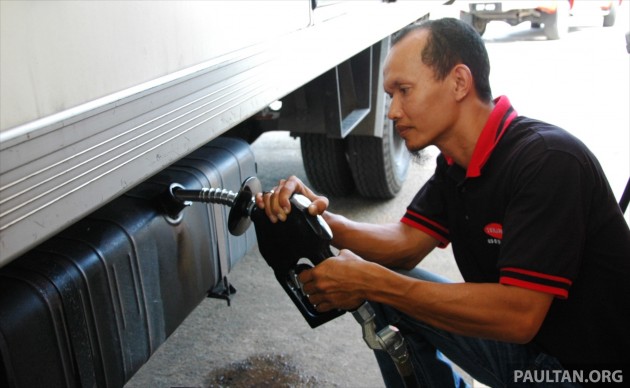
Political party PAS is asking the government to bring about a ceiling price on fuel, for both petrol and diesel, which will allow petrol station operators to compete with each other, The Sun reports.
Vehicle owners can then have the option to shop around and fill up at stations that offer the cheapest fuel, said Dr Dzulkefly Ahmad, the party’s research centre executive director. He added that the government should consider looking into this proposal – in which the mechanism would mirror that as implemented in the United Kingdom – for the benefit of the rakyat.
“The rakyat must benefit and a healthy competition on the price of petrol and diesel will be good. Currently in Malaysia, Petronas has 1,000 stations, Petron 500 and Shell has more than 1,000 outlets. Consumers can choose their stations if the mechanism on pricing is in place,” he told the publication.
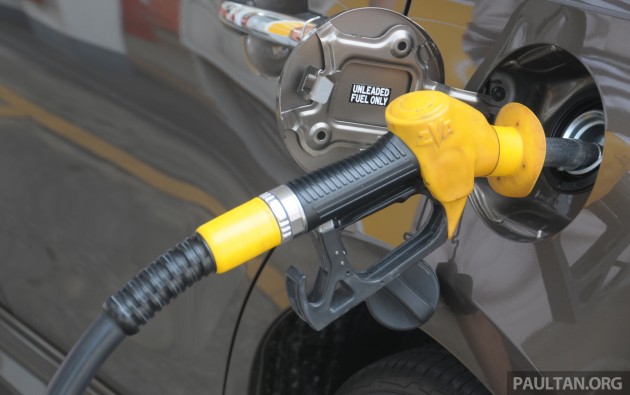
Dzulkefly also suggested that the MOPS (Mean of Platts Singapore) index – which defines the cost of product at the start of the Automatic Pricing Mechanism (APM) system in place – be replaced with another benchmark, since the country has its own infrastructure to produce and filter crude oil for the nation’s consumption.
The APM is the formula used to calculate the price of fuel, and has been in place since 1983. Its function is to stabilise the price of petrol and diesel in the country to a certain extent via a variable amount sales tax and subsidy. With it, the retail price only has to be changed if the difference in price exceeds the threshold of the tax and subsidy, at the discretion of the government.
Read our detailed story on the APM and how fuel prices are calculated in Malaysia.
Looking to sell your car? Sell it with Carro.

 Guan Yin Maa
on
Guan Yin Maa
on 

 San Miguell
on
San Miguell
on  Scor
on
Scor
on  maniam
on
maniam
on  Real Motorhead
on
Real Motorhead
on  Mr.Nami
on
Mr.Nami
on  Rangers
on
Rangers
on  Green
on
Green
on  kzm (Member)
on
kzm (Member)
on  carazy
on
carazy
on  lilytan
on
lilytan
on  A poh
on
A poh
on  yy
on
yy
on  Dr. Doom
on
Dr. Doom
on  old dog
on
old dog
on  almighty tokong lim guan eng
on
almighty tokong lim guan eng
on  almighty tokong idiot
on
almighty tokong idiot
on  zula
on
zula
on  CAR
on
CAR
on  Brainiac
on
Brainiac
on  barridom
on
barridom
on  wassini
on
wassini
on  Ripcord
on
Ripcord
on  almighty your mom
on
almighty your mom
on  bangabg jgn ditunjuk
on
bangabg jgn ditunjuk
on  Karl
on
Karl
on  14 year old
on
14 year old
on  kemosabe
on
kemosabe
on  Alex Chan
on
Alex Chan
on  LGE
on
LGE
on  jinggo
on
jinggo
on  thedarkside
on
thedarkside
on  mr1031
on
mr1031
on  pai
on
pai
on  mzma
on
mzma
on  honest
on
honest
on  pathfinder
on
pathfinder
on  Shaekey
on
Shaekey
on  ayooo
on
ayooo
on  cendol (Member)
on
cendol (Member)
on  Beng
on
Beng
on  susukotak
on
susukotak
on  Maserati(Official)
on
Maserati(Official)
on  ben yap
on
ben yap
on  biz
on
biz
on 


AI-generated Summary ✨
Comments on the blog post about imposing a ceiling price on fuel mainly support the idea as a way to prevent price gouging and benefit consumers, citing examples from other countries. Some express concerns about potential cartel practices and anti-competition issues if prices are fixed across companies. Others criticize political interference and question the practicality of control measures, emphasizing the importance of free market principles and fair competition. Overall, the sentiment favors regulated pricing to protect consumers, with debates around the best economic approach.