
For next year’s Consumer Electronics Show in Las Vegas, Continental will be showcasing two new battery charging systems, which will be of benefit to all-electric and plug-in hybrid cars.
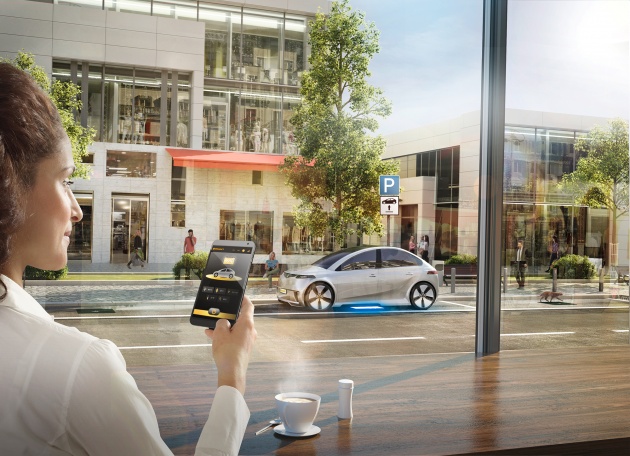
The first involves inductive charging, a concept that has been explored by other companies as well. The idea is to transfer charging power wirelessly from a ground-based charging pad to a receiver pad on the underside of the vehicle.
Continental says it has developed a micronavigation solution that uses magnetic field sensors integrated in the ground pad to more accurately position the vehicle. The unit receives signals from the EV, and responds by sending sensor data to the vehicle.
The location system operates on a long-range frequency band, and works well even if snow or leaves cover the ground pad. The company claims its solution is up to ten times more accurate than a conventional parking assistant.
It also claims up to 90% better efficiency, with the system being rated at a charging rate of 11 kW. A 20-minute charge can provide up to 20 km of driving range, and the system will “repark” automated electric vehicles when they are fully charged. A single charging station will therefore be able to cater towards many vehicles.
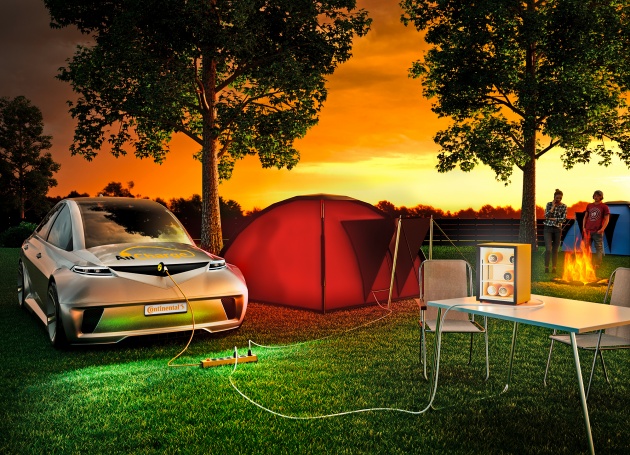
While wireless charging might sound like the way forward, cables continue to be a more widespread option for now. In light of this, Continental has developed what it calls the AllCharge, allowing any charging point to be used, regardless of charging rate, type of current, or voltage level.
In the case of cable-based charging, alternating current (AC) from the grid is converted into direct current (DC), which is then used to charge the vehicle’s battery. This conversion is either done in the charging station, or the vehicle’s on-board charger.
Although DC charging is faster by comparison, high setup costs limit their availability. With higher charging rates being more in demand, Continental’s approach involves turning the electric powertrain itself into a “charger,” instead of installing more and more charging technology into a car.
According to the company, this requires specially adapting the electric motor and the inverter (used to convert between DC and AC power) to enable them to support charging as well. The only extra component needed in such a system is a DC/DC converter, which ensures that power flows to the battery at the optimal voltage level at all times.
Since AC charging is no longer affected by the limitations of an on-board charger, with the appropriate AC infrastructure, AllCharge can charge the battery at a rate of up to 43 kW. This will quicken charging times of vehicles with larger vehicles, and Continental expects production of the technology to start in 2022.

I wonder why our universities don’t have battery tech development. OMG…why look so far, even both our national cars got no EV, Hybrid or PHEV. And we think we are so advanced.
All car companies now moving towards EV except our two national companies
https://paultan.org/2015/09/10/proton-iriz-ev-300-km-electric-car-on-display-at-igem/
Many years have passed, still cannot see this car also. When is it launching?
Proton announced this car to get more funding from our money. Gomen gave Proton extra billion to do further research for EV car. Our tax payers money.
But until now also, tarak
I still waiting Proton Hybrid. They showcase 8 years ago. Masih tuggu
Alamak, dah 8 tahun tunggu !!! Beli Jazz Hybrid sajalah.
When the market willing to accept Rm80k Bsegment EV hatchback, then P1 will release. Its all ready to go ahead.
It is not that we do not have the “brains” and talent, but unfortunately two things are going against us that is the oil industry and the small local vehicle market.