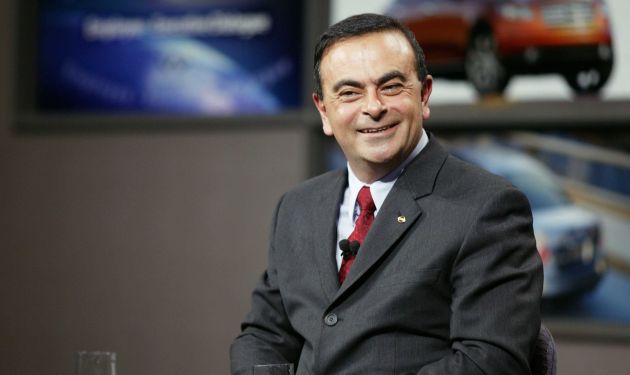
The Renault-Nissan-Mitsubishi Alliance will always remain a partnership, with no one party dominant to the point that it completely owns the others, according to Carlos Ghosn, the chairman and CEO of the alliance.
Speaking to shareholders of Mitsubishi Motors at their annual meeting in Tokyo earlier today, he reiterated that there was “zero chance” that the French automaker will make the two other companies wholly-owned subsidiaries, The Mainichi reports.
At the meeting, Mitsubishi shareholders expressed their concern over the company losing its strengths or being taken over by Nissan or Renault, but Ghosn assuaged their fears. “If Nissan wanted to acquire Mitsubishi, Nissan would have bought all of Mitsubishi. We did it because we don’t believe in acquisition, we believe in partnership. And this is the essence of an alliance,” he said.


“Anybody who will ask for Nissan or Mitsubishi to become a fully-owned subsidiary of Renault has zero chance of getting the result. We do not believe that companies where you have one company dominating the others are sustainable. It doesn’t work,” he told the shareholders.
The initial alliance was formed in 1999 – Renault came to Nissan’s aid then when the latter was on the verge of bankruptcy, and the French carmaker has since held a 43.4% stake in the Japanese company, with Nissan in turn given a 15% non-voting stake in Renault.
Since then, however, Nissan has grown to be a more profitable company than its French partner, and now commands a larger market value and better sales figures. In October 2016, Nissan acquired a 34% stake in Mitsubishi, forming the three-way alliance.
Looking to sell your car? Sell it with Carro.
 Mitsubishi Xforce
from RM109,980
Mitsubishi Xforce
from RM109,980  Mitsubishi Triton
from RM101,980
Mitsubishi Triton
from RM101,980  Mitsubishi Xpander
from RM99,980
Mitsubishi Xpander
from RM99,980 
 shaw
on
shaw
on 

 Hew
on
Hew
on  say no to tow truck
on
say no to tow truck
on  Awang Selamat
on
Awang Selamat
on  john
on
john
on  Cabai
on
Cabai
on  Steve
on
Steve
on  Hellhole
on
Hellhole
on  Civic turbocor
on
Civic turbocor
on  Tom
on
Tom
on  Yong
on
Yong
on  Imelda
on
Imelda
on  trio
on
trio
on  Tajuddin Ohwai
on
Tajuddin Ohwai
on  Andrew Goh
on
Andrew Goh
on  Yusri
on
Yusri
on  Faiz
on
Faiz
on  Kelabit
on
Kelabit
on  My england is bad
on
My england is bad
on  Rightwinger
on
Rightwinger
on  Azman
on
Azman
on  skyer
on
skyer
on  Mimi
on
Mimi
on  rally_fan (Member)
on
rally_fan (Member)
on  DS Banglaman
on
DS Banglaman
on  arowana
on
arowana
on  Sam Loo (ori1)
on
Sam Loo (ori1)
on  Panorama
on
Panorama
on  edmund liew
on
edmund liew
on 


AI-generated Summary ✨
Comments mainly discuss car brand reputations, industry leadership, and government influence. Renault is praised for aiding Nissan and selling better in Europe, while Japanese brands are criticized for quality issues. Ghosn is seen as an effective leader, with some suggesting Malaysia’s GLCs could benefit from similar management. Off-topic arguments about politics, foreign workers, and personal attacks are also present, but the core focus involves brand performance, leadership, and industry strategies related to Renault, Nissan, and other automakers.