
At this year’s Google I/O, the company announced a series of updates coming to Android for Cars, which covers both Android Automotive OS, the platform for built-in infotainment systems, as well as Android Auto, the phone mirroring app.
Before getting into the details, Google revealed that there are currently over 200 million cars on the road that are compatible with Android Auto. Meanwhile, nearly 40 car models offer Google built-in – you’ll find this on Volvo cars sold in Malaysia.
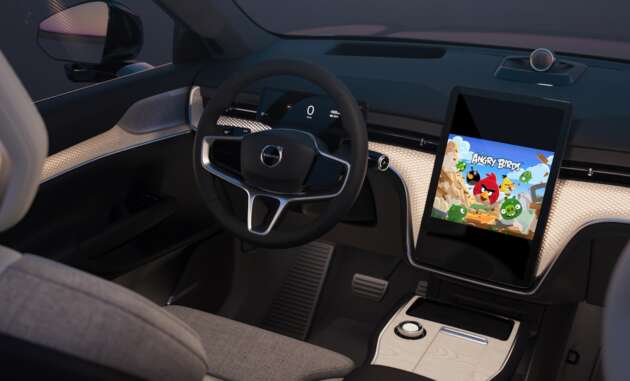
The majority of the updates announced are focused on Google built-in infotainment system, with selected cars set to get new streaming apps such as Max (HBO) and Peacock. The Angry Birds game will also be introduced, expanding the entertainment options that users have access to.
Another development is the imminent introduction of Google Cast to cars with Android Automotive OS, starting with Rivian with more to follow. This feature is already found in other products like smart TVs and Chromecast, allowing users to easily cast video content from a phone or tablet directly to the car while parked.
As for Android Auto, Google says an Uber Driver app is now available so drivers can accept rides and deliveries, as well as receive turn-by-turn directions on a bigger screen. Earlier this year, the company said it would bring AI-powered features to Android Auto as well.
For developers, there are new tools to make it easier to create new apps and experience for Android Auto, including the ‘Car ready mobile apps’ programme that serves to accelerate bringing mobile apps to cars with no additional work.
Apps and experiences will also be divided into new quality tiers based on their level of integration and adaptability. The first tier is known as ‘car differentiated’ that represents the best of what’s possible in cars, with apps in this tier being specifically built to work across a variety of hardware in cars and can adapt their experience across driving and parked modes.
The second tier is ‘car optimised’ and covers most apps available in cars today. These apps will have some car-specific engineering to include capabilities that can be used across driving or parked modes, depending on the app’s category. Lastly, there’s ‘car ready’, which are apps that may not have car-specific features, but are compatible with large screens in cars.
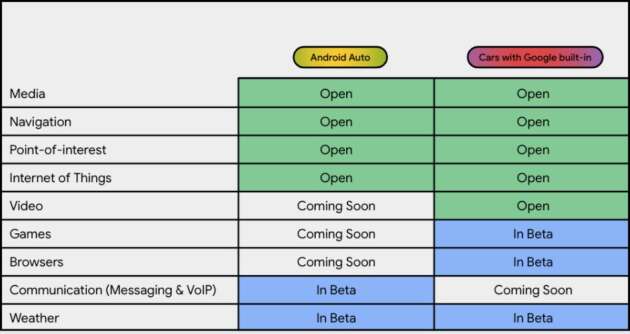
Google also provided a handy table for developers to identify what app categories are currently open and accepting app submissions across both Android Auto and cars with Google built-in.

The only problem is when owners try to bypass the vehicle safety system. OEMs requirement is to detect that the car is parked and stationary before any video can be cast. Many owners abuse this by sideloading apps which enables video to be played on the main screen while moving. Drivers can be easily distracted although it’s meant only for passengers viewing. You only need to drive beside some of these cars and see the video playing while moving.
Why do I need Angry Birds in my car? I got my phone, hmm
Major distractions… and soon to have high accident stat.