
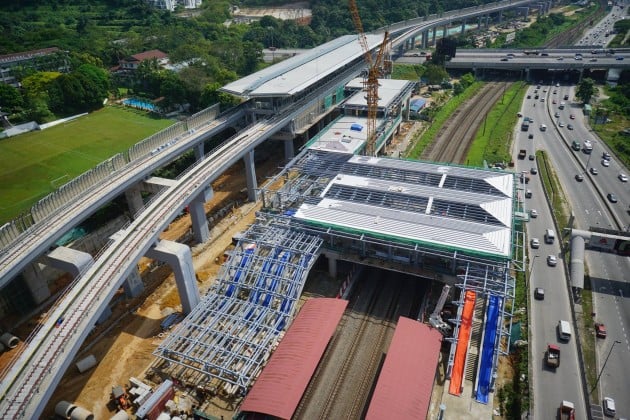
Public satisfaction over public transport services is on the uptrend, as indicated by the rise in the yearly Customer Satisfaction Survey (CSS) index from 48% in 2010 to 74% in 2015, Bernama reports.
According to the just released National Transformation Programme 2015 Annual Report, the survey conducted by the Land Public Transport Commission (SPAD) in 2015 found that the commuters were most satisfied with rail services such as the LRT, KTM Komuter and ERL.
“The feedback shows that rail services becoming more reliable and efficient is appreciated on the ground. Rail services today are the cheaper alternative to private transportation as well as offer enhanced safety and comfort. Another major contributing factor to commuter satisfaction is the convenient interchange and interconnecting system between different rail services, incorporating a standardised ticketing system,” the report said.
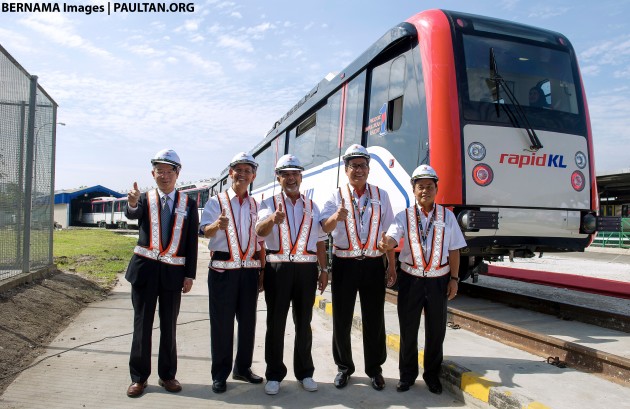
The report added that with the Urban Public Transportation National Key Results Area’s (UPT NKRA) aim to drive up the modal share of public transportation within Greater Kuala Lumpur or Klang Valley to 40% of all commuters by 2030, it is necessary that the public transport network is integrated, convenient, accessible, easy to use and affordable.
It said that throughout 2015, the UPT NKRA has seen both the addition of much-needed capacity to existing rail services as well as the construction of large-scale rail infrastructural projects. “These are starting to come online, with the first Klang Valley Mass Rapid Transit (MRT) line scheduled to begin operations by the end of this year and full LRT Line Extension Project to begin in the middle of this year,” the report mentioned.
The MRT is described as a ‘game changer’ and Klang Valley commuters can look forward to a clean, modern, fast and comfortable transportation system that allows them to travel from Sungai Buloh to Kajang in 88 minutes, the report said.

 WTH
on
WTH
on 

 tokmoh.
on
tokmoh.
on  john
on
john
on  Same L00
on
Same L00
on  gorengbanana
on
gorengbanana
on  Donkey J
on
Donkey J
on  Amriji
on
Amriji
on  malaysian view
on
malaysian view
on  BolehDriver
on
BolehDriver
on  Jeffrey Chew
on
Jeffrey Chew
on  ben2
on
ben2
on  In Your Dreams
on
In Your Dreams
on  zainal abidin othman
on
zainal abidin othman
on  AC
on
AC
on  Andrekua
on
Andrekua
on  Naik Keta Syok Complain
on
Naik Keta Syok Complain
on  policeman
on
policeman
on  john
on
john
on  nabill (Member)
on
nabill (Member)
on  Chris
on
Chris
on  Err Am I A Malaysian Then?
on
Err Am I A Malaysian Then?
on  lala
on
lala
on  LRT
on
LRT
on  leonardo
on
leonardo
on  soso
on
soso
on  Anon
on
Anon
on  Ben yap
on
Ben yap
on  tishaban
on
tishaban
on  Syed Hamid Albab
on
Syed Hamid Albab
on  jc
on
jc
on
AI-generated Summary ✨
Comments express mixed feelings about public transport, with some satisfied due to affordability, convenience, and improvements, while others criticize ongoing issues like safety concerns, station parking, and frequent breakdowns. Many are skeptical of survey results, blaming authorities like SPAD and comparing Malaysia’s system unfavorably with Singapore, Japan, and Hong Kong. Concerns also include last-mile connectivity, maintenance reliability, and the impact of car culture. Overall, sentiments range from cautious optimism to frustration and cynicism about government performance.