

All passenger car manufacturers present in Malaysia will be compelled to install three-point seat belts for all occupants from January, according to the New Straits Times. The two-point lap belt, meanwhile, will be outlawed, and as such passenger vehicles manufactured from this month must have three-point belts or it will not receive approval, as the requirement is included in the Vehicle Type Approval (VTA) permit.
Crash impact tests carried out by industry experts had proven that the pressure imposed by the lap belt in a crash could cause serious injuries, despite preventing the passenger from being thrown out of the vehicle in an accident, said JPJ automotive engineering director Datuk Mohamad Dalib.
“Crash impact tests show the need for lapbelts to be replaced with three-point seatbelts. The risks associated with lap belts include severing the lower torso and causing serious injuries to women who have had a Caesarean section,” he told the daily.
“We adopted the United Nation Vehicle Regulations R14 and R16 (related to seat belts), which were incorporated in the Road Transport Rules (construction and use) 1959, in 2007 and 2011,” Mohamad said.
“This means that, by right, passenger vehicles built from 2012 should not have the lap belt. We have given industry players a lot of time to prepare. Cars manufactured from January that are still fitted with the lapbelt will be considered not roadworthy, and we will not approve its VTA,” he added.
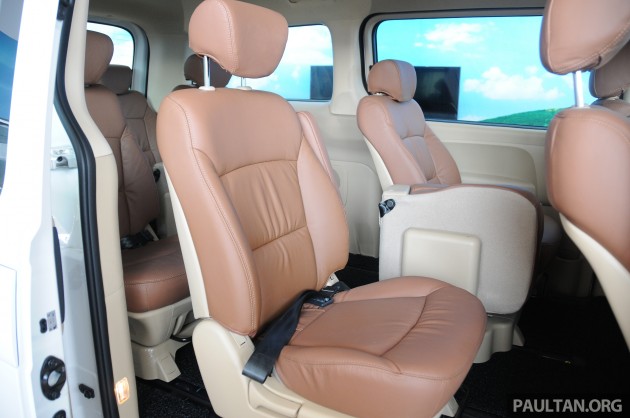
Three-point seat belts distribute the impact load during a crash while limiting violent movements of the occupant’s body, as well as minimising pressure to the abdomen, said Malaysian Institute of Road Safety Research (Miros) research officer Yahaya Ahmad. This is in contrast with the nature of the two-point lap belts, where pressure is focused on the abdomen which the belt is worn across.
“If you are strapped in with a lapbelt and a collision happens, or the driver brakes suddenly, your body, which is only partially restrained, will be violently thrown forward. When this happens at high speed, your head will either smash into the front seat, or you will be thrown forward and possibly impact the floor, causing facial and head injuries,” said Yahaya.
“The ensuing whiplash, where the body is thrown back into the seat, could cause the neck to snap,” he said, adding that several European countries, Japan and Austria had banned lap belts long ago. Children are at greater risk of injury from using lap belts as their bodies are more fragile, Yahaya added. “For children, the seat booster would be the best option.”
This measure, of course, can only work if and when occupants actually fasten their seat belts. Buckle up folks, as you’ll see in the video below, it isn’t just your own safety at stake.

Kudos to JPJ! But what about those 14seater minivans?
Safer to take MRT.
Public transports > all
This should have been implemented in 2012. Now 2018.
Already 6 years have passed and still tidur?
This sounds like our petrol quality. EU banned Euro 2 in 1994 and 22 years later, Malaysia still using Euro 2.
Malaysia oh Malaysia….why are you so slow to implement anything?
Never heard the word ‘ratified’, have u?
Euro 2 need 22 years to ratify? Oh My….memang tido ni
From my experience the ones that chimed others being third world mentality aren’t much different either. Complain why police corrupt then oso run over red lights, then see motorcyclist get run over blame rempit. When tio saman claims apa sarahan saya?
Seriously why the fish talk so much but oso act like cheebyes? Blame country somemore but actually doing shite is too much?
Hyprocriticism runs in their genes.
three point also no use if most rear passengers don’t bother to buckle up… heck don’t even need to talk about the rear, there’s still plenty of ignorant drivers and front passengers out there
New Myvi now has seat belt reminders for all. Make use of it.
No worries. Got seatbelt reminder dummy buckles. Kegemaran ahbeng.
“This means that, by right, passenger vehicles built from 2012 should not have the lap belt…..”
So what shall we do with the car we bought in 2017 with lap belts i.e. Starex?
Will the ignorant car manufacturer responsible for this?
Probably he meant, the law was in place @2011 but only ratified in @2018. In between, car makers shud move towards 3pt belts but no penalties will be incurred if they dun. Now they will have to follow the law.
so this means buses, (both on land & in air should also start considering 3 point seatbelts if 2 point seatbelt can cause injuries to wearer. imagine Airbus doing 360 rolls midair.
Buses and aeroplanes have a different safety feature called compartmentalization. If you look in the aeroplane safety instructions, they show that when aeroplane is about to crash land, you must rest your hands and head on the seat in front of you. Essentially, the seat in front of you works as your shoulder belt. If you happen to be in a bus that is driving like crazy idiot, you should also follow the same position as recommended in the aeroplane safety instruction.
May i know wat is lap belt?
Cross between lap dance and leather belts.
U are very rude mister! Was just a question posted on this car forum..tnks anyway
the internet is more than just place to criticise, use it well.
If you don’t want to answer his question, then please shut up as well
So when will my 5 point harness be road legal?
So, with this Exora will be only six seater like Ertiga?
Only needs roof mount anchorage for middle seat like BRV
One of the reasons why older cars and public transports including ‘bas kilang/sekolah’ should be encouraged to have the latest safety not complex features. Make it mandatory if need to if encouragement fails. Some may not like it but to me there should never be a compromise concerning PUBLIC safety.