
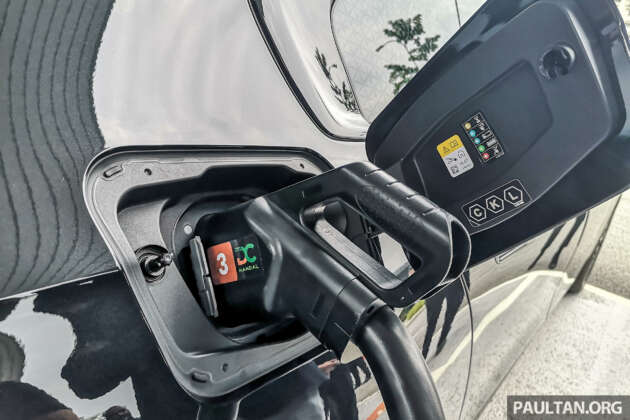
Subsequent to prime minister Anwar Ibrahim’s assertion on Monday that ASEAN leaders and heads of state will only be ferried in electric vehicles during Malaysia’s chairmanship of the regional association next year, deputy prime minister Fadillah Yusof said that the number of EV charging stations in the country is expected to double to 4,000 by 2025 to support the move.
According to The Star, Fadillah said that the existing number of over 2,000 stations – primarily located in city centres – is already sufficient to supply electricity to official vehicles for ASEAN meetings, which will also be held in cities.
This focus on the energy sector, including EVs, is one approach to achieve sustainability, Fadillah added. “The plan now is to promote more EVs, and one step is to increase the number of charging stations. Our target is to have 10,000 stations nationwide by 2030, along with providing incentives for EV ownership.
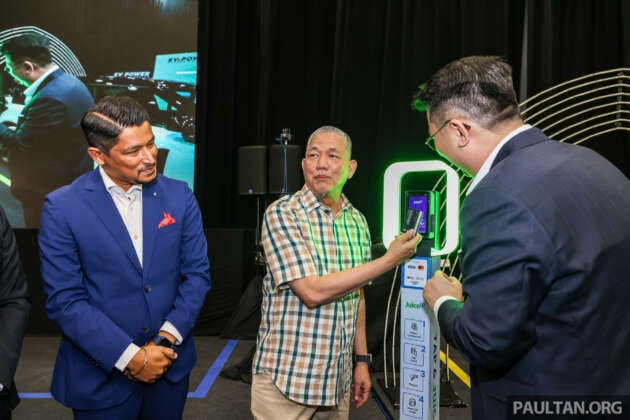
“This is beneficial for the environment as it reduces carbon emissions from the transportation sector, and EVs are one of the approaches that the government is focusing on,” he said, adding that the acceleration of charging station installation would require the involvement from not only Tenaga Nasional (TNB) but also the private sector.
Fadillah’s data is slightly out of step with that of minister of investment, trade and industry (MITI) Tengku Zafrul Aziz, who just last week claimed that Malaysia already had 3,171 charging stations (813 DC, 2,358 AC) as of September 30, compared to 2,585 in June. As such, the target of 4,000 stations by the time 2025 rolls along in just over 60 days time is certainly doable.

The more ambitious target is to have 10,000 chargers, consisting of 1,500 DC and 8,500 AC chargers, by the end of 2025. This was outlined in 2021 under the Low Carbon Mobility Blueprint (LCMB) 2021-2030 – a promise that Zafrul fully intends to keep. It’s also five years ahead of the target that Fadillah himself mentioned earlier.
Fadillah said the transition of the transportation and manufacturing sectors could help Malaysia achieve the target of increasing the proportion of renewable energy in the national fuel mix to 40% by 2030, up from 20% currently. He continued, saying that efforts to increase the usage of EVs must balance electricity supply, safety and affordability.
Looking to sell your car? Sell it with Carro.




EVs are for those with big pockets. When there is affordable RM 50k price range EVs (range 500+ km above), then come talk again. Otherwise, don’t burden the rakyat with these kind of infra that mostly benefit the rich.
Think about the suffering the rakyat is burdened with at the moment. Rising cost of living, public transport, education, welfare, access to public hospital, improving security (police stations, bomba, army) etc.
50k ev already exist. But need protek pekema and cronies. Cannot sell cheap ev here
how do EV and its ecosystem burden you? by not emitting soot, NOx, COx, etc. for you to inhale? I am really curious here.
I don’t understanding why those people are suffering? Pasar borong worker with OT can get 4-5k salary, a grab car driver with daily 2 trips to KLIA airport and 26 working days with Bezza can get at least 4k nett. Why susah? Mat rempit when young and marry early with no skill and knowledge yet giving birth of 4 kids. Of course this kind of situation will get susah and you blame on gov not helping? Why need to have RM50k EV? The first wave of EV was never target low income people. Work harder and earn higher income to afford one reputable EV instead of blaming gov. Don’t blame, work harder.
Not enough EVs on the road, nobody build charging station. Not enough charging station, nobody buys EVs.
You should thank the early adopters. Charging infra is put in because of them. By the time RM50k EVs comes around, it’d have much better technology than the EVs that are currently on the road, and those cars will suffer massive depreciation. Later adopters will also benefit from charging infra already in place.
Unless you believe the future (20-50 years later and beyond) of automotive industry lies with dinosaur juice, in which case we will agree to disagree. And that is okay
Majority is AC slow charger… well good luck to you sir. Happy charging your MIFA 9 with slow AC charger
AC chargers are in shopping centres, where you’d go for 2-3 hours and get 33kWh or about 50% for many EVs.
Highway chargers are mostly DC where the range is needed. If you clock 50,000km a year, everyday your 260 working days (meaning you drive 192km every day), that means you can still make the to and fro trip (384km) in most EVs. It *can* work even with todays tech.
Also, China is much larger than Malaysia and they are making it work. Malaysia is not unique and we are late to the party, no need to reinvent the wheel, just follow what other countries are doing, learn from their mistakes.
bagus, remove all petrol subsidies, petrol subsidies for bumi only
that may work you know. coz according to some tun all bumi are poor and can only go around by bicycle so subsidize them something they cannot use may actually save gomen a lot.