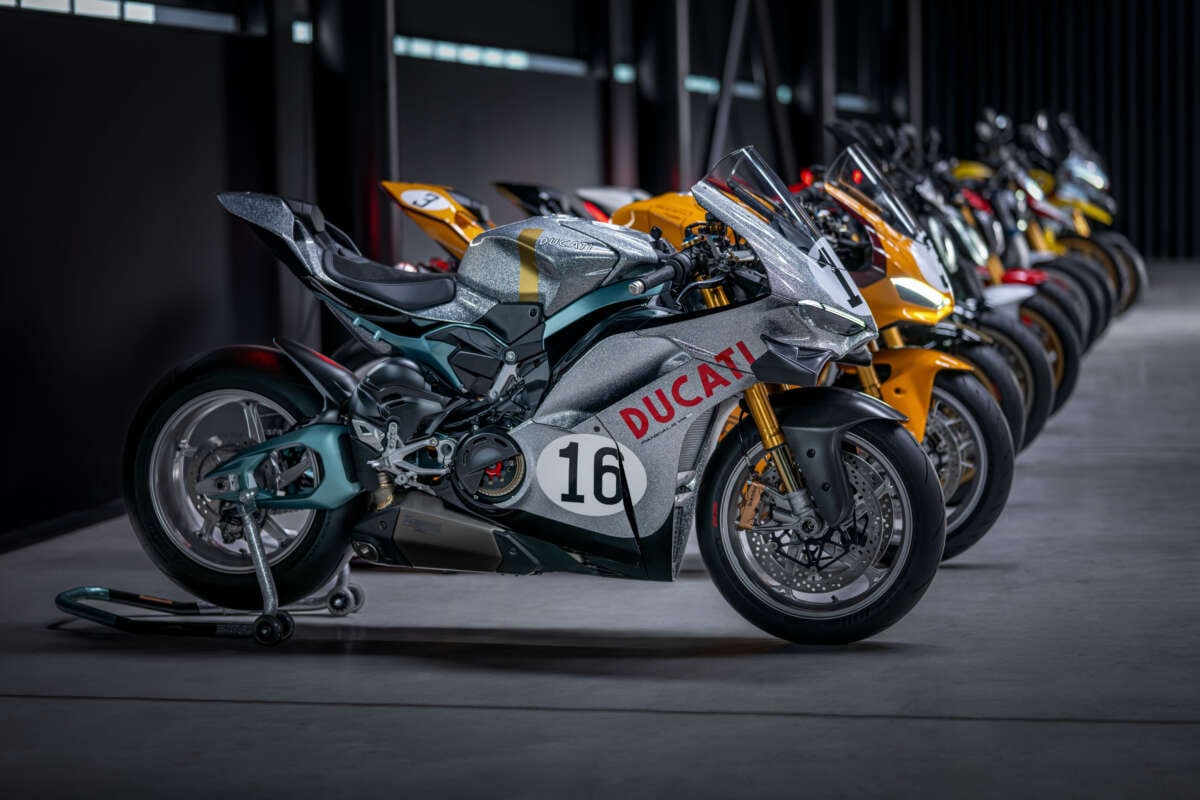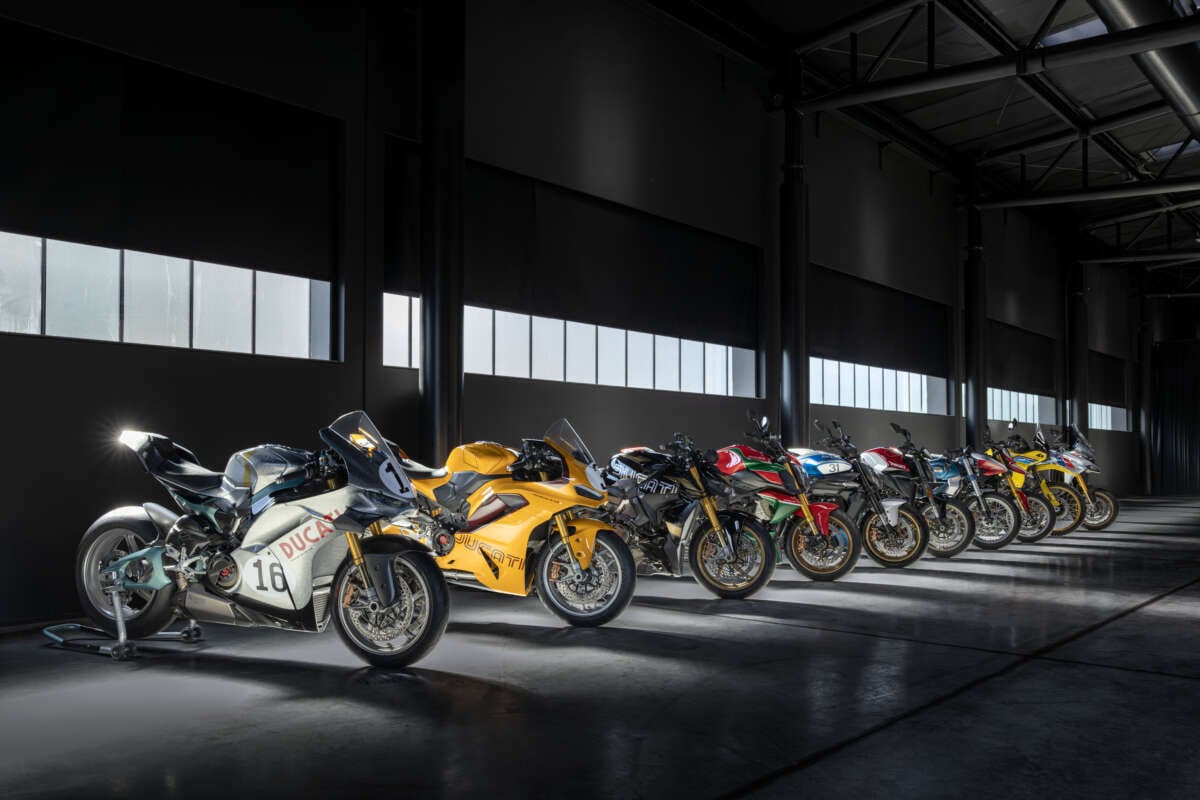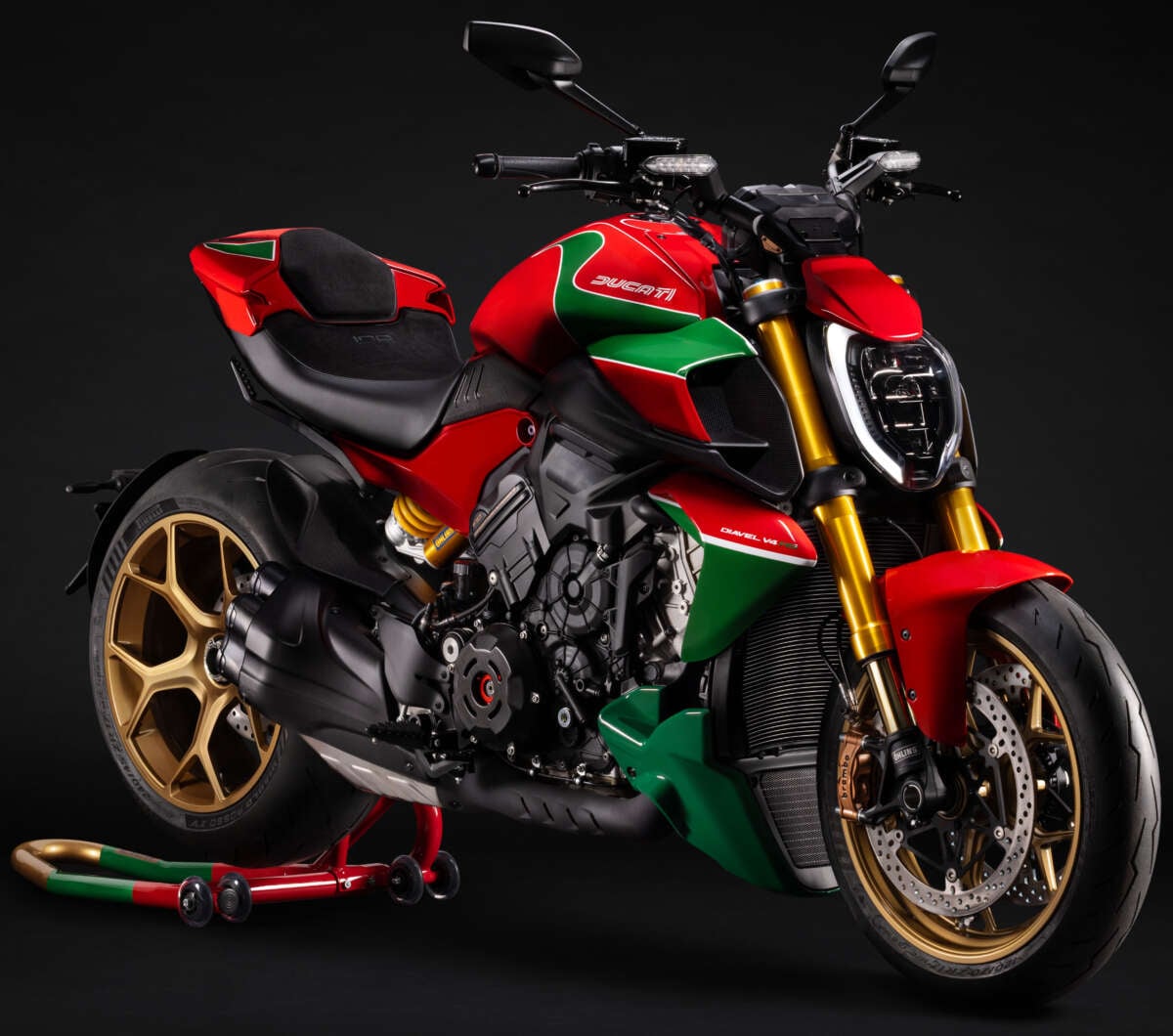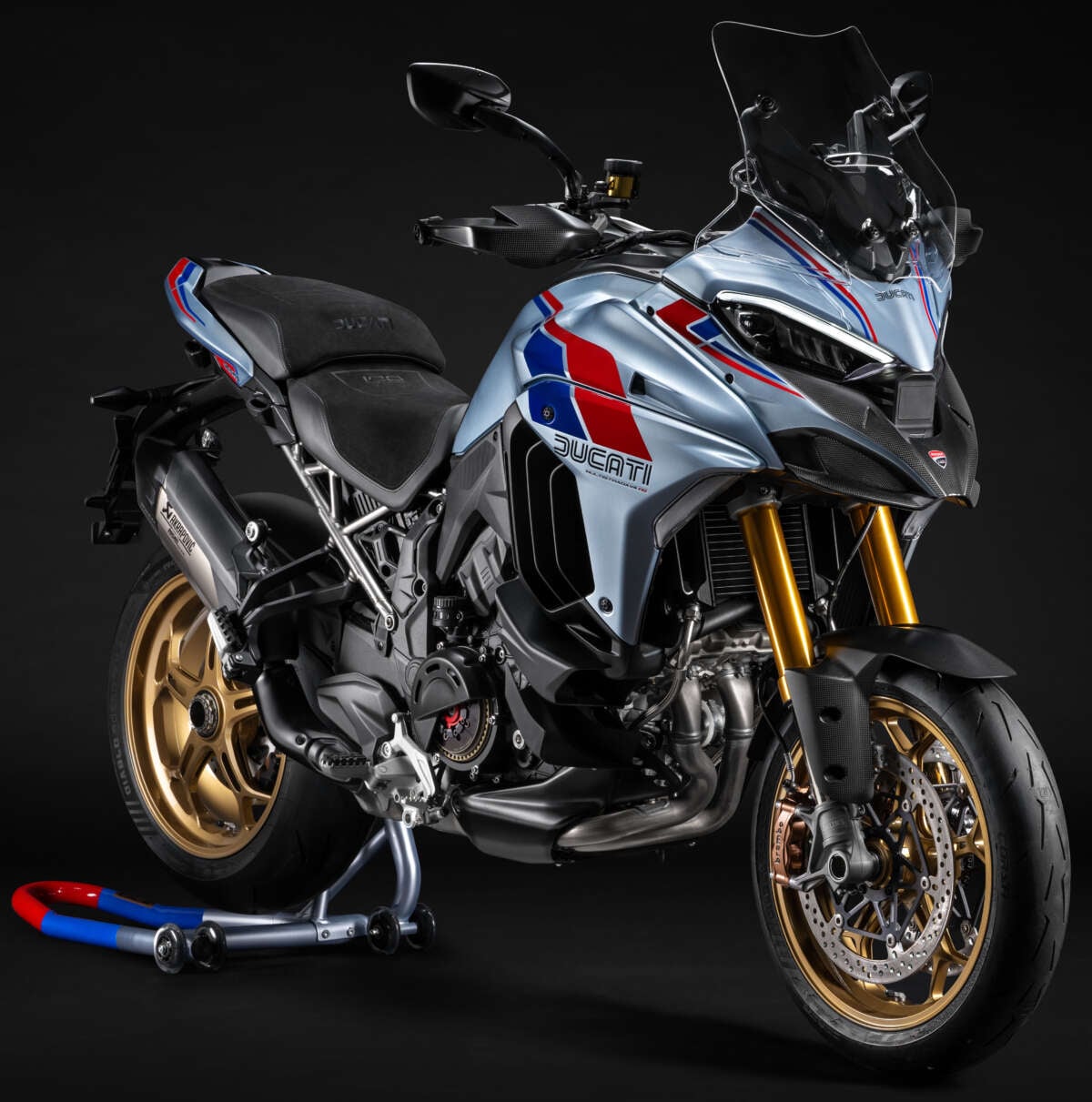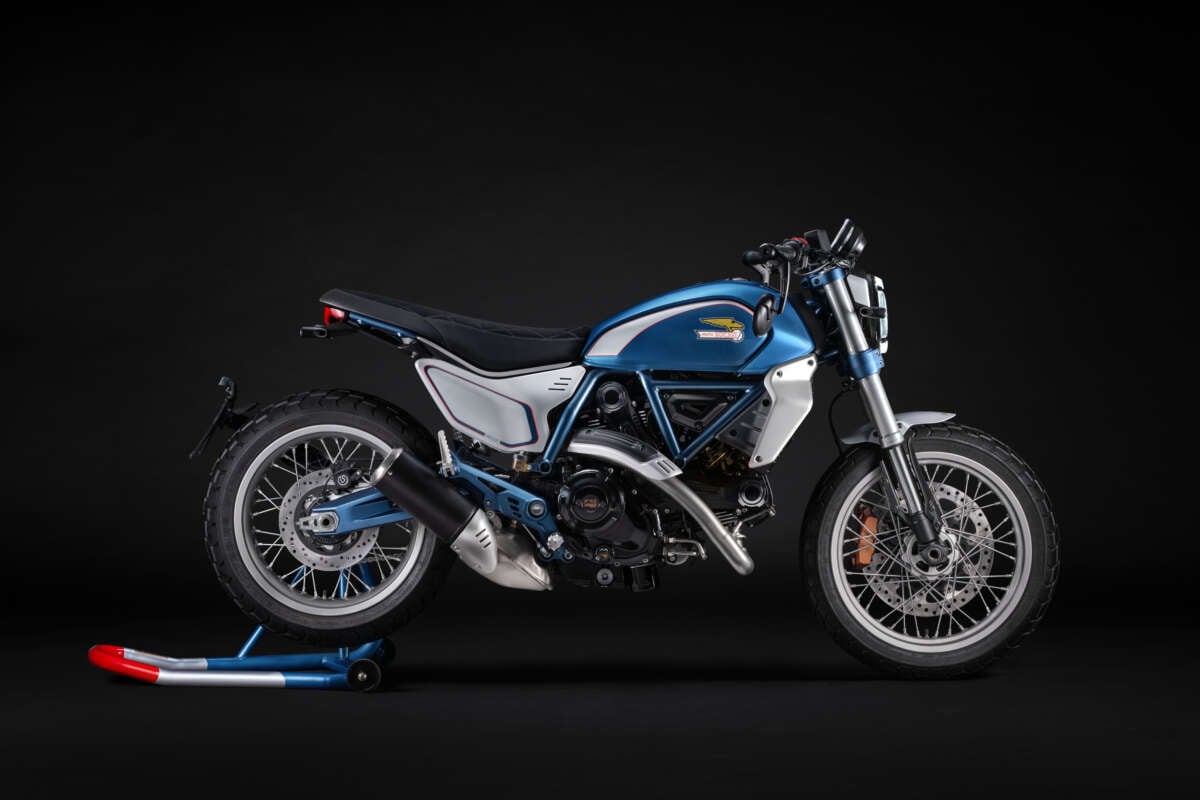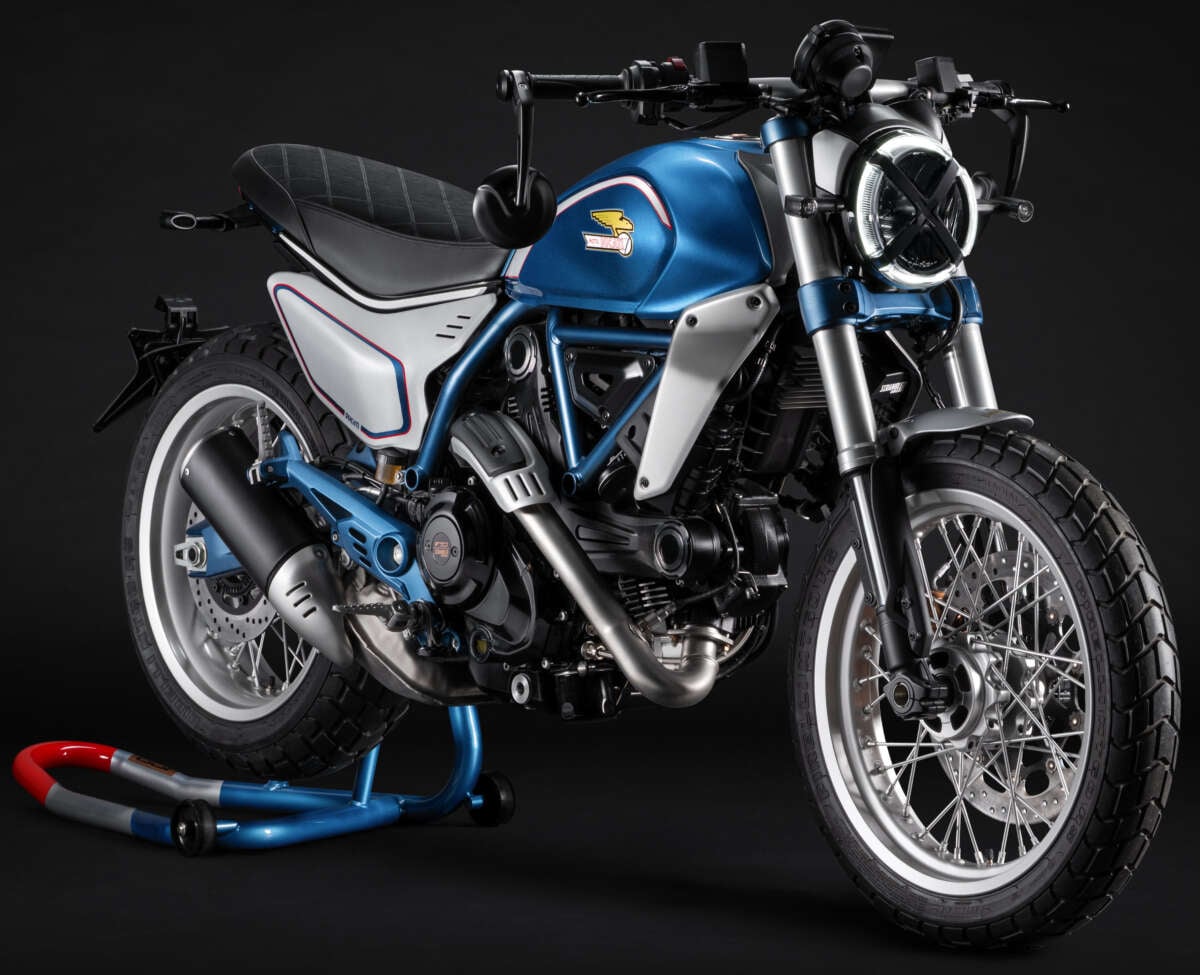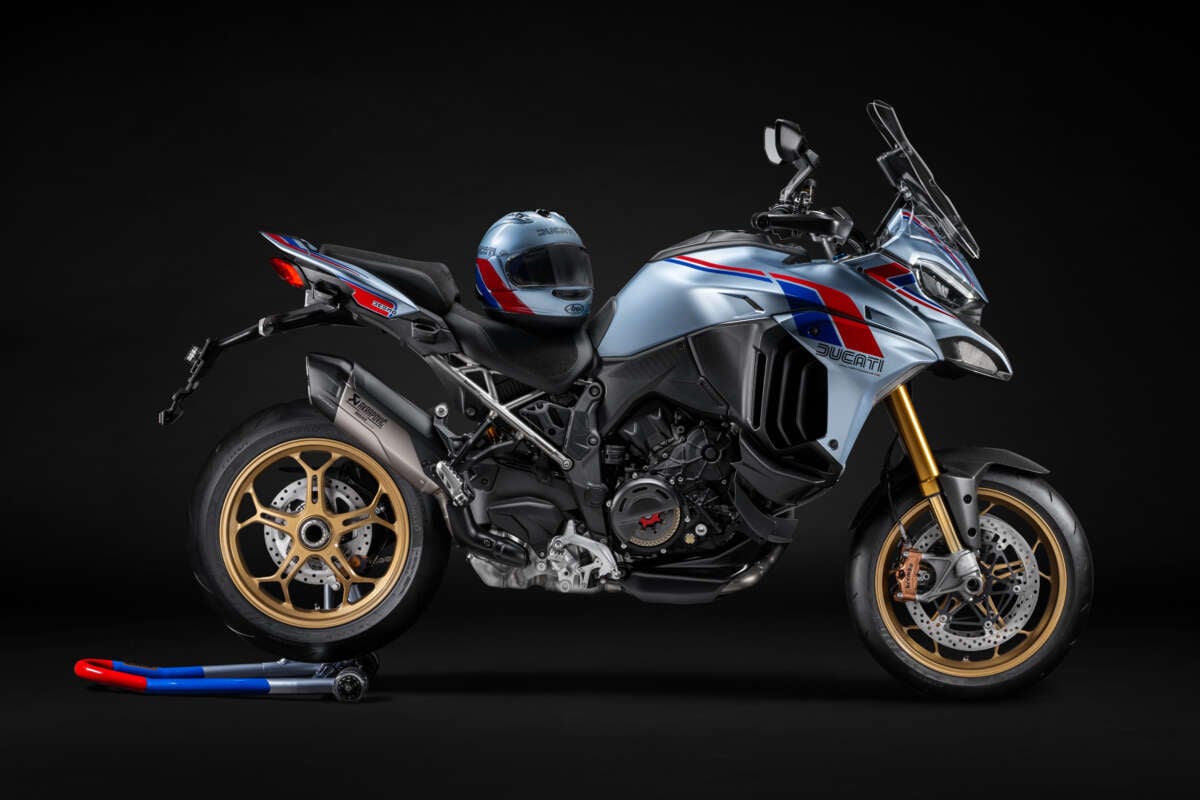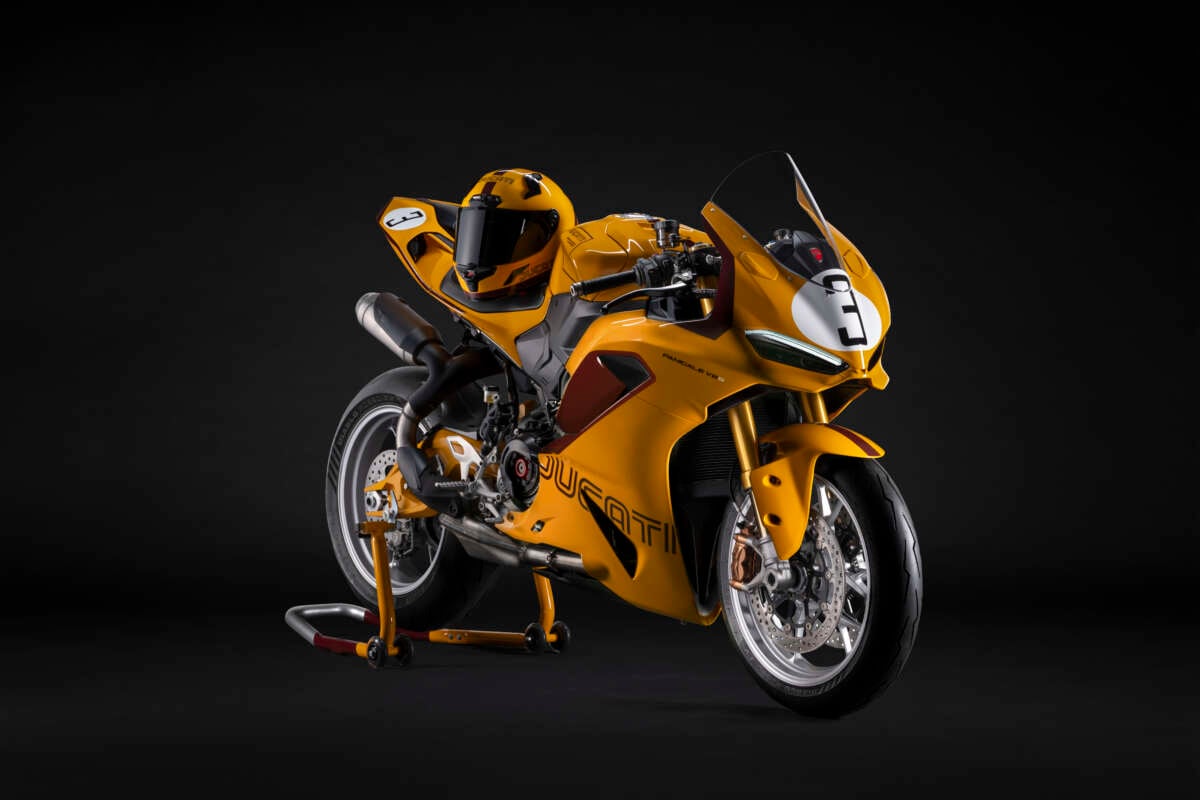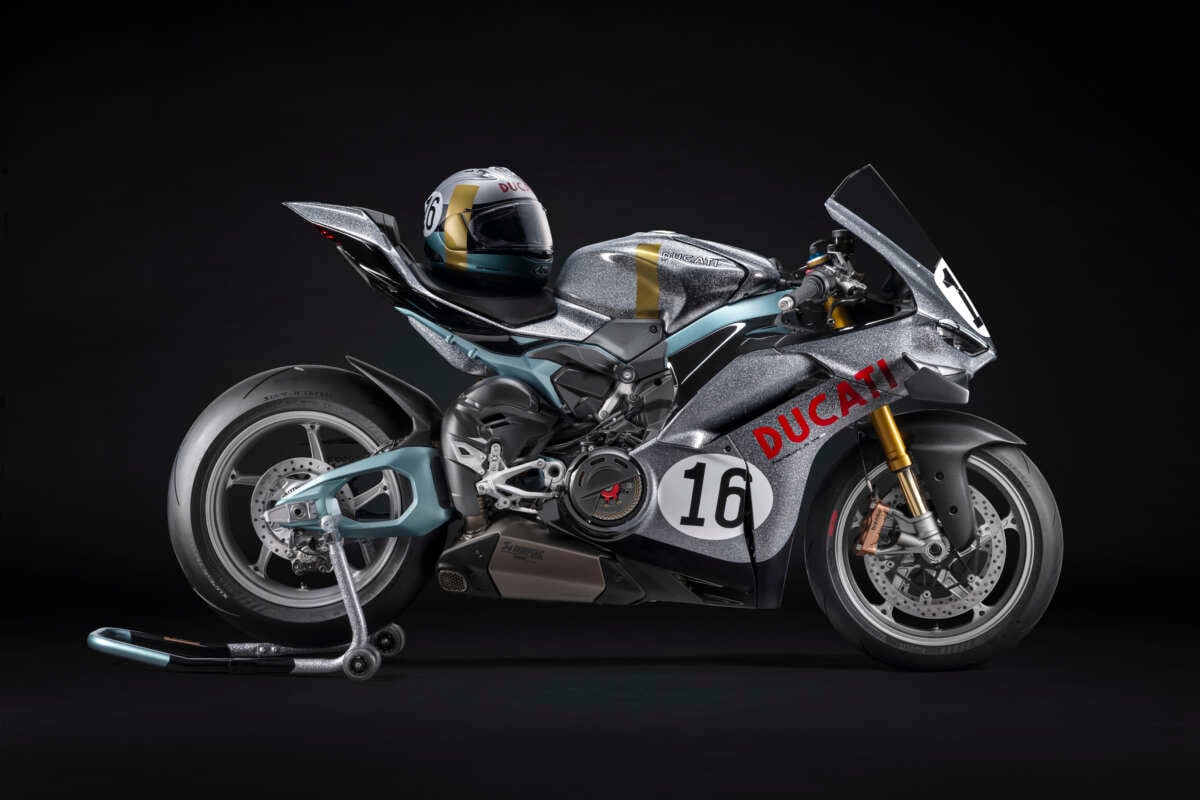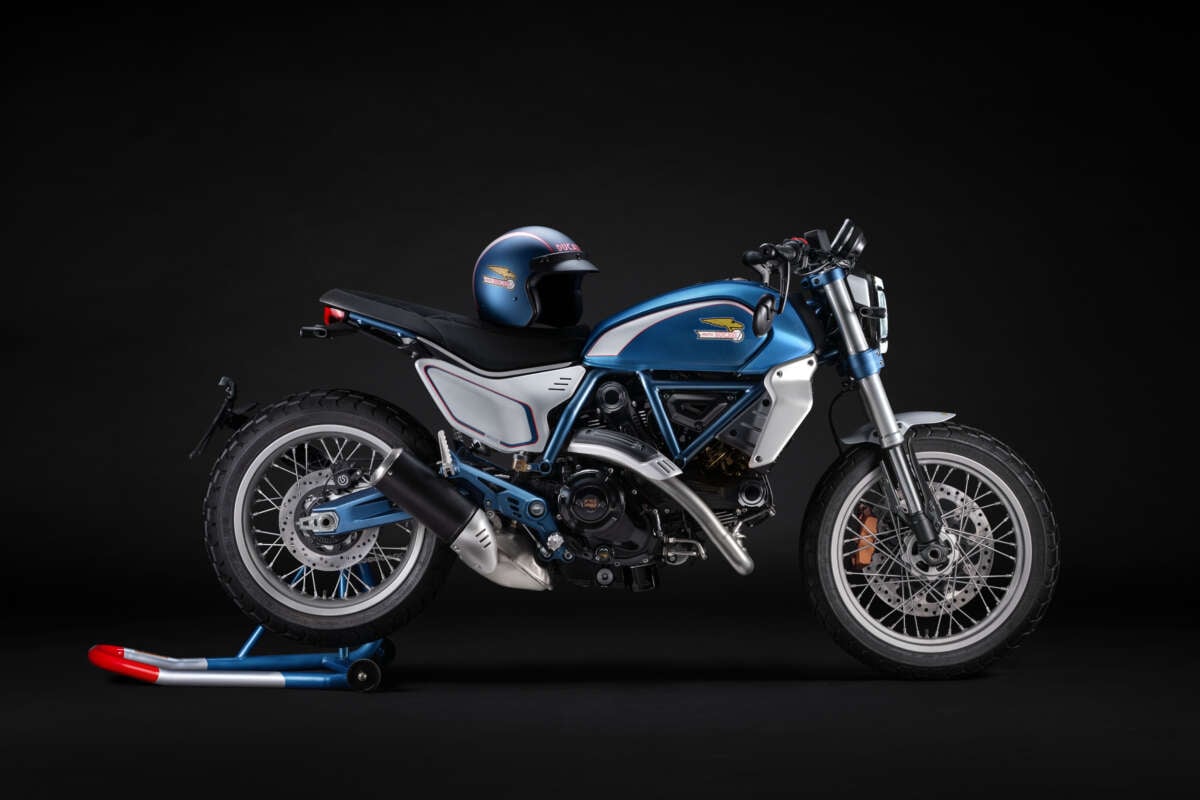
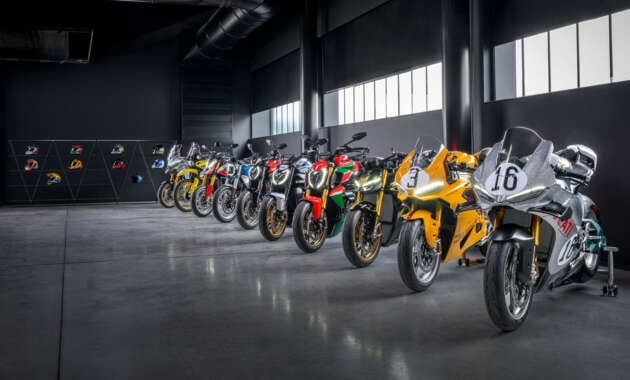
Celebrating 100 years of Ducati history is the Collezione 100 (Collection 100) with 10 limited edition motorcycles from the Ducati catalogue. Limited to a production number of just 100 motorcycles each, the Collezione 100’s 10 motorcycles line-up is made unique with a special specification, a livery inspired by an iconic Ducati motorcycle from Ducati’s history, an Alcantara or leather seat featuring an embroidered “Ducati 100” logo, and the Bronzo Centenario colour.
This special colour is applied to the brake callipers, while a nameplate with the edition number is found on the billet alloy triple crown, or brackets and fuel cap ring. Each special edition Collezione 100 machine also comes with a a dedicated rear stand, a motorcycle cover, a certificate of authenticity and a pair of numbered art prints signed by late 20th-century Italian artist Ugo Nespolo, while the V4 models will be presented in a customised wooden case.


Intended for the collector, the Collezione 100 was presented to buyers at Mugello circuit in Italy where there was also the unveiling of a capsule collection comprising of a helmet and jacket as well as Nespoli’s art. Also unveiled during the presentation were two Collezione 100 racing livery Ducati Desmosedici GP race motorcycles that will be raced by the Ducati Lenovo team along with edition specific products from Carrera eyewear and Piquadro luggage.
Public unveiling of the Collezione 100 will take place on 3 July during World Ducati Week 2026. Thereafter the collection will be on display in the UK for the Goodwood Festival of Speed, followed by taking up residence in various museums in Bologna, Italy.


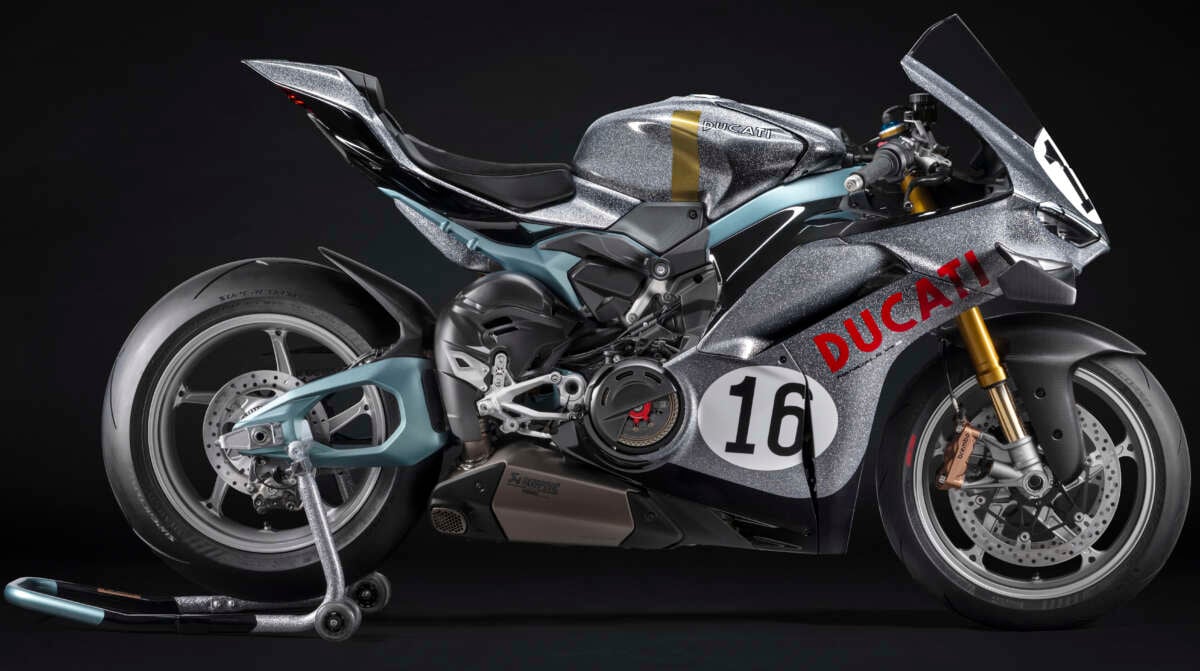
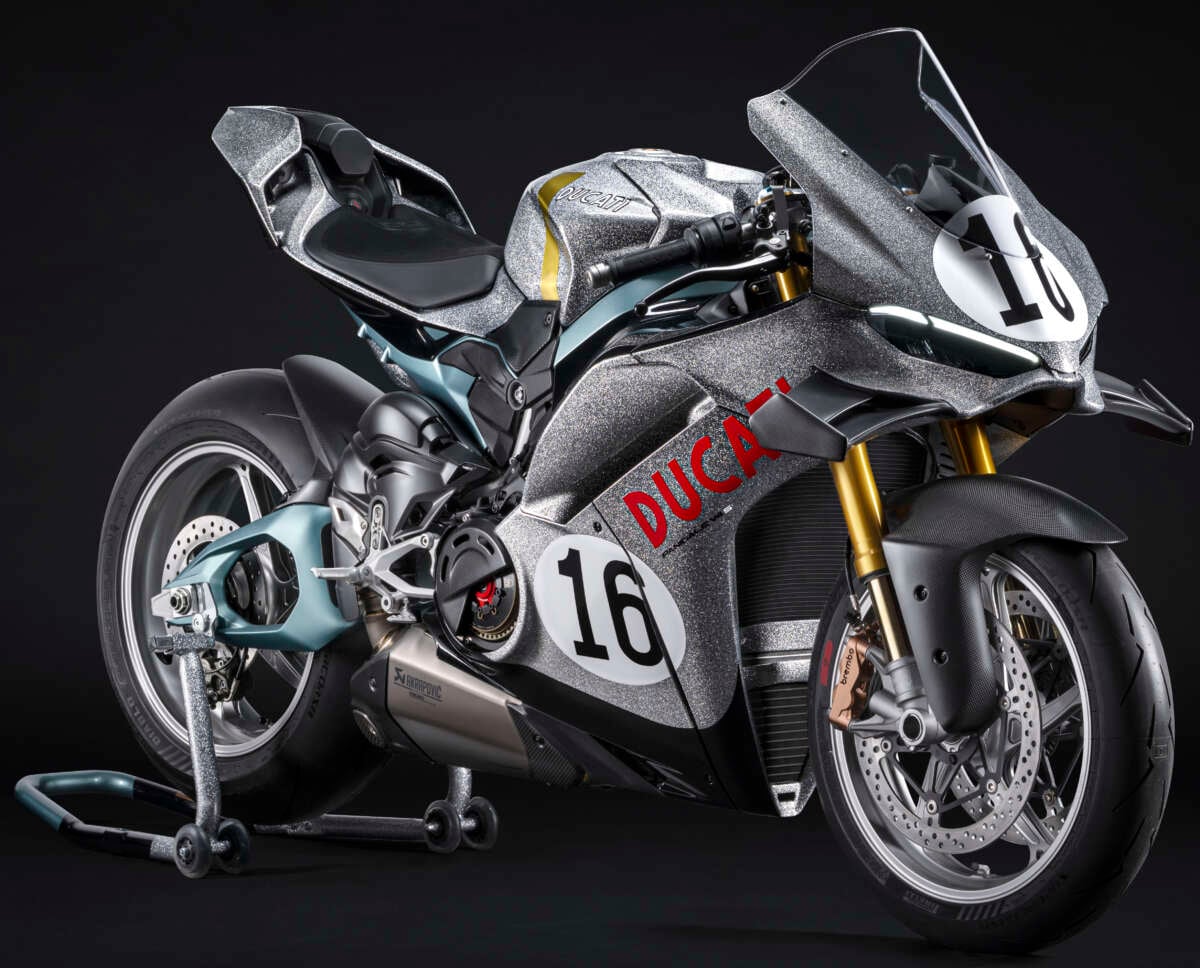
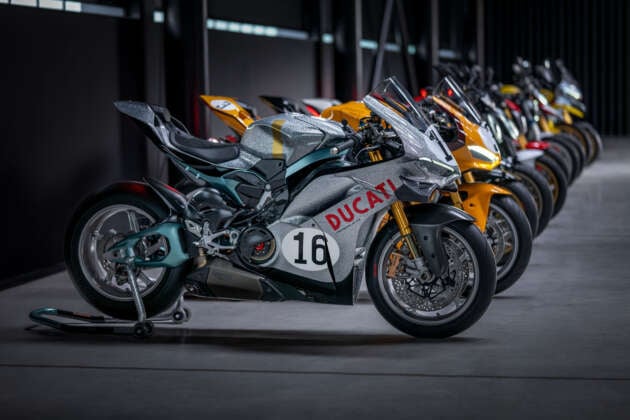
The Collezione 100 starts with the Panigale V4S 100, with inspiration from the 1972 Ducati 750 Imola Desmo ridden by Paul Smart and Bruno Spaggiari whose racing success caused the 750 Imola Desmo to be built in 1973. The special edition Panigale V4S is painted in a “glittery” silver colour, a reference to the science fiction aesthetic popularity in the 1970s, and used by Ducati for the 250 and 350 Desmo single-cylinder bikes, and later to the 500 GP and then to the 750 Imola Desmo.
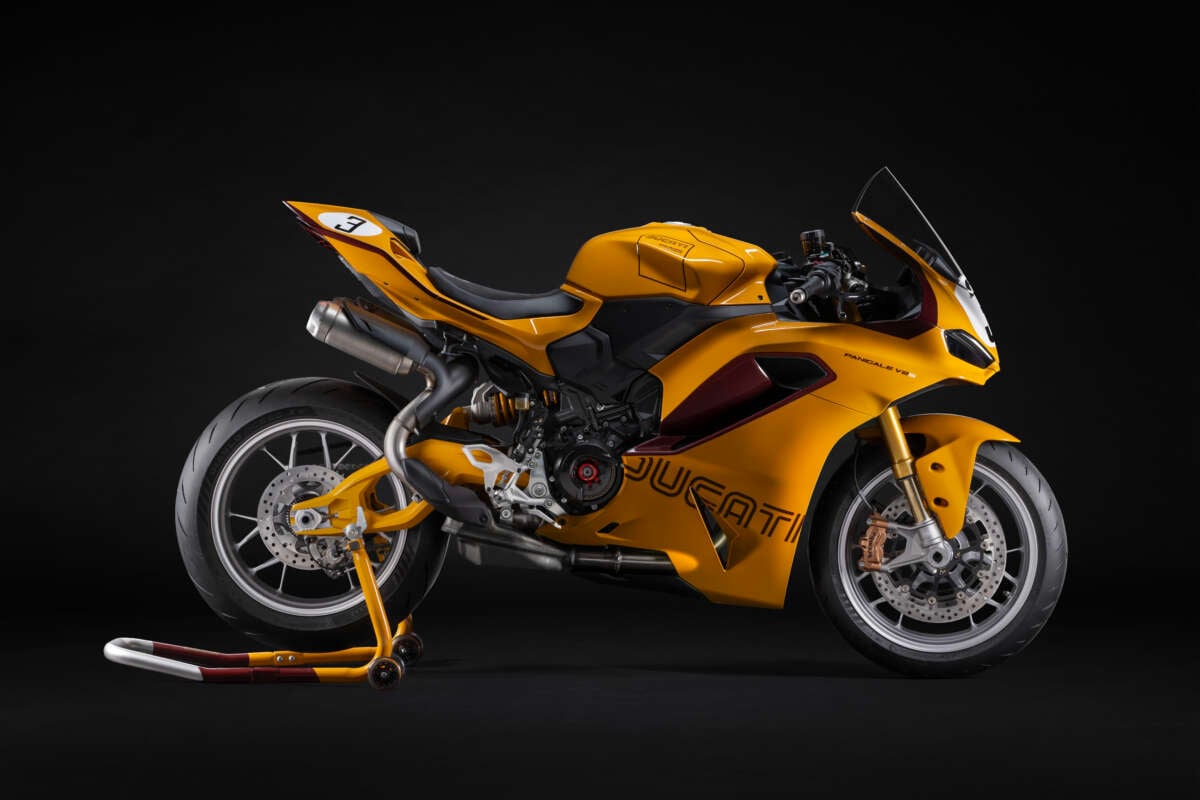
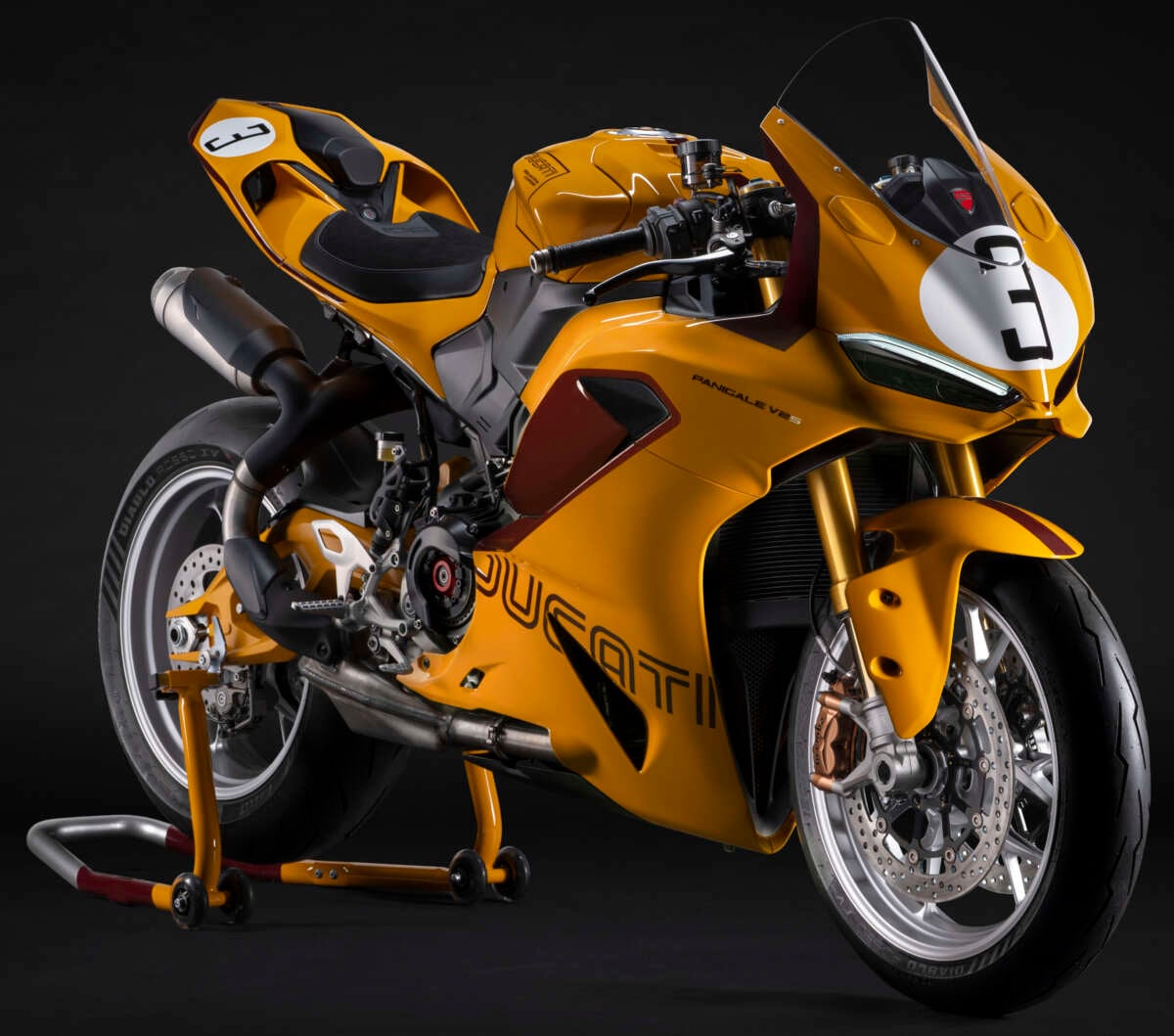
The Panigale V2S 100 takes inspiration from the 750 Super Sport Desmo ridden by Franco Uncini in the 1975 Italian Championship, becoming a popular model of Ducatisti of that era. The yellow livery was used on road-going versions of the Super Sport Desmo, while the brown/burgundy colour was used on inboard marine engines assembled in the Borgo Panigale factory, with this limited edition Panigale V2S 100 made special by the fitting of a dry clutch.


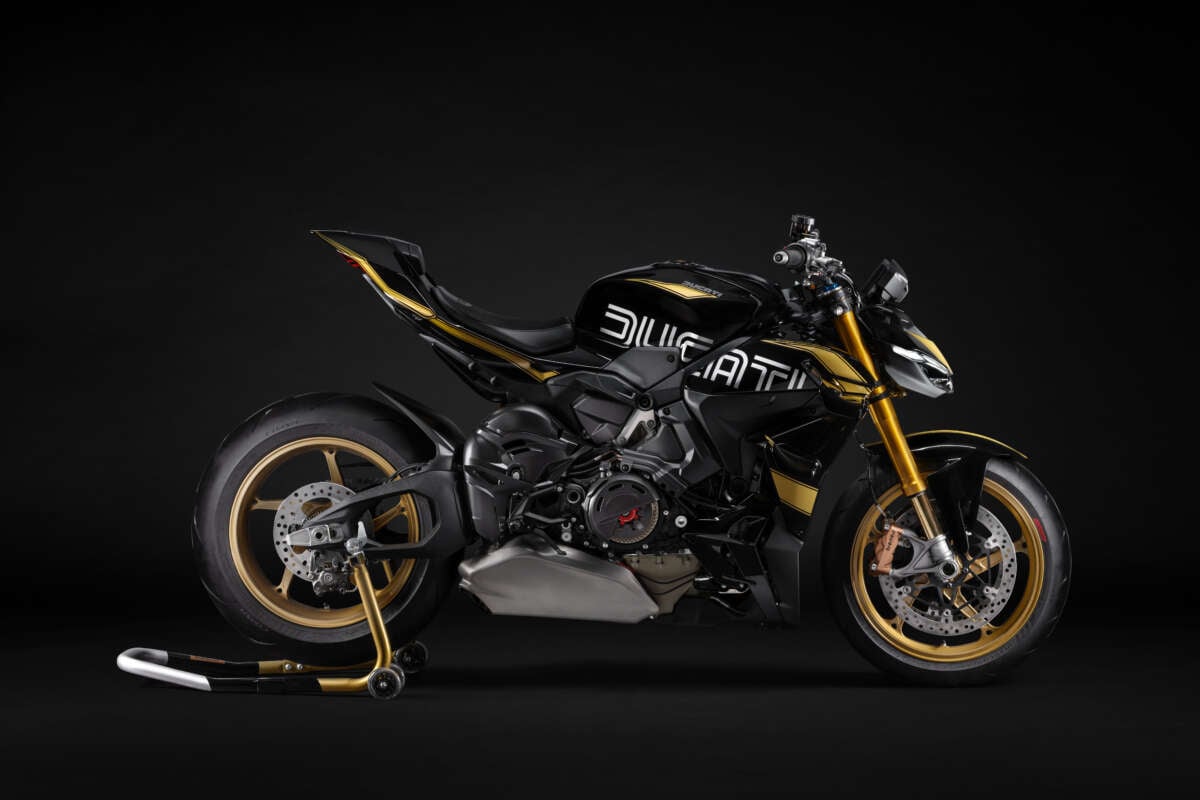
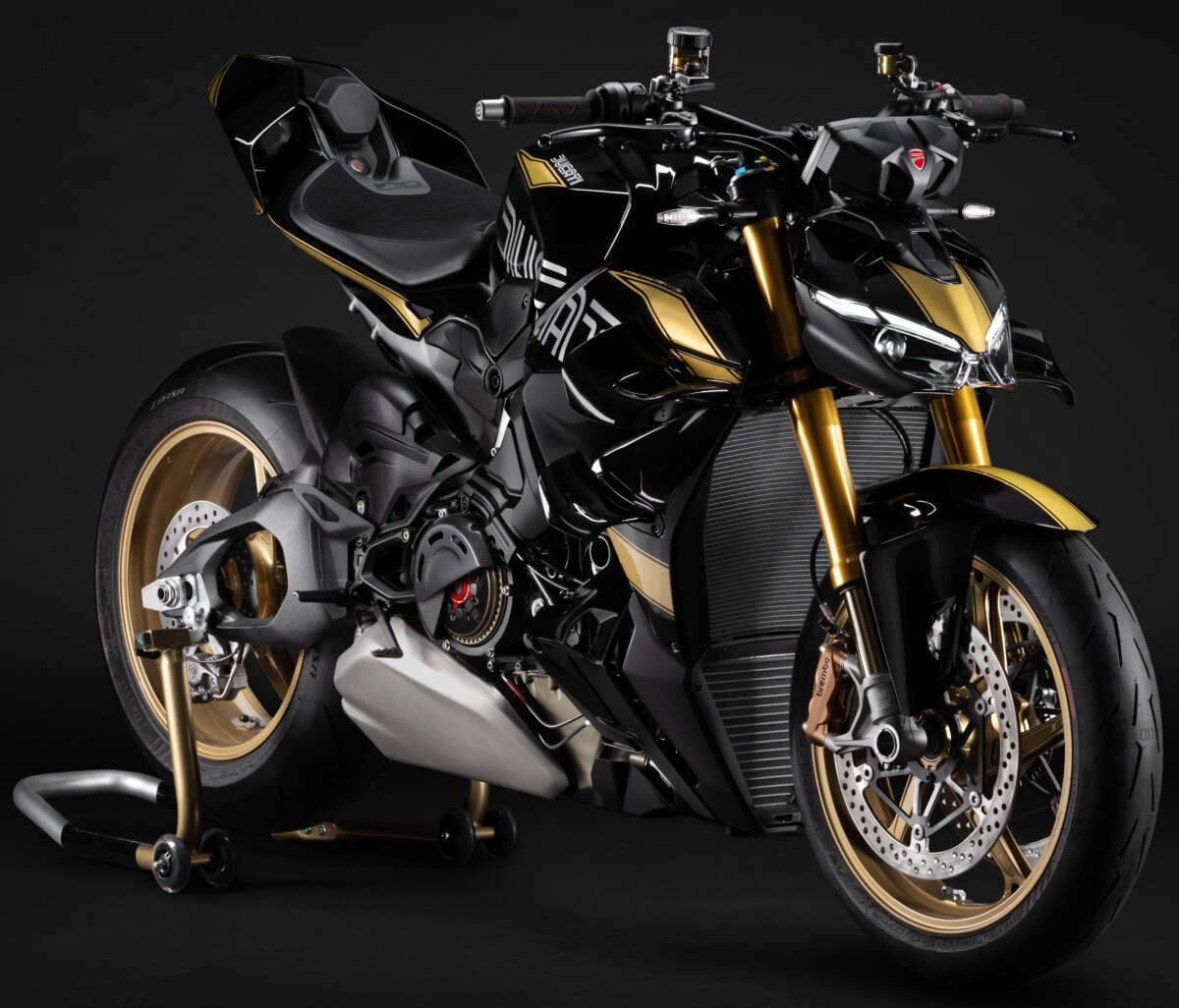
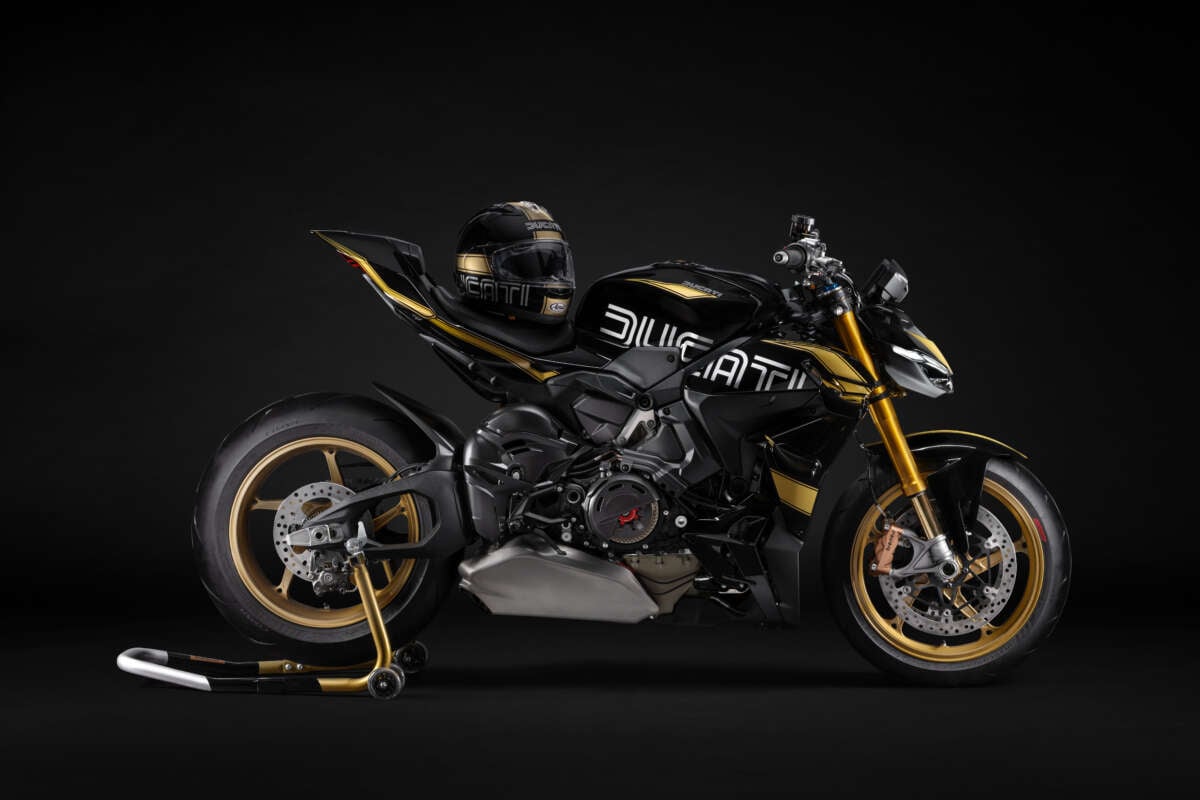
Inspired by the 1979 Ducati 900 Sport Desmo Darmah the Streetfighter V4 S 100 comes in black and gold graphics, a colour scheme popular in motorsports at the time (those of you who know, know). The Darmah, a made up name for marketing, built on Italy’s fascination at the time for exotic locations, with the Streetfighter V4S 100 carrying on theme with tiger head emblazoned on the under tail, and carried on into the matching Collezione 100 helmet and jacket.
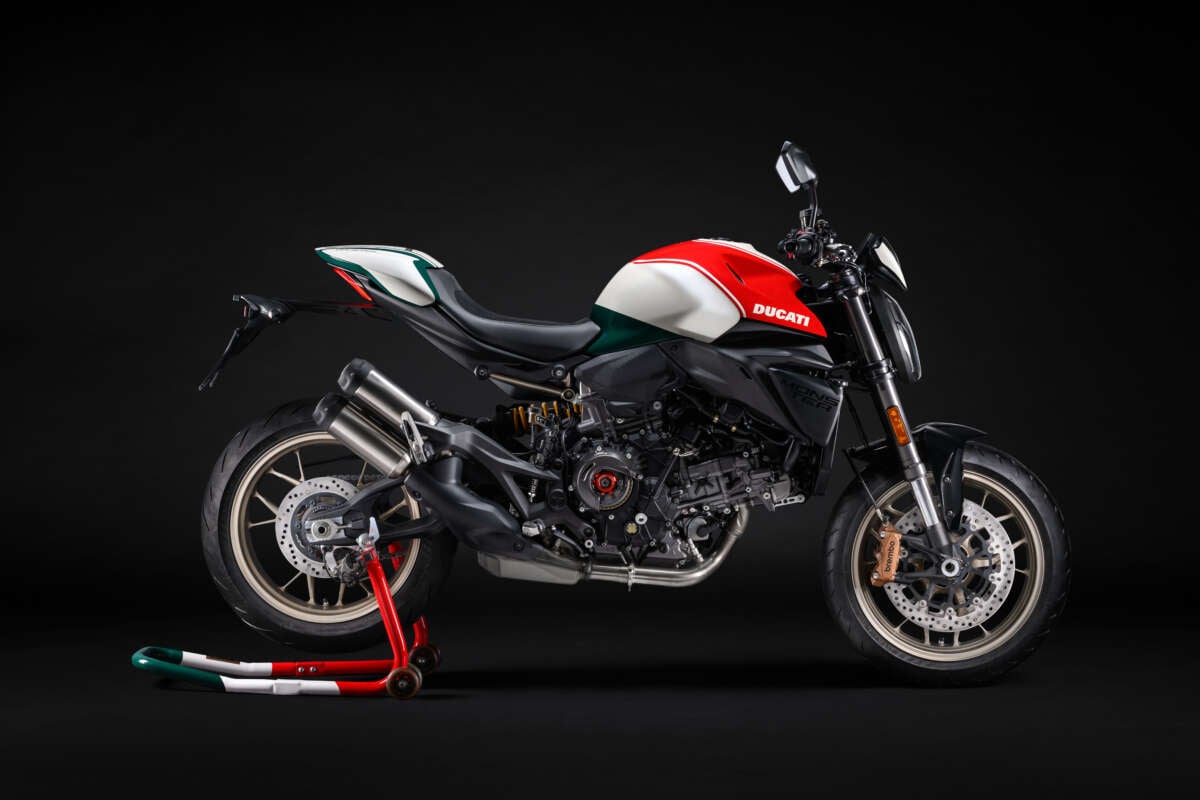
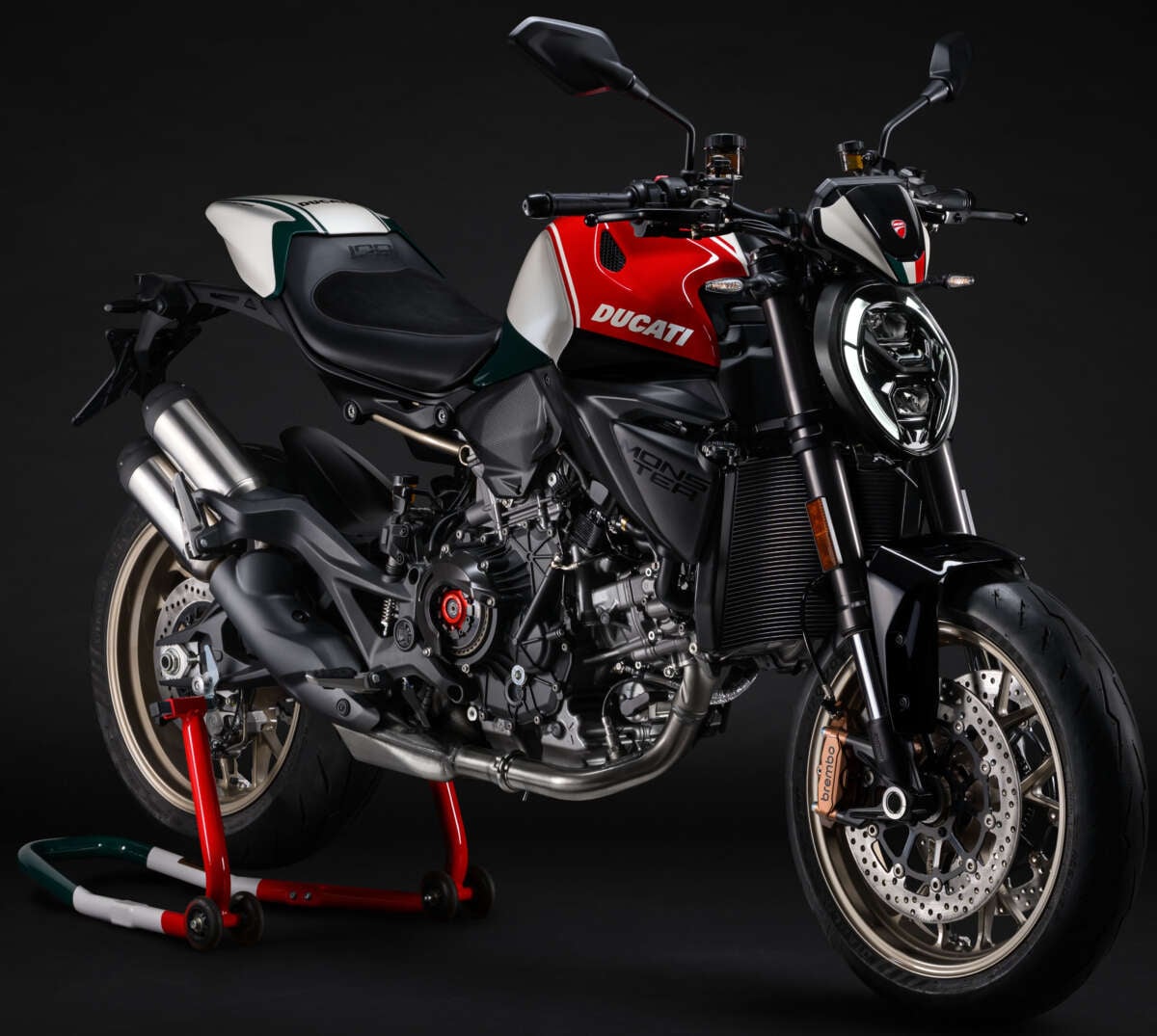
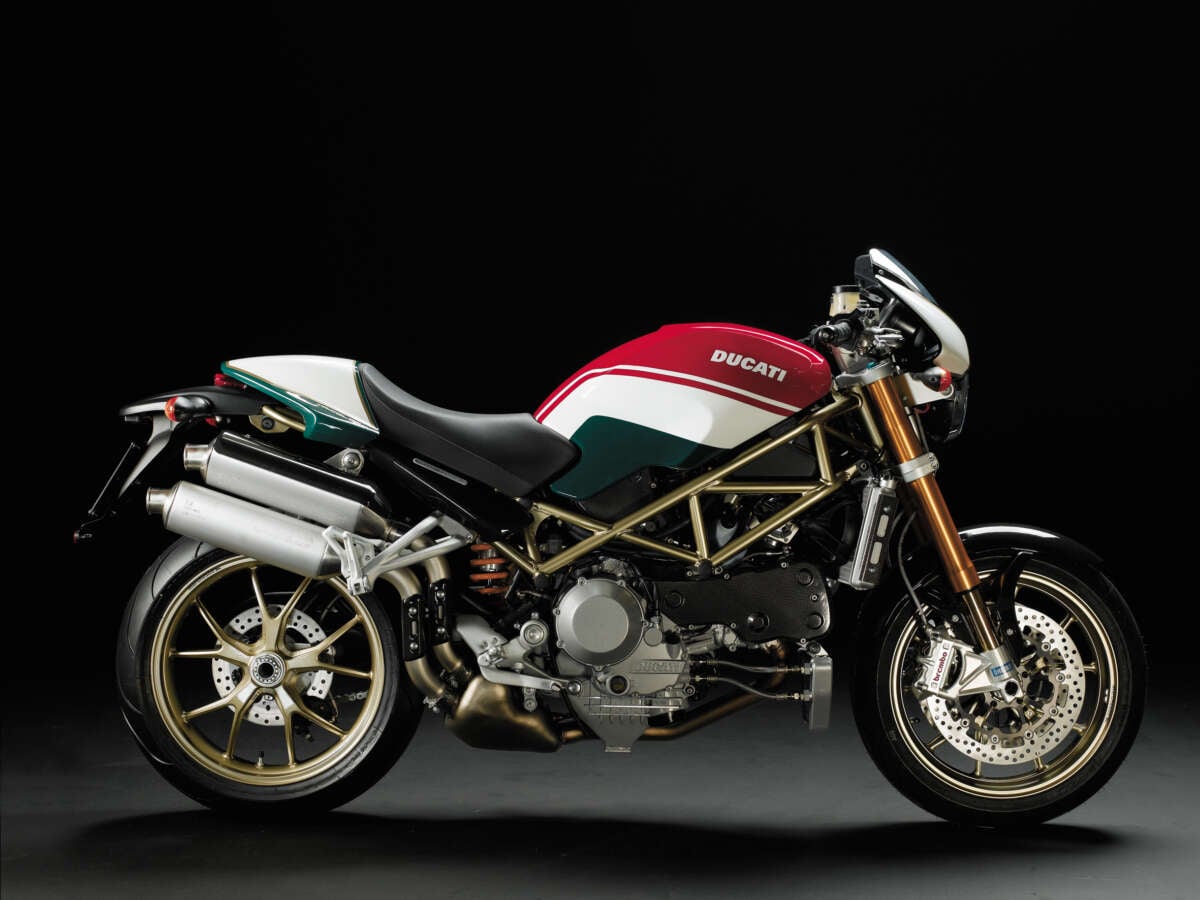
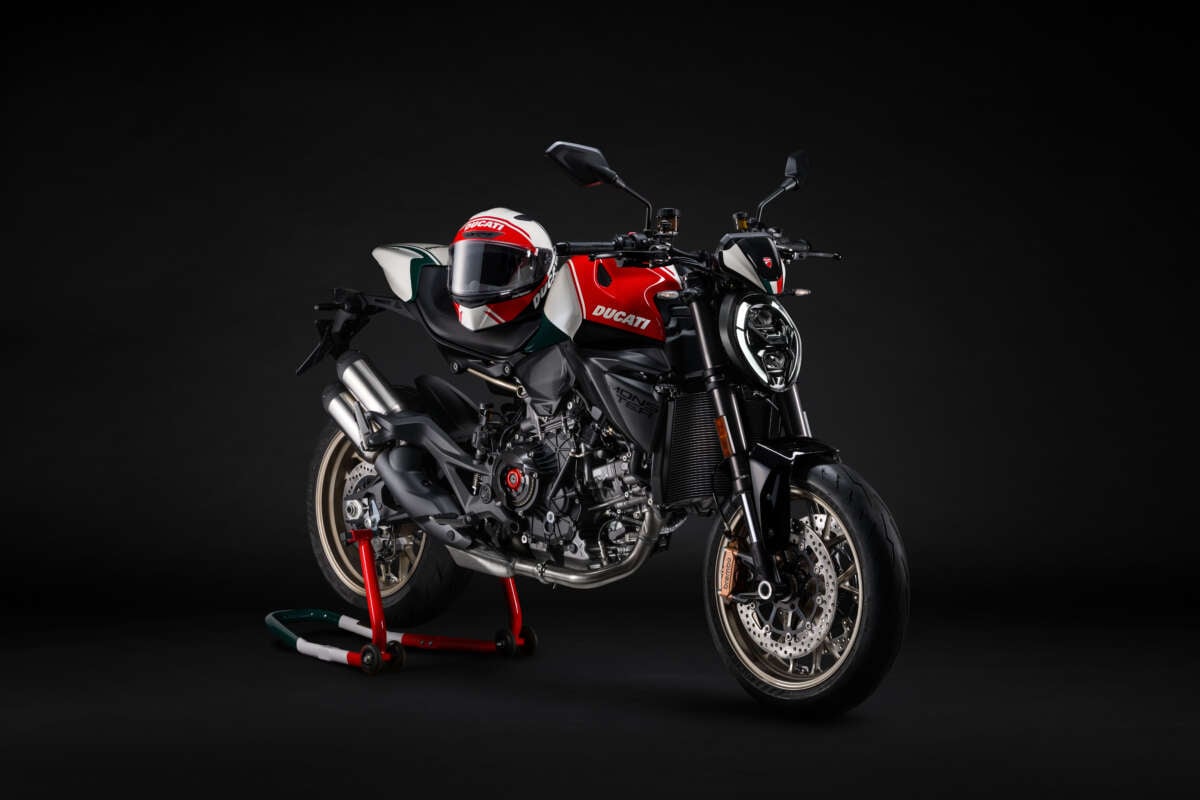
Meanwhile, the Monster 100 follows the styling of the Ducati Monster S4Rs Tricolore from 2008, the final edition of the iconic first generation Monster which began production in March 1993. The Monster 100 comes with a dry clutch, Alcantra seat with embroidered Ducati 100 logo, single-seat cover, windshield and carbon-fibre look cover.


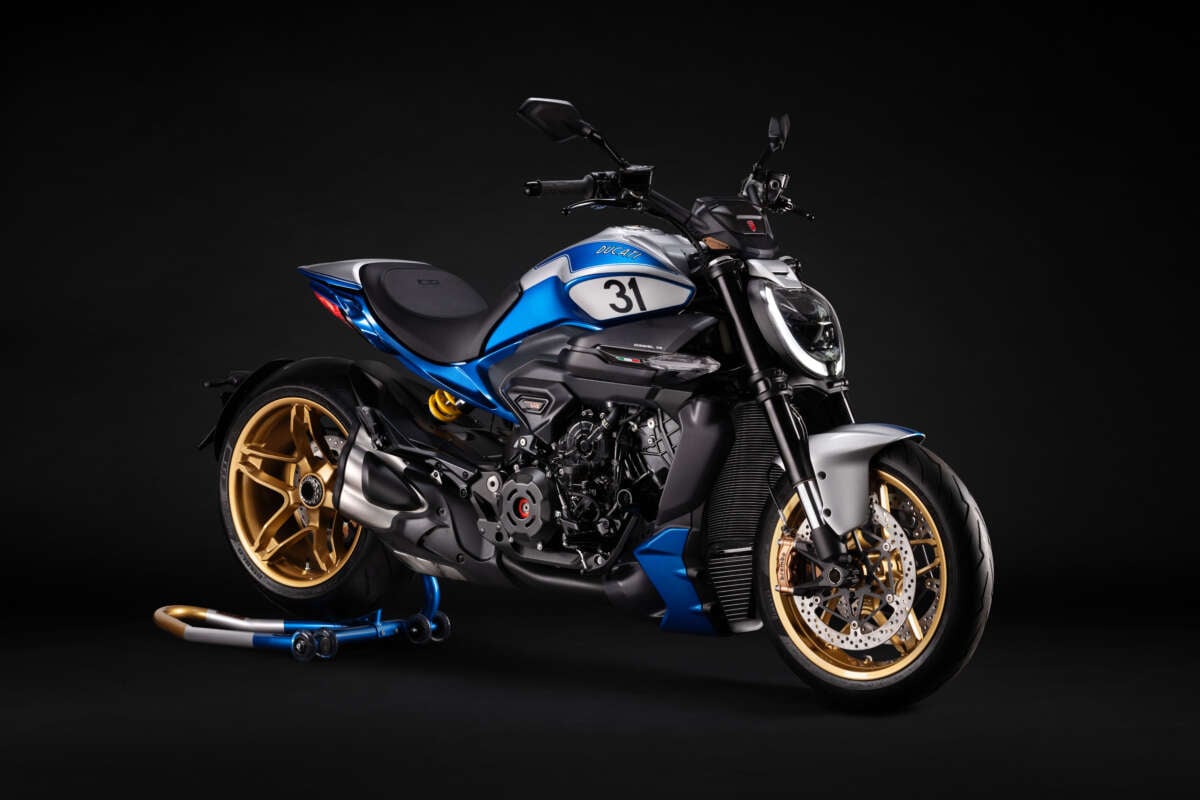
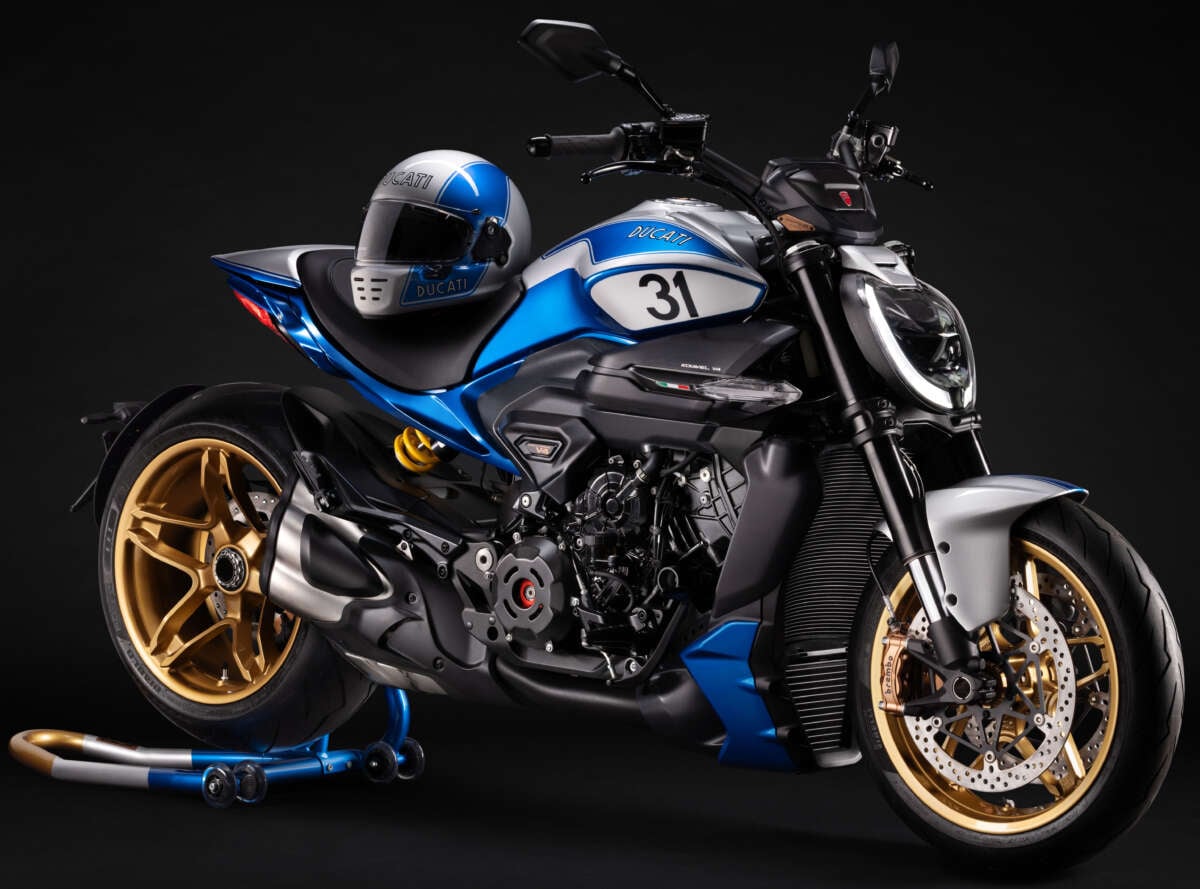
Next is the Ducati XDiavel V4 100, inspired by a special Ducati 750 Super Sport in the mid-1970s in the US, from a Daytona-winning race bike called the “California Hot Rod” raced by Cook Neilson. XDiavel V4 100 comes with a leather seat with “Ducati 100” logo, dry clutch and central section of the handlebar machined from solid with the name and serial number on a riveted plate.
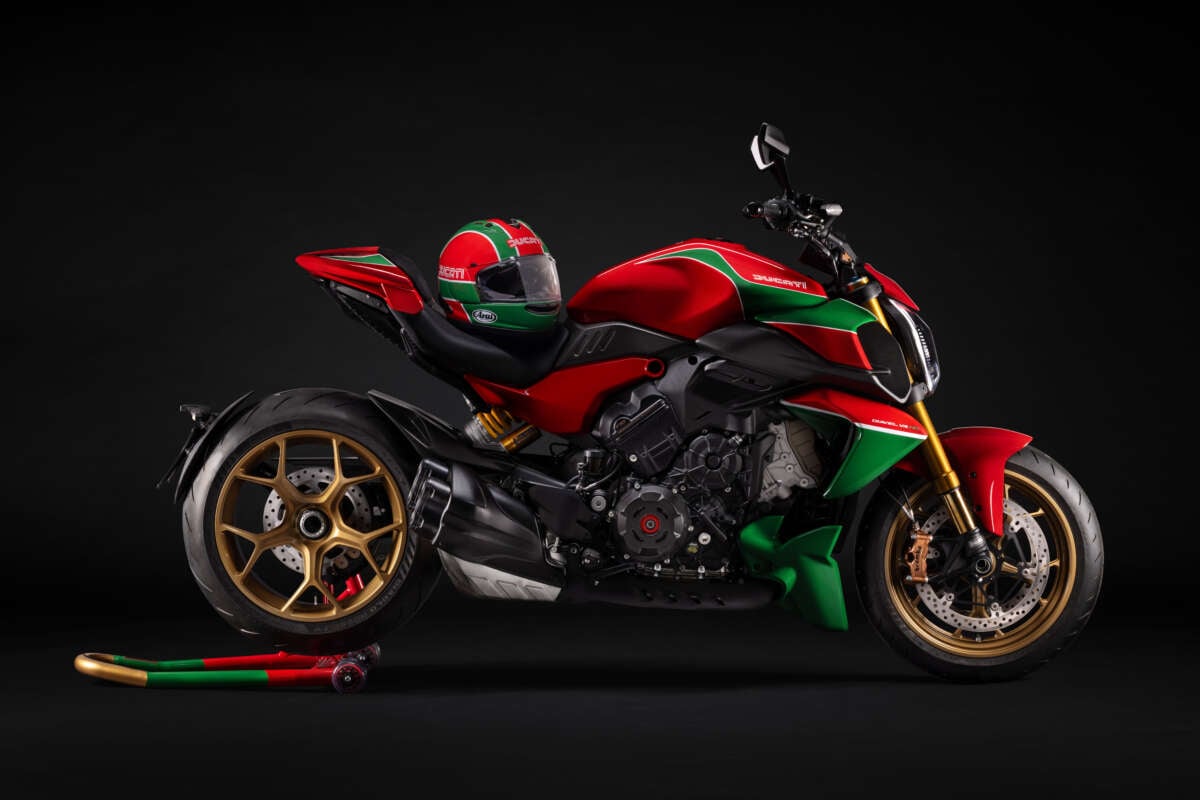
The XDiavel V4 100’s stablemate, the Diavel V4 RS 100, takes inspiration from the 1979 Ducati 900 Replica, perhaps the most iconic motorcycle in Ducati’s history. The 900 Replica came about from Mike Hailwood’s Isle of Man TT winning race bike, with the livery later applied to some of its sportiest and most exclusive motorcycles, including the Diavel V4 RS 100, with Alcantra seat with “Ducati 100” logo.


With livery taken from the 1979 Ducati 500 SL Pantah with the then new design trellis frame different from previous Ducati models, and Pantah engine that omitted the bevel gear system that drove every Ducati motorcycle engine from the 1955 Ducati Gran Sport Marianna, is the Ducati Multistrada V4S 100. Marking the first use of belt-driven Desmodromic valves in a Ducati V-twin, the Pantah also carried the engine as a stressed member in the trellis frame, while the sinwgarm pivot was located at the rear of the engine casing, while the original Pantah logo was designed by legendary Italian car designer Giorgetto Giugiaro.
A retro motorcycle like the Ducati Scrambler 100 would obviously take its cue from its stablemate of 64 years ago, the 1962 Ducati 250 Scrambler, developed exclusively for the US market. Based on the Scrambler Nightshift, the Scrambler 100 comes with Alcantara seat with an embroidered Ducati 100 logo and a Centenary Bronze finish plate with edition number.
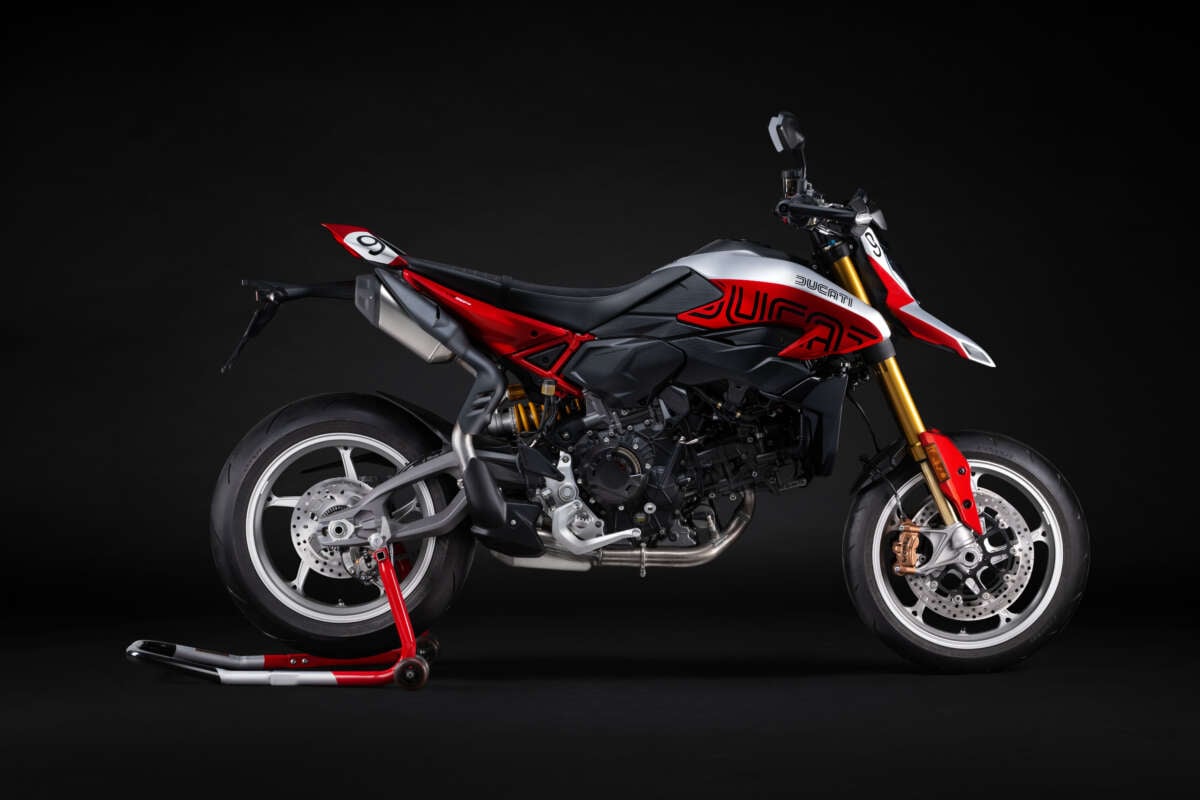
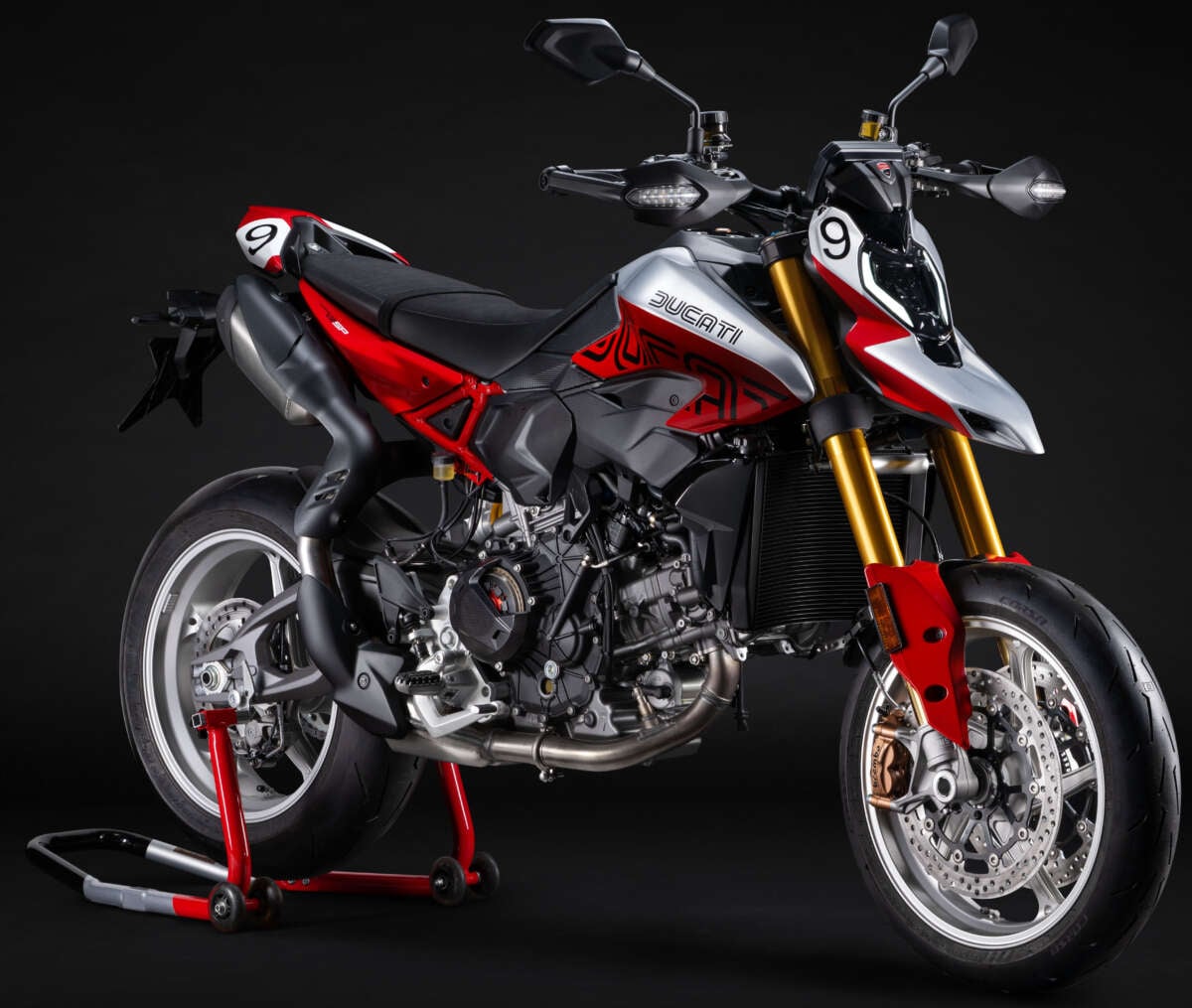
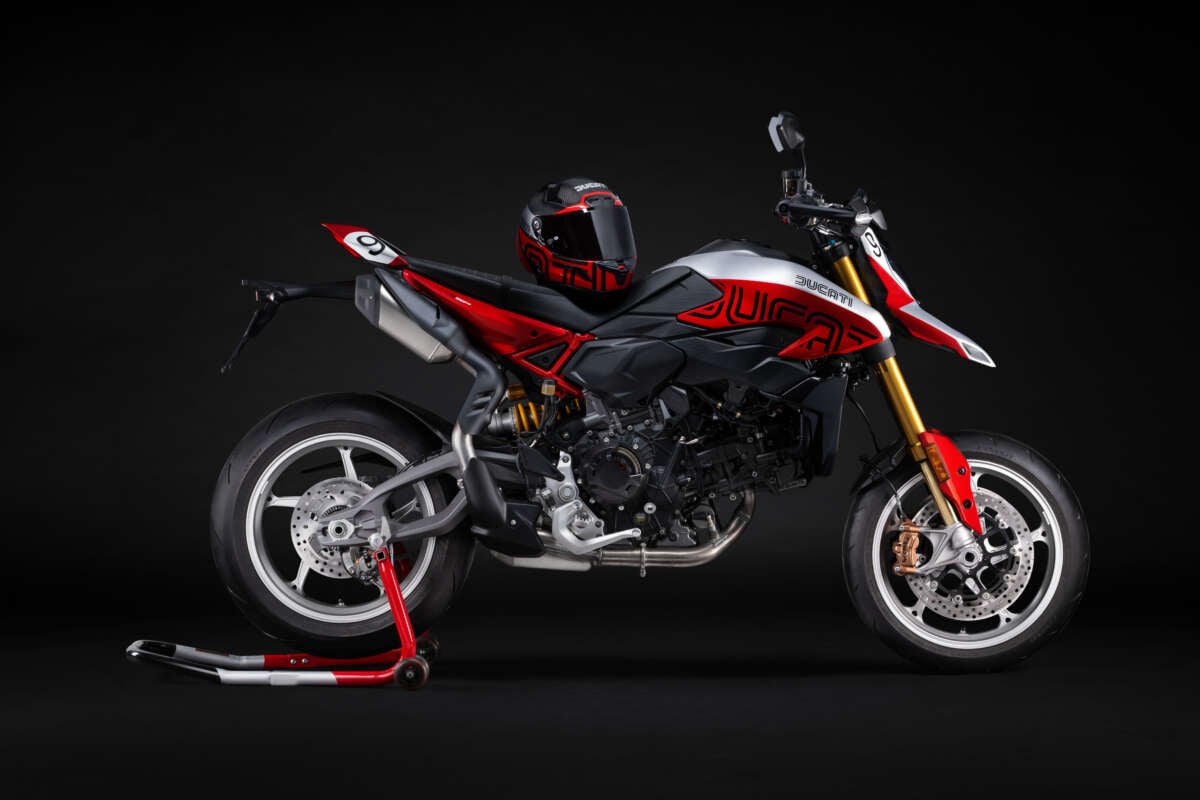
The Ducati Hypermotard V2 SP 100 draws on the 1975 Ducati 860 “24 Horas de Montjuïc” (24 Hours of Montjuic), raced by Salvador Canellas and Benjamin “Min” Grau in the colours of Giorgio Nepoti, Rino Caracchi and Luigo Rizzi, whose surnames made up the legendary NCR Scuderia, then Ducati’s unofficial factory team, with tis famous “racing coyote” logo. Based on the ‘SP’ variant of the Hypermotard V2, the Hypermotard V2 SP 100 gets Ohlins suspension and forged wheels.
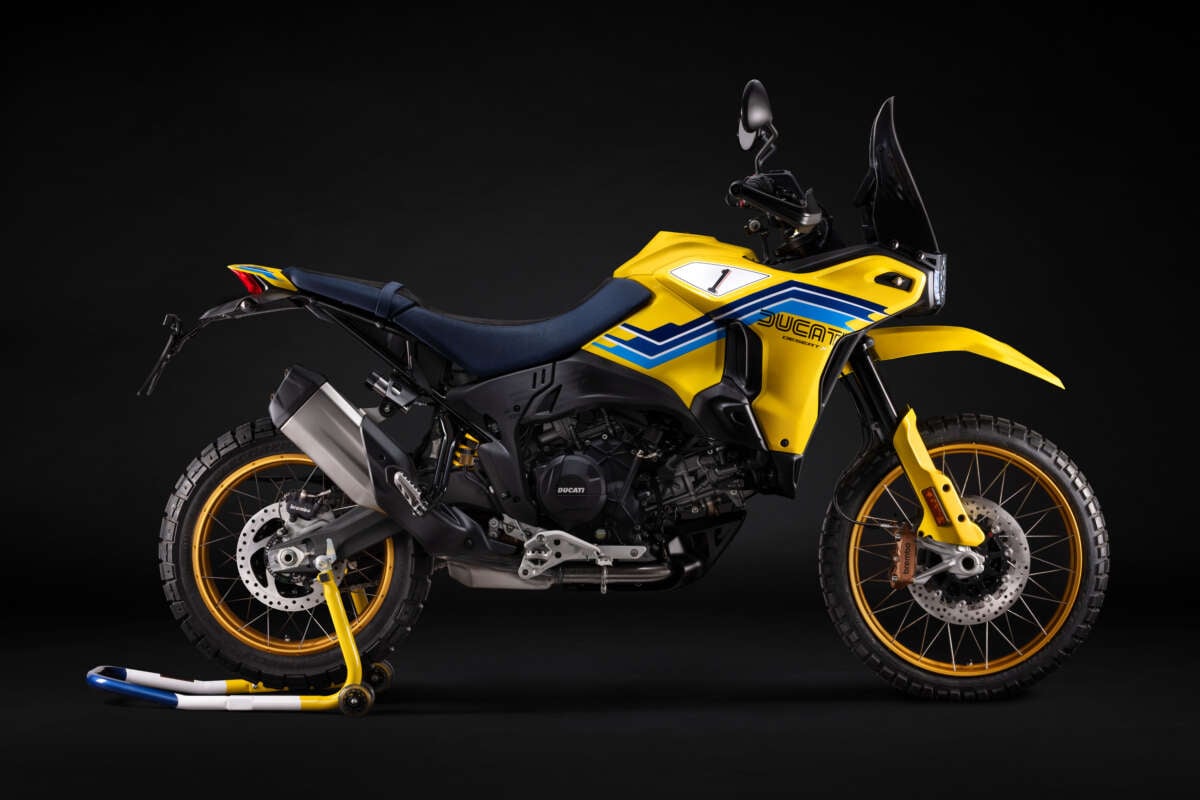
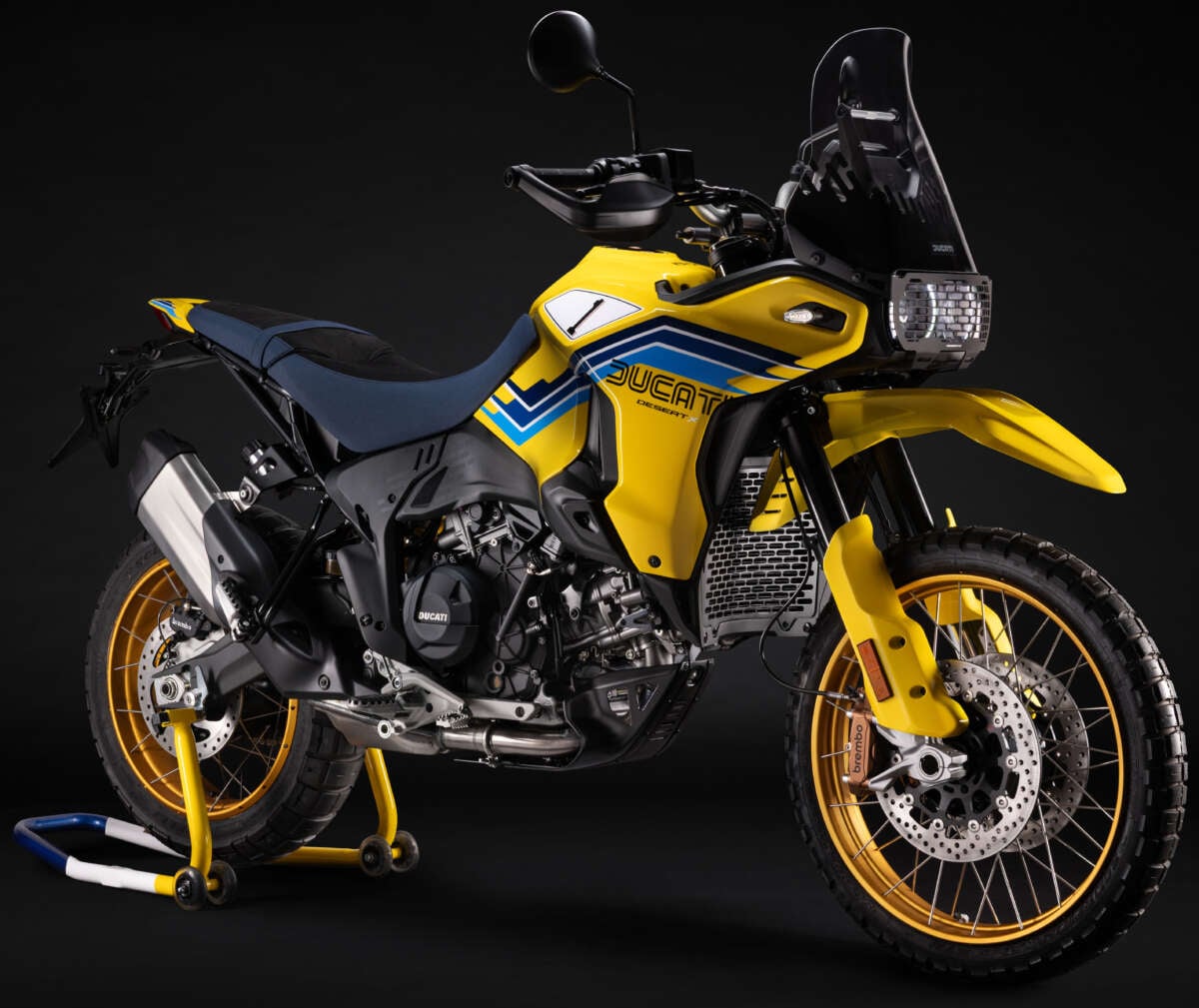
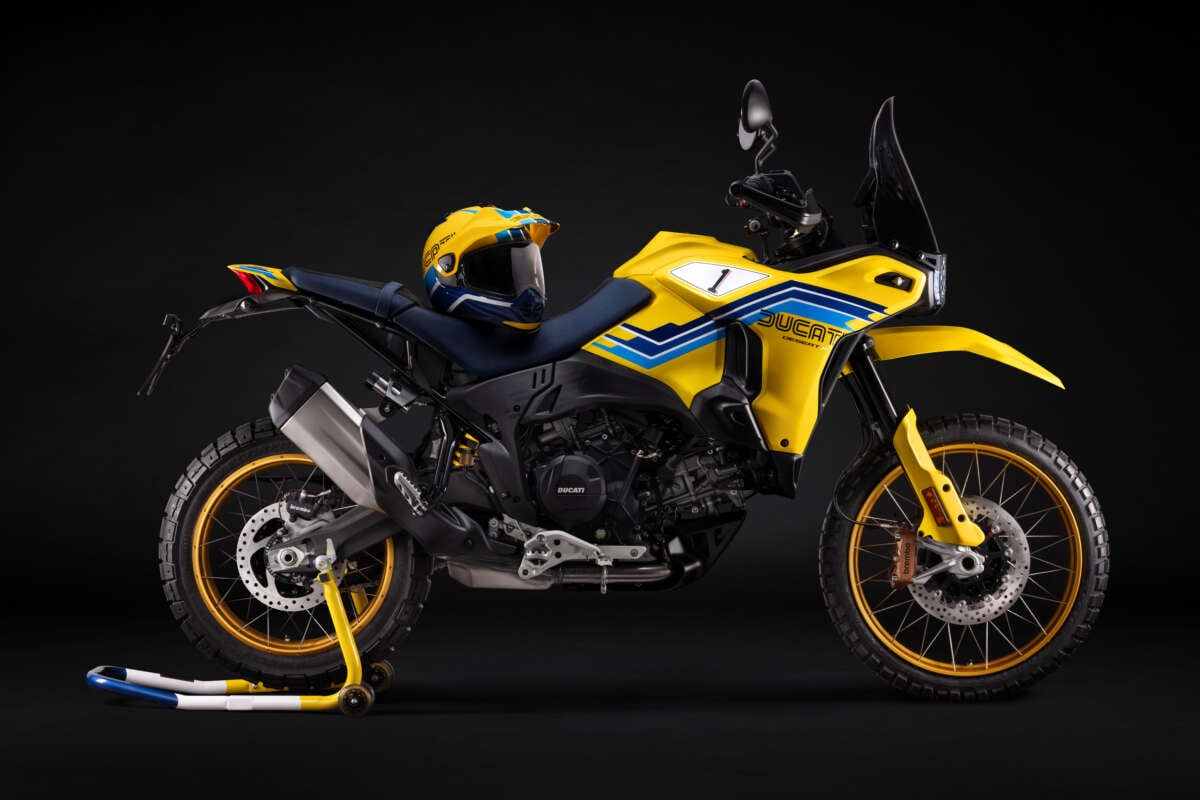
Rounding out the Collezione 100 is the Ducati DesertX 100, with livery taken from the 1981 Ducati Pantah “Ice” which was something of an oddity in Ducati’s racing history, having been designed for ice racing and based on the Pantah 500. With studded tyres and brakes removed, the Pantah “Ice” came about when EFIM controlled both Ducati and Alfa Romeo, and used Alfa Romeo’s for ice racing in the Alps, and the bikes were used to put on intermission demonstration races for the spectators in between the main event.