
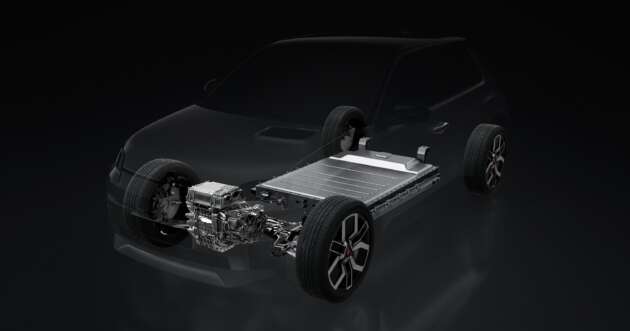
Battery company CATL has announced at the London Climate Action Week that it has teamed up with BMW, Renault, Volvo, and Xiaomi as well as Google for the establishing of the Global Energy Circular Economy Alliance, which aims to develop common standards for battery designs which are easier to reuse and recycle, reported Car News China.
The Global Energy Circular Economy Alliance aims to develop common assessment standards for factors such as battery usage history, state of health, degradation and recycling responsibilities, with the goal of providing automakers, logistics companies, investors and policymakers with a consistent basis from which to evaluate the value of batteries and their operational risks, stated CATL.
The targeted result is the Battery Circular Design Guide that is scheduled to be published next year, and this will set out standardised criteria for aspects including diagnostic cell testing, battery pack disassembly and battery cell refurbishment. For this, the partnering firms aim to define technical parameters which support structural assessments of battery-electric passenger cars and commercial vehicles, it said.
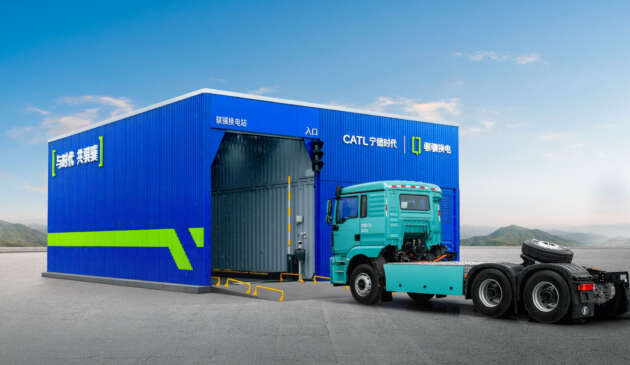
At the London Climate Action Week, CATL also announced that it has entered into a joint venture with UK energy company Octopus Energy for the construction of a battery-swapping network for commercial vehicles in Europe. This project will draw from technology used in CATL subsidiary, Qiji Energy’s 1,250 km battery-swapping route in China, Car News China reported.
Qiji Energy focuses on heavy-duty truck battery swapping, and claimed that its battery swap stations are compatible with more than 95% of mainstream heavy-duty BEV trucks, enabling a range models from different truck brands to complete battery swaps in around five minutes.
According to CATL, the battery-swapping method can save around 30,000 to 60,000 yuan (RM17,972 to RM35,944) per truck in annual operating costs, the publication reported. This is based on a conventional heavy-duty truck that travels 200,000 km a year at a fuel consumption rate of 33 litres per 100 km, and 174 tonnes in carbon emissions per truck, it wrote.
Looking to sell your car? Sell it with Carro.



why was perodua not invited? they’re using catl battery too with the circular system
This is a good direction in theory. How effectively will they get the network setup that reliably recycles everything, remains to be seen.
US of A will definitely ban all these brand soon accordingly to legislation set by previous Biden administration KEK
Climatic action scams again. This will make all these cars worth nothing after 7 years.