

Rising insurance and takaful costs have become a new worry for e-hailing drivers, who say that the increasing price of premiums are putting further pressure on already thin earnings. While daily e-hailing insurance premiums presently vary by insurers and the type of coverage, the sharp increase in prices over the last four years has been undeniable for everyone in and around the industry, as the New Straits Times reports.
According to observers, the industry’s benchmark daily premium has risen significantly to around RM5.50 per day in 2025 from about RM3.26 per day in 2022, with some insurers reportedly now charging between RM7 and RM7.50 per day. Opinion is divided on the increased costs, with some asking whether the increases are justified, while some say it is necessary.
The Malaysian Takaful Association (MTA) said it is aware of concerns raised by e-hailing drivers over the affordability of insurance and takaful protection. According to MTA CEO Mohd Radzuan Mohamed, the issue had been raised through industry engagements facilitated by Bank Negara Malaysia (BNM), and centred over rising protection costs and the impact it had on drivers’ earnings and continued participation in the sector.
“These concerns have been recognised as part of the broader discussions within the e-hailing insurance/takaful ecosystem industry working group,” he told the Business Times section of the publication. He added that it was still premature to speculate on whether insurance and takaful costs for e-hailing drivers would continue rising, stabilise or moderate over the next 12 to 24 months.
He said that pricing trends would depend on several factors, including claims experience, risk patterns, market conditions and the outcome of ongoing industry initiatives, but added that the industry is actively exploring measures to improve affordability.
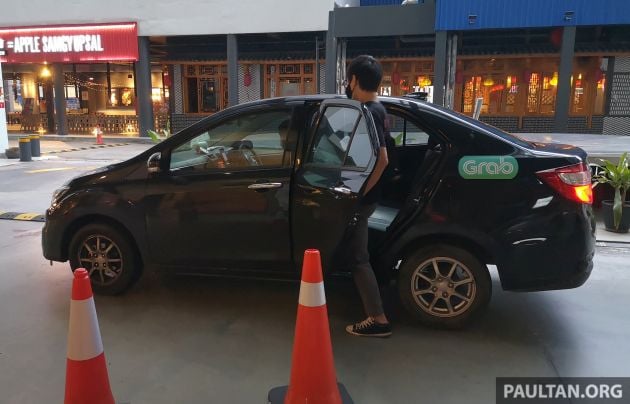
“These include the development of more flexible and usage-based coverage models, improved driver status verification mechanisms to support more accurate risk assessment and interim measures such as optional excess structures, which may provide drivers with lower contribution options. The shared objective among stakeholders is to develop a framework that is affordable, accessible and sustainable, while ensuring that drivers continue to receive appropriate protection,” he said.
Meanwhile, the general insurance association of Malaysia (PIAM) said that commercial e-hailing operations generally carry a higher risk profile due to extended road exposure and higher mileage, resulting in more frequent and severe claims. It added that rising costs associated with vehicle repairs, property damage and third-party bodily injury compensation have also contributed to pressure on insurers.
“This elevated risk profile, coupled with the rising costs of property damage, vehicle repairs, and compensation for third party death and bodily injuries, has necessitated periodic premium adjustments by insurers to ensure the long-term sustainability of this coverage,” it said.
Working closely with BNM, government agencies and industry stakeholders, it said the insurance industry would ensure premium structures remain transparent, sustainable and supported by data, adding that it was also exploring long-term measures such as telematics adoption, enhanced industry data-sharing and initiatives to encourage safer driving behaviour.

Conversely, Gabungan eHailing Malaysia said driver concerns extend beyond the increase in premiums itself, and include questions over whether such increases are proportionate and supported by sufficient industry data.
While insurers have consistently cited higher accident frequencies, claims costs and loss ratios as reasons for premium adjustments, driver representatives have yet to see sufficient industry-wide data to independently assess those claims, GEM chief activist Jose Rizal said.
“GEM believes the immediate priority is not necessarily price intervention, but greater transparency and regulatory scrutiny of the factors driving these increases. Similar explanations have also been conveyed during our engagements with BNM,” he said. He added that transparency would help ensure greater trust among drivers who are required to purchase insurance coverage in order to operate on e-hailing platforms.
“As representatives of platform workers, we have yet to see sufficient industry-wide data that would allow stakeholders to independently assess the validity and scale of these claims. If insurers, through PIAM, can provide comprehensive and aggregated data on accident rates, claims frequencies, claims severity, underwriting performance, and loss ratios specific to the e-hailing sector, then discussions can be conducted based on evidence rather than assumptions,” he explained.
Looking to sell your car? Sell it with Carro.



b40 melayu harus bersyukur lah
PROTECT B40 AT ALL COST!!!
motor insurance is a scam
many smart T5 already realized its a scam thats why they dont renew roadtax for their porsche and lambo.
What is the statistic of ehailing car accidents?
ehailing insurance do not cover repairs, why become issue?
How much insurance claim in ehailing industry?