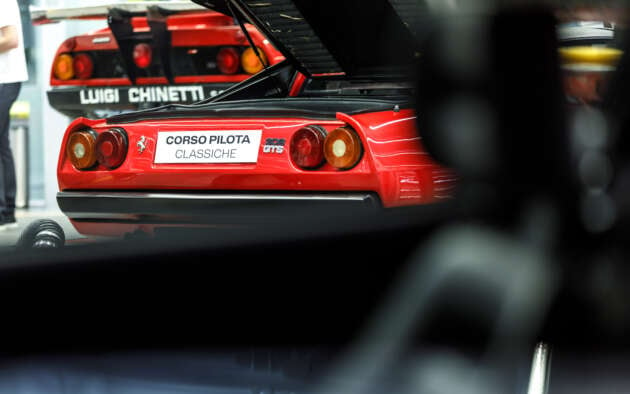
For some, nothing brings the same thrill as climbing into a time capsule from their childhood. If classic Ferrari cars are what gets you buzzing, the Corso Pilota Classiche programme is pretty much motoring nirvana for any tifosi.
The Corso Pilota Classiche programme is held at two locations yearly, with one being at Ferrari’s private racetrack in Fiorano, Italy, while the other is on a frozen lake near the town of Saint Moritz, Switzerland in the winter. If you’re privileged enough to be a Ferrari customer, you can contact your dealer to book a slot at a not-insubstantial price. This writer is not affluent enough to do so, but life sometimes blesses us with rare opportunities like being invited to attend the programme in Fiorano.
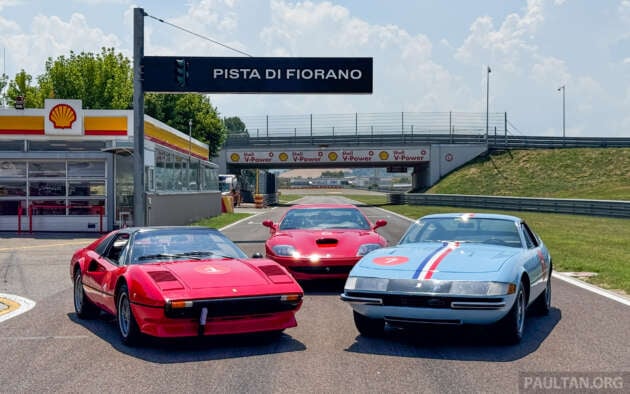
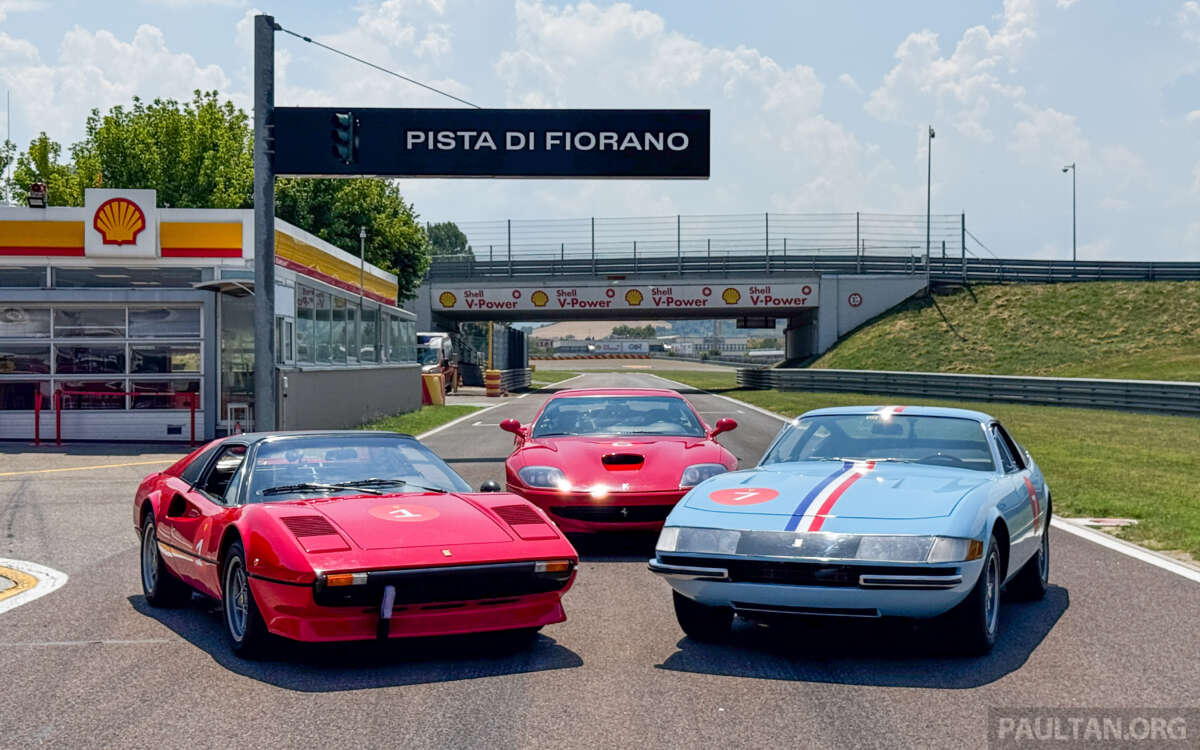
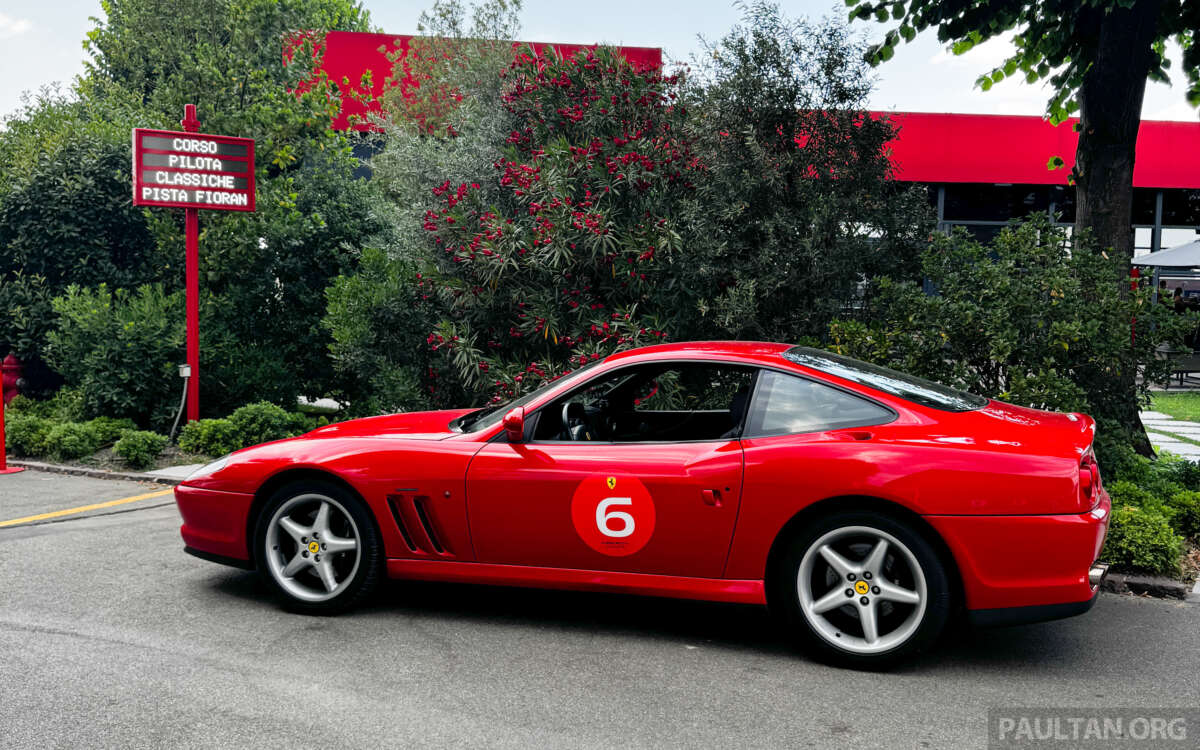
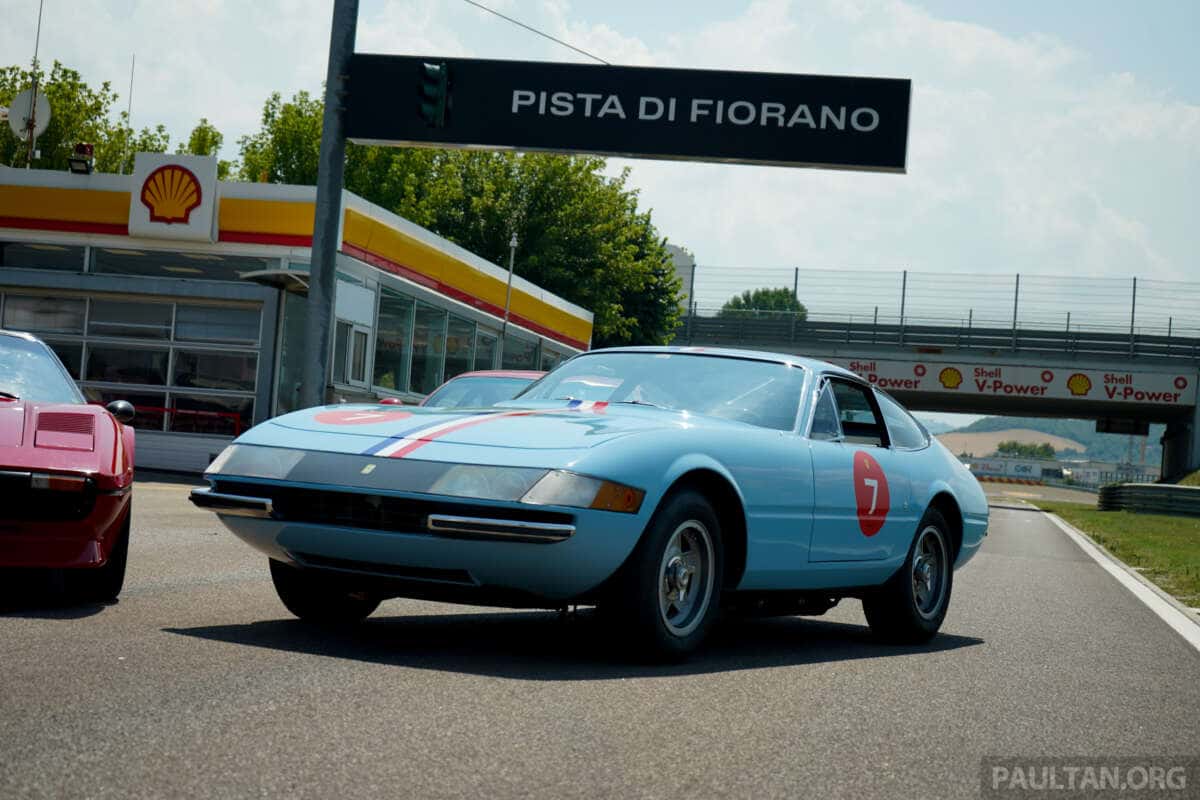
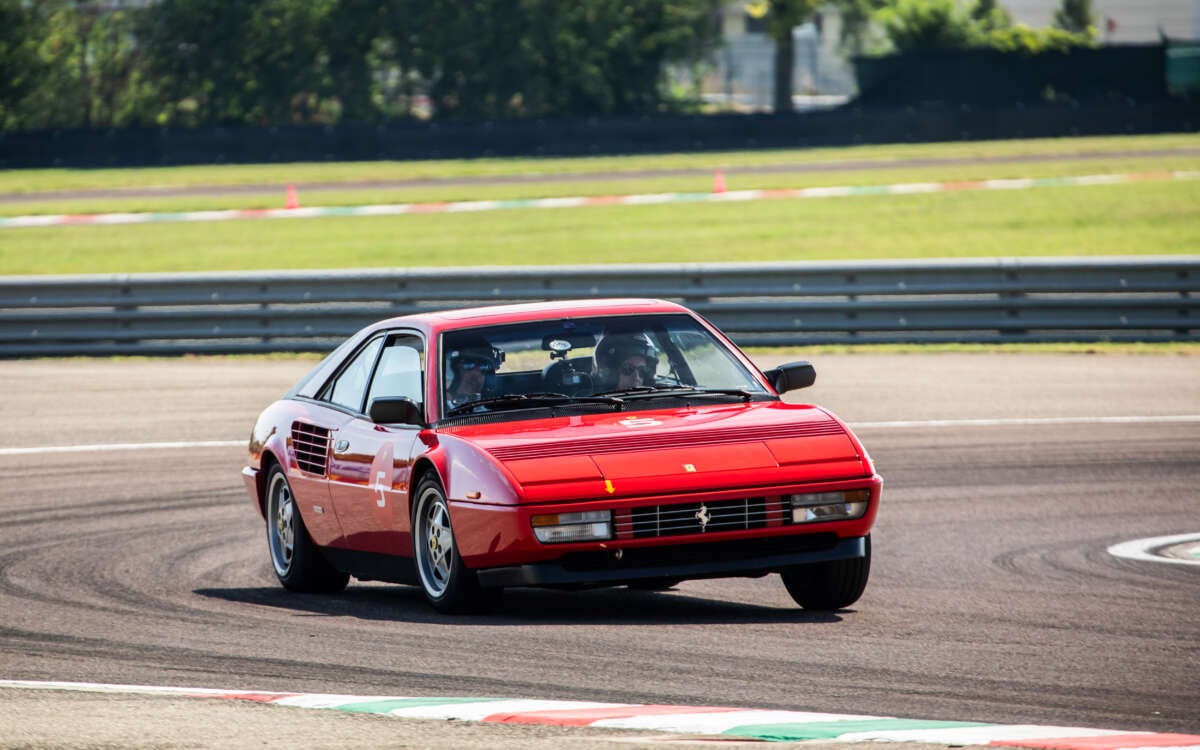
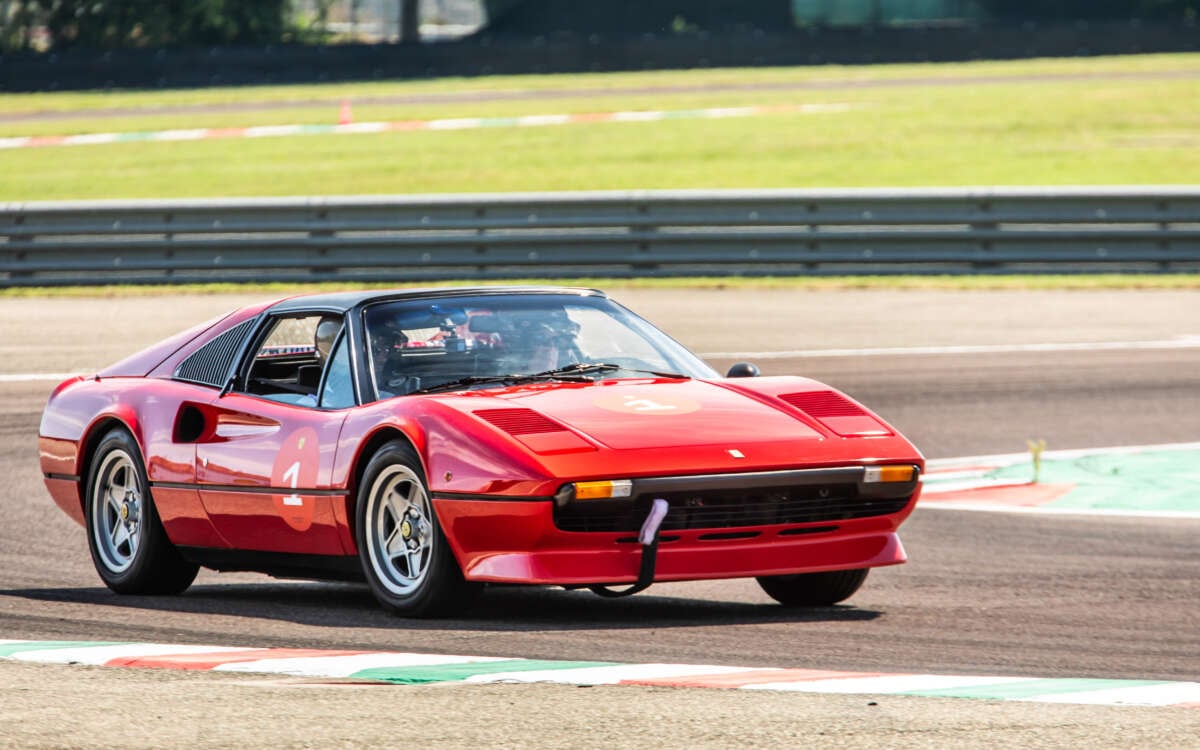
The baking heat of an Italian summer did little to dampen the excitement because of the cars that greeted us. Parked in front of the control room where the brand’s Formula One team does their testing are the Ferrari Daytona, 308 GTB and GTS, Mondial 3.2 and 550 Maranello.
While not necessarily the rarest of the breed, these cars represent decades of performance and innovation and knowing that we’ll experience the company’s history first-hand by driving them is exhilarating. Every car had a manual transmission and some lacked any form of driver assistance, which is a breath of fresh air from modern cars that can be desensitising.
As with most driving programmes, a team of instructors talked about the dos and don’ts and described the layout of the track before providing some details about the cars that we’d be driving that day.
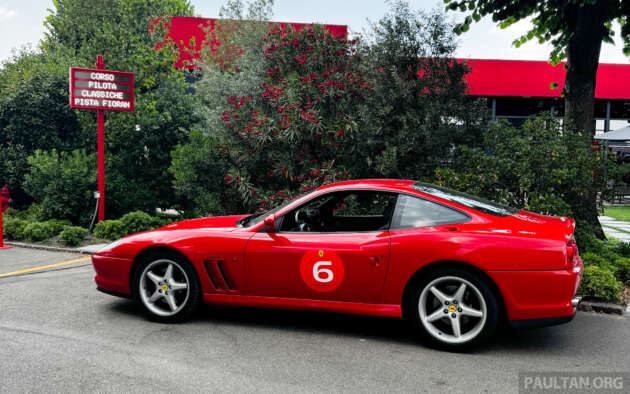
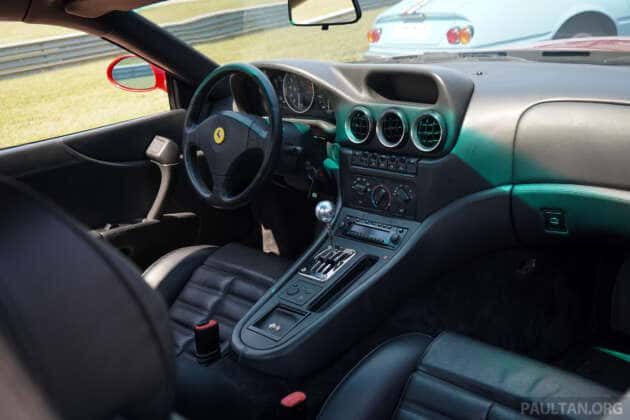
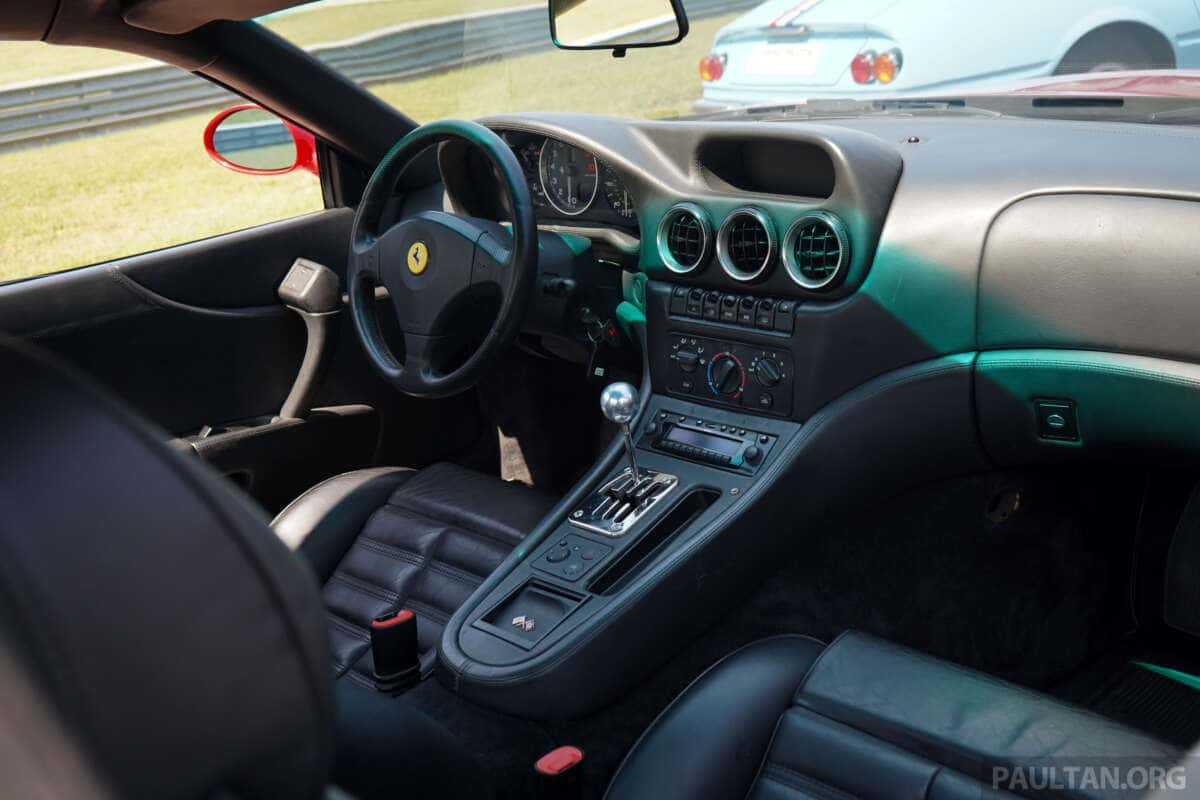
Theory over, the practical part of the experience began with me first slotting into the snug, leather-wrapped bucket seats of the 550 Maranello. This is one of the Ferraris that I was fond off as a child of the 90s, and with ABS and traction control, the 550 appeared to be the most inviting as the most modern car of the bunch.
That assumption proved right because while the clutch was heavy, it is forgiving. Add in power steering and a relatable seating position and it instills confidence to push harder. Not that going as fast as possible is the goal because the whole purpose of the programme is to sample classics as they were driven back in the day, not trying to set the best time of the day.
With that perspective, there’s better enjoyment of the aural pleasure served up by the 5.5 litre naturally-aspirated V12, the engagement of the gated shifter as well as the controlled weight transfer enabled by the 550’s standout variable dampers.
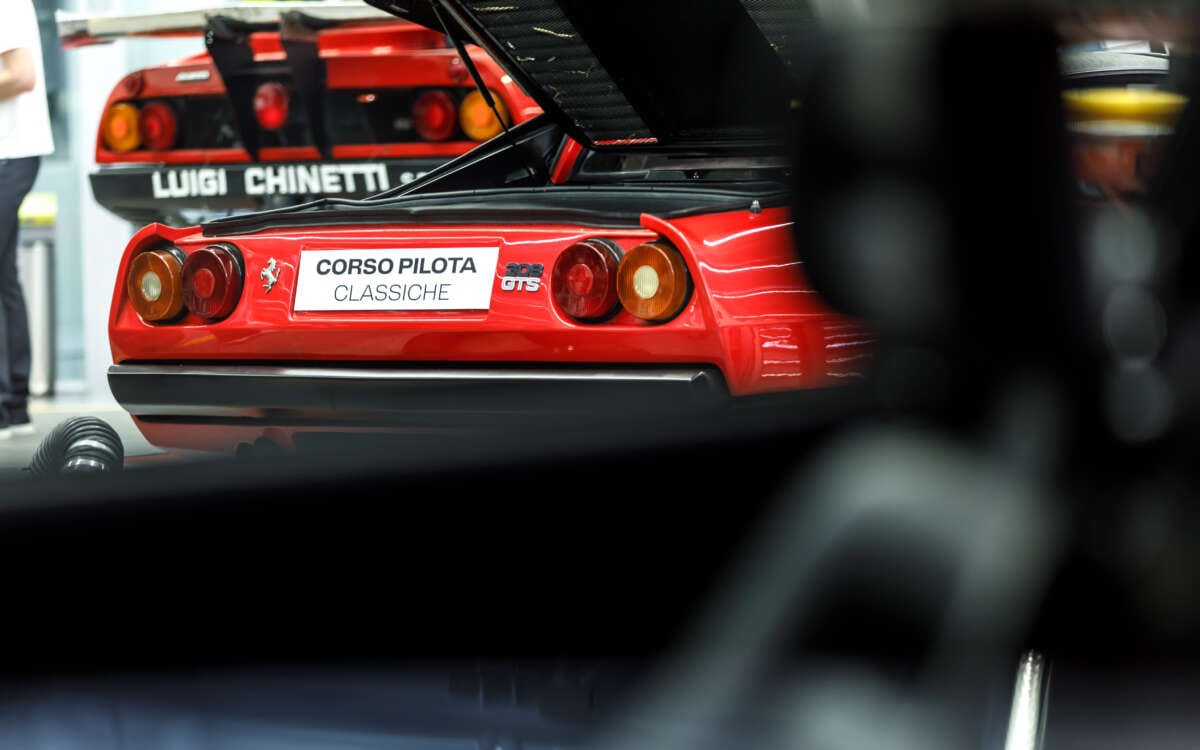
Beaming with confidence from the 550, next up was the 308 GTB. While the 550 felt relatively modern, 308 is of a different era where it seemed you needed to have the hairy chest of Tom Selleck and his moustache or that of Claudio Ori to look like you belong behind the wheel.
The overly reclined seats and offset pedals also required some flexibility and core engagement, but the 308 is easy to get to grips with. Its 2.9 litre NA V8 was good for a top speed of 250 km/h and 0-100 km/h time of 6.2 seconds, which made for a quick car for its time.
Body roll is noticeably more in the 308, with the feeling amplified when the instructors placed us on a wet skid plate to try out hand at sliding the thing. Not that any of that matters as much because it just feels cool to drive such an iconic wedge shape that became the structural blueprint for every mid-engine V8 Ferrari that followed over the next two decades. If you managed to maintain your hair as well as 81-year-old Selleck today, consider the GTS convertible.
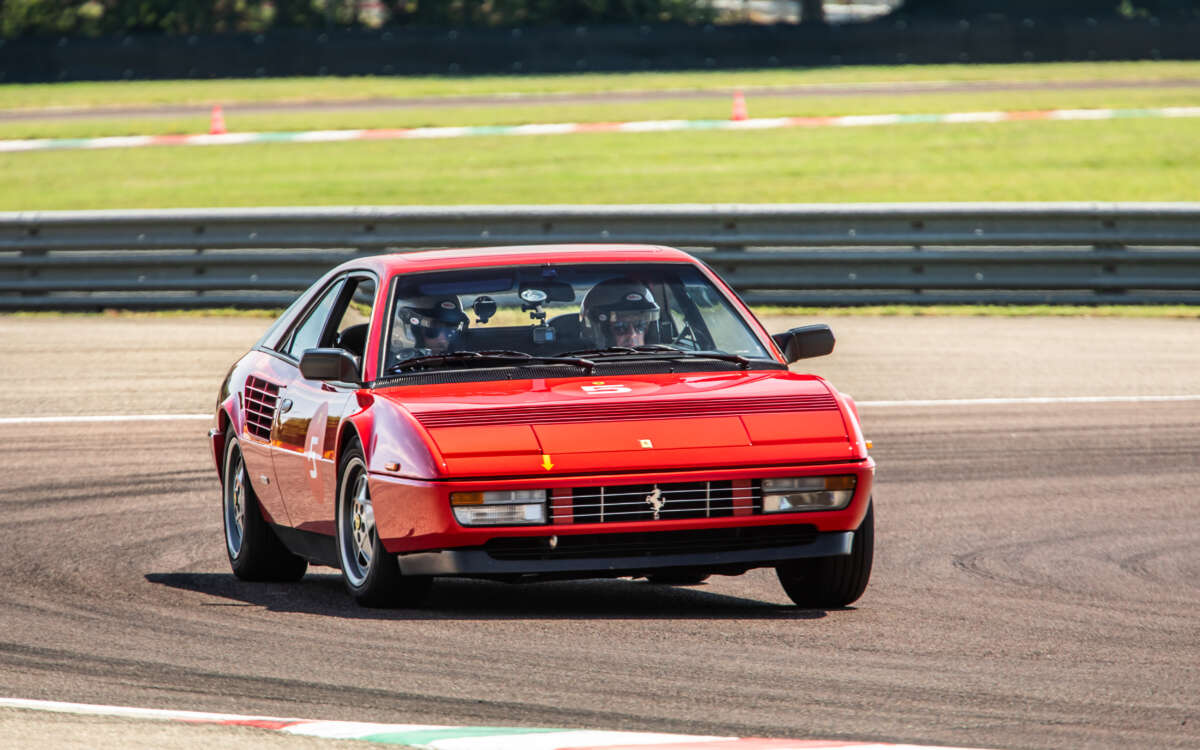
With seats that didn’t make you feel like you’re lying down but still with offset pedals, the Mondial 3.2 is the bridge between the 308 and 550 and was easily the most approachable car of the bunch. While the Mondial’s 3.2 litre NA V8 made more power than the 308’s engine, the extra weight of its 2+2 layout meant performance wasn’t improved by a whole lot.


Still, it is an easy car to drive despite its age, with the instructors also pointing out that its air-conditioning was the most capable to deal with the heat. The Mondial often gets an unfair reputation but it balanced ergonomics, visibility and practicality, which are areas where performance cars of the time were sometimes unable to.
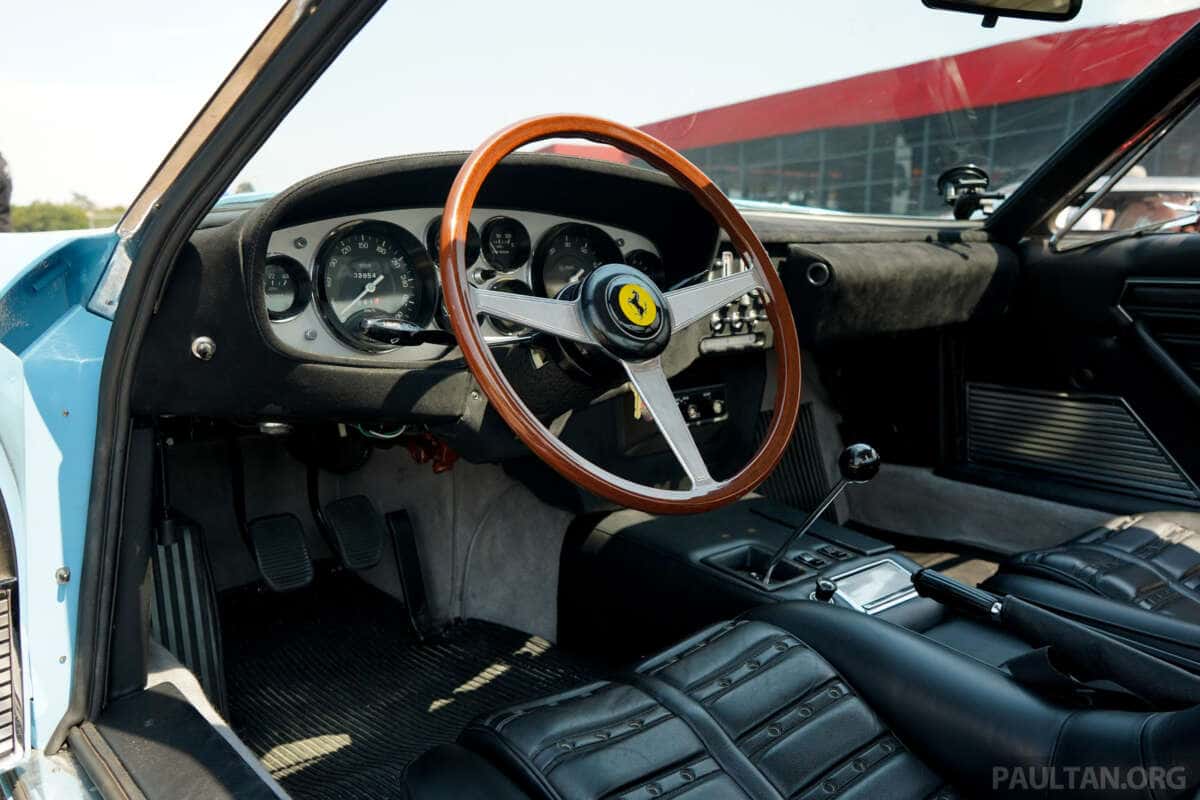
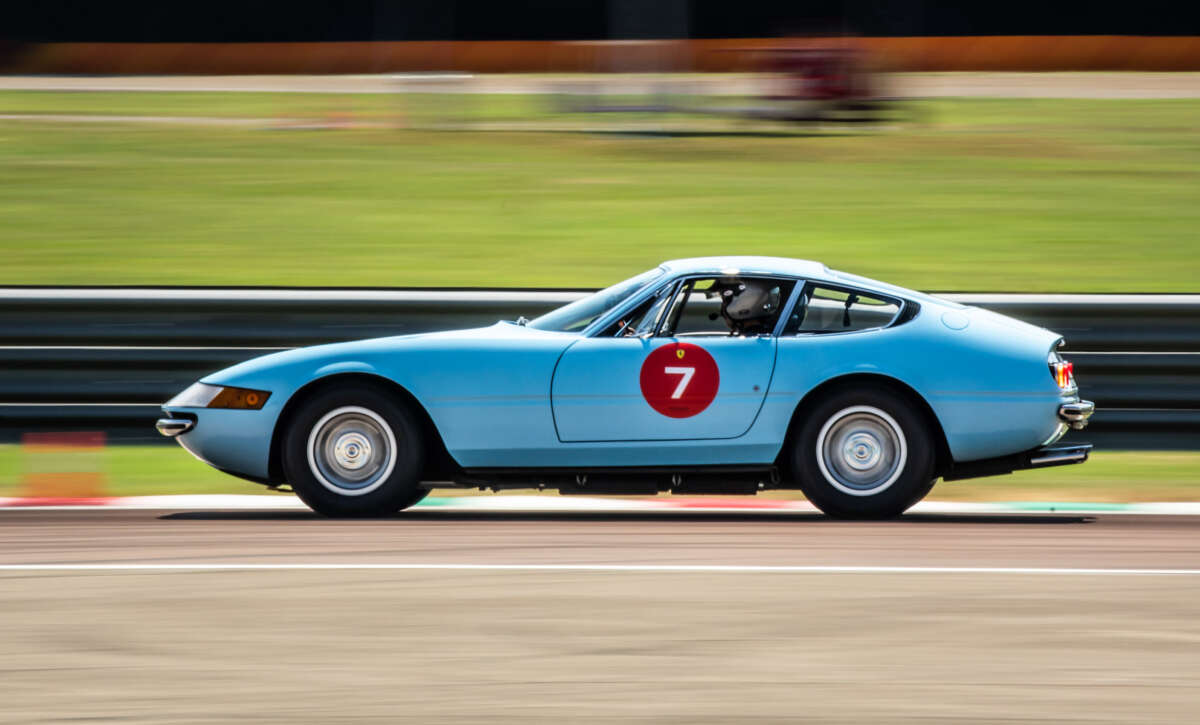
Going back further back in time, we arrive at the Daytona, a Ferrari that is revered for its sharp, aggressive, muscular wedge silhouette coupled with record-breaking performance and racing heritage.
With its front-mounted 4.4 litre Colombo V12, the Daytona could hit a top speed of 280 km/h. This made it the world’s fastest production road car in the world at the time, which saw Ferrari take the crown back from the Lamborghini Miura which was mid-engined.
Officially known as the 365 GTB/4, the Daytona moniker came about after Ferrari upset Ford on its own turf by finishing 1-2-3 at the 1967 24 Hours of Daytona race with its racing prototypes. When the 365 GTB/4 made its debut at the Paris Motor Show a year later, the media dubbed it the ‘Daytona’ to honour that legendary sweep and the name stuck.


Being the oldest of bunch, there no form of assistance with the Daytona and the five-speed manual gearbox cannot be rushed despite having a synchromesh. Everything experienced with the previous cars needed to altered or learned new in the Daytona, with double clutching being one of them.
When hurtling towards a corner at speed, braking while being deliberate, heavy and precise with the gearbox proved to be a lesson in humility. With the Colombo V12’s six Weber carburetors wide open and the summer heat building up inside the cabin, it was quite the workout. My instructor’s advice was simple: find the perfect rhythm and don’t rush it. Just goes to show how impressive it was when drivers competed in endurance racing back in the day.
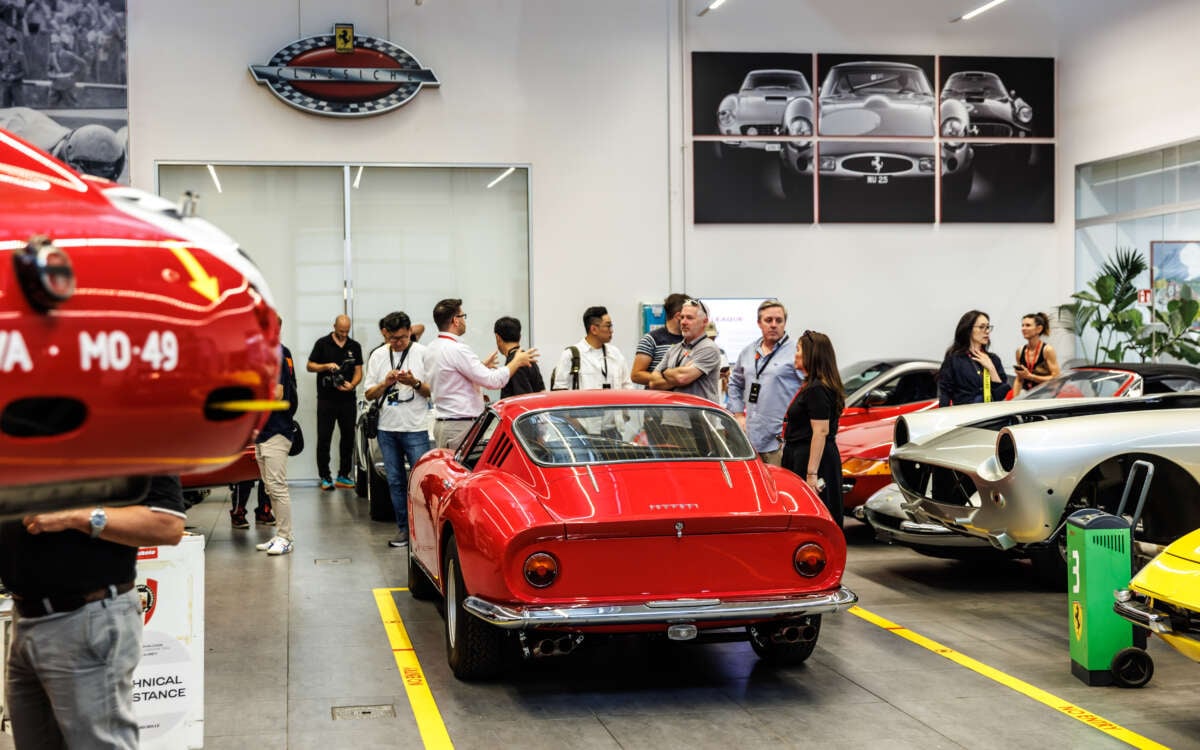
The experience on track was just part of the Corso Pilota Classiche programme. We were also brought to the Ferrari’s home of Maranello where the very cars we drove were being poured over by technicians of the Ferrari Classiche department.
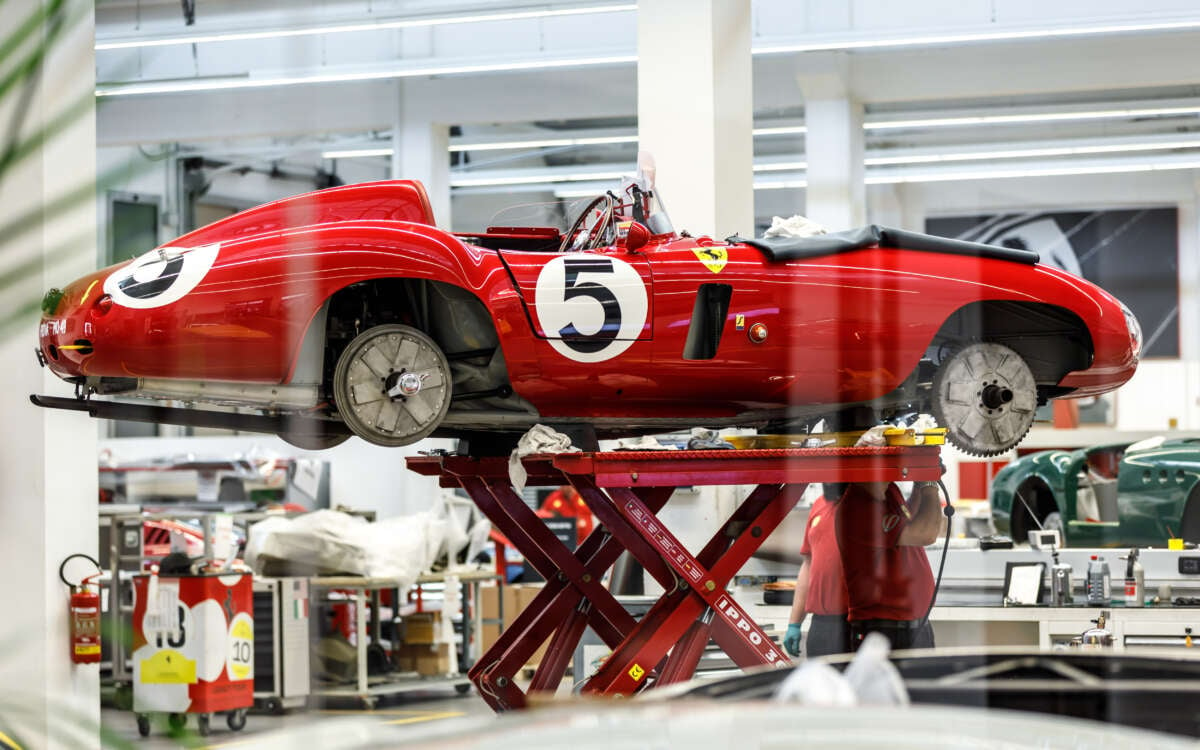
Officine Classiche (translates to Classic Workshop) is where classic Ferraris are maintained or restored to their optimum driving and authenticity condition. In addition to the trusty steeds used to lap Fiorano, the building contained some exceptionally rare cars like a former 512 BB race car with a patina gained from its time on track.
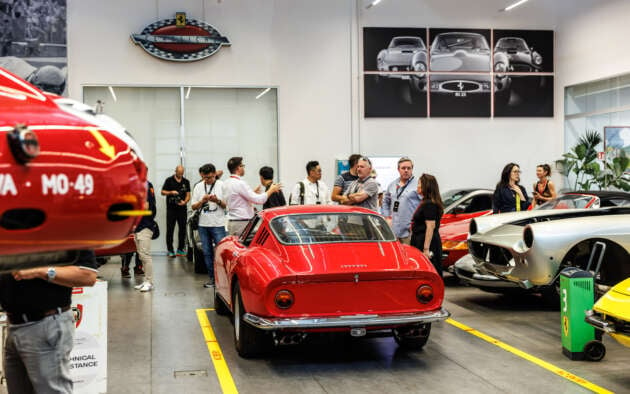
In another area, a Scaglietti-designed Ferrari 735 LM (also known as the 121 LM) was being readied for its next Mille Miglia outing, while a rarer-than-a-F40 Ferrari GTO was tucked away in a different corner along with more cars. It’s a sensory overload in terms of visuals but sadly, photography was restricted to attendees.
This extends to the technical archive housed in a climate-controlled room where the documentation for every car Ferrari produced since 1947 is stored. The rows of binders filled with assembly sheets, along with the numerous original drawings and schematics are a sight to behold, but it is the people working there that bring the history to life.
One of them was gracious enough to show us order forms of famous drivers that have raced for the Prancing Horse. Names like Fangio, Ascari, Villeneuve and Lauda (he ordered a Daytona) pop out, and we also got an exemplification of just how obsessed Enzo Ferrari was with being hands-on and involved with the Scuderia in the form of handwritten feedback that drivers presented after each race or test session.
These pieces of paper detailed what was good about the car and what needed improvement, with the Il Commentadore making the necessary improvements for the next session. This is also true of some road-going models, some receiving minor updates from one to the next. Innovation takes many different forms, and building on what came before is what’s precious about the human spirit, and Enzo exemplified that.
Another relic shown to us was the original schematics of the gate that greets visitors to the Maranello factory. Put simply, a good bulk of Ferrari’s history is nestled within these walls and this archive is priceless beyond measure.
If you’re wondering what makes a Ferrari qualify for Classiche status, it must either be a road car over 20 years old, a competition or Formula 1 car, a model under the Special Series or a limited-edition hypercar.
Cars going into the Classiche programme will be subject to an in-depth inspection to check every component and ensure it meets the specifications in the archive. We are told the chassis originality is paramount, meaning it must be in period, not modified or swapped with a replica.
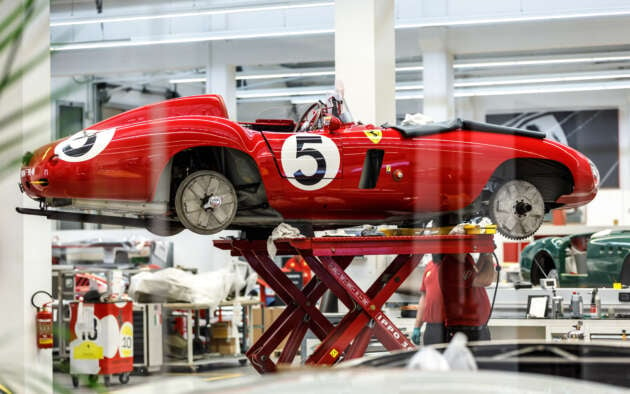
Only when the car passes the inspection can it undergo any form of restoration, and since the Classiche department is located where Ferraris are built, it has the resources and access to machinery, including a foundry, to reproduce parts and even entire engines to make the car as whole as it was when it left the factory years ago.
With extensive support from the mothership, expanding your Ferrari ownership to include a classic in addition to the brand’s modern cars sounds like an assured investment, especially given how much some cars have appreciated.
The Ferrari Classiche programme and its Corso Pilota extension is a shining beacon in the automotive world. In the brand’s eyes, its cars as timeless pieces of automotive art and engineering, with each one deemed to be unique and every owner a preserver of the Prancing Horse heritage.

















Looking to sell your car? Sell it with Carro.