
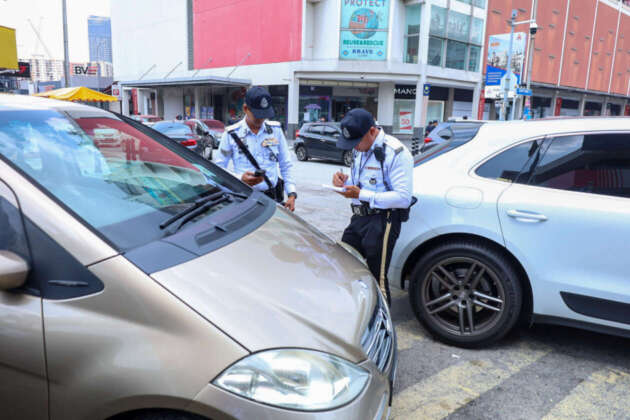
Despite amendments to the Road Transport Act, which will include the implementation of a maximum compound rate of RM500 for several traffic offences starting from January 1, 2029, road safety advocates say that fines are no longer enough to deter reckless driving or address the record number of road crashes, and have called on the government to fast-track the revamped Kejara demerit points system, as The Star reports.
According to Malaysian institute of road safety research (MIROS) chairman Wong Shaw Voon, fines are not a sufficient deterrent for certain groups, but they would not be able to avoid demerits. “Fines alone may not effectively change behaviour as their impact differs based on income levels. The demerit system, however, does not make any differentiations. Effectively, this would keep dangerous drivers off the road,” Wong told the publication.
Universiti Putra Malaysia associate professor Law Teik Hua also said an improved Kejara system must be urgently put into practice. “The reintroduction of a demerit point system that could lead to the suspension or even the loss of a driving licence would have a better effect on repeat offenders than just punishing them with fines,” he said.
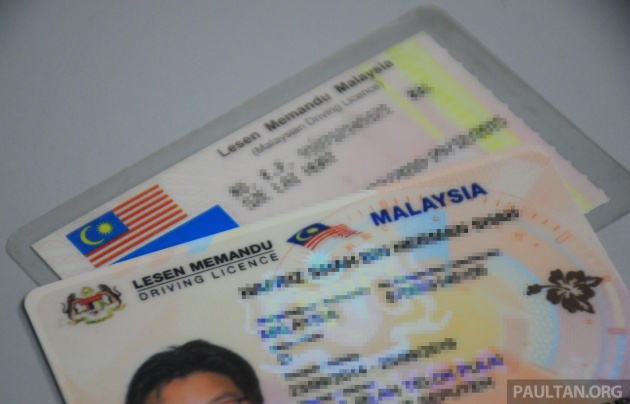
He also called for the enforcement of speed limiters in heavy vehicles to be sped up, following its deferred enforcement on July 1. “Although a partial solution, they are an established engineering control that works effectively if installed, maintained and enforced,” he said, adding that there should be driving refresher courses for commercial drivers and repeat offenders every three to five years, with mandatory retraining imposed on drivers who accumulate demerit points or commit serious traffic offences.
Road safety council of Malaysia executive council member Datuk Suret Singh agreed, saying traffic enforcement remains incomplete with Kejara yet to function as intended. “Reckless drivers must be awarded demerit points for each offence and their licences should be suspended for six months when demerit points exceed 15,” he said.
In November last year, transport minister Anthony Loke said that the Kejara driving licence demerit points system was set to get a major overhaul and was due to be rolled out in the second half of 2026.

Previously, demerit points were only chalked up after traffic offenders settled their summonses, but under the revamped system, those who fail to pay their fines after a certain period will be blacklisted. It was reported that the system will be fully integrated with the MySikap platform, and will be directly linked to driving licence and road tax renewals.
Introduced in 1984, the Kejara system involves assigning demerit points to motor vehicle drivers who commit scheduled offences under the Road Transport Act 1987 and the regulations covered by it. A total of 20 offences identified as potentially causing serious or fatal accidents and endangering other road users was included in the system.
The system was suspended in 2011 due to enforcement and feasibility issues, but in 2015 it was announced that it would make a return alongside the Automated Enforcement System (AES). This finally happened in 2017, when Kejara and AES were integrated under the Automated Awareness Safety System (AWAS).
Looking to sell your car? Sell it with Carro.



sigh! un-toni lock must resign
Govt should speed up revamped Kejora? Can you first ask Mr Loke to stop focusing on selling number plates and improve our road safety and design? The current condition with ill design roads and poor signage, and motoris that dont follow rules, no amount of tech can compensate that.