
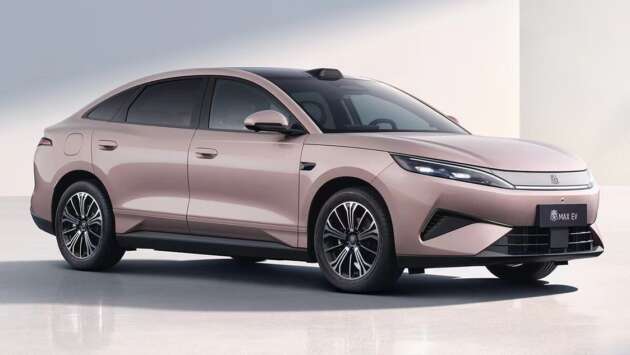
The BYD Seal 6 is set to gain a larger sibling in China in the shape of the Qin Max, the range topper of BYD’s budget-focused Qin sedan brand. As the name suggests, the car is essentially an uprated version of that Seal 6, which is sold in China as the Qin L EV (confusingly, there’s a different Seal 06 EV offered in the Middle Kingdom, which is a twin of our car with unique styling).
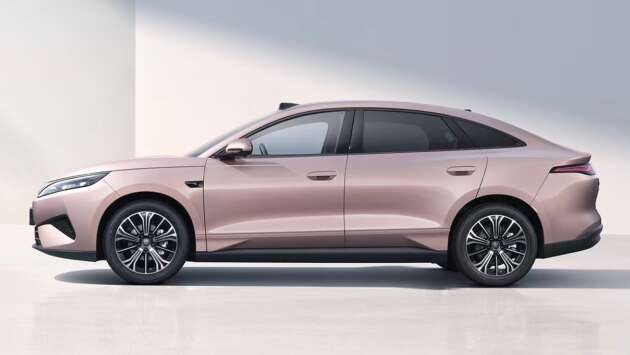
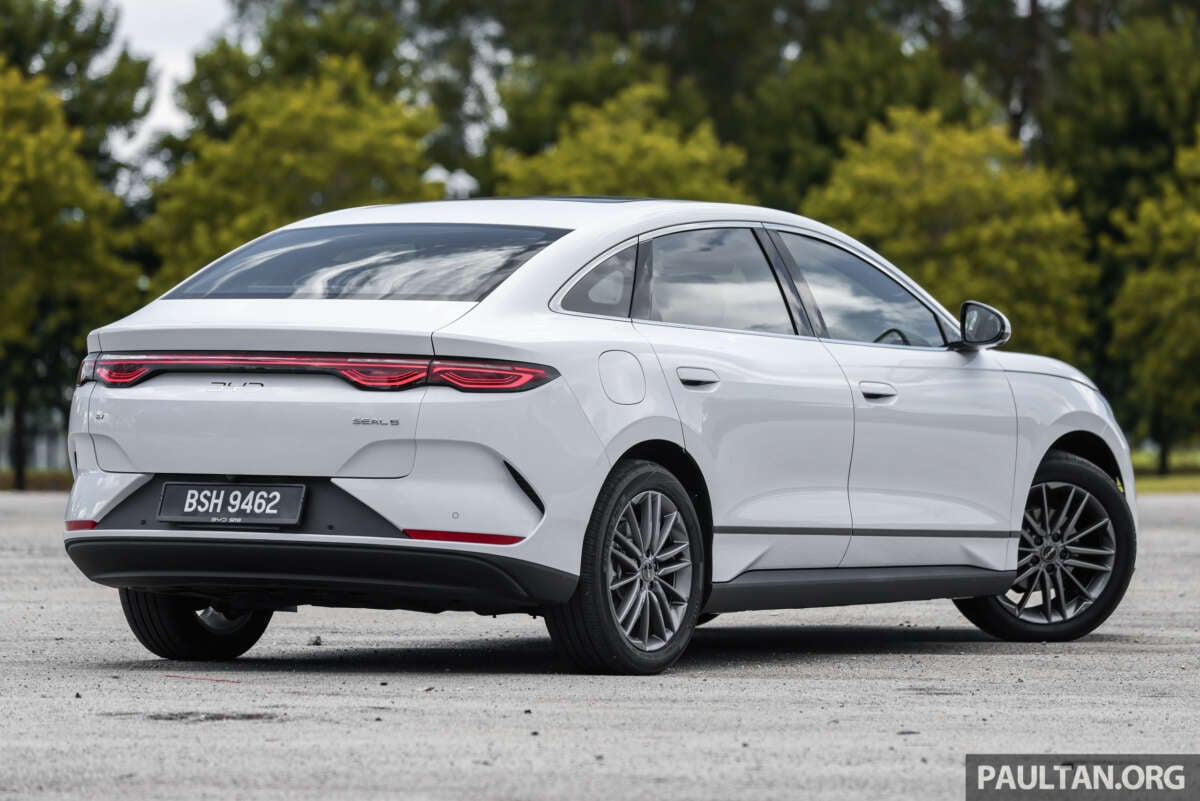
Initial official images show a car very much related to the Seal 6, sharing the general rounded shape and the arching roofline that stretches almost all the way to the rear. The doors with their flush pull-up door handles and scalloped bottom surfaces also look to be carried over.
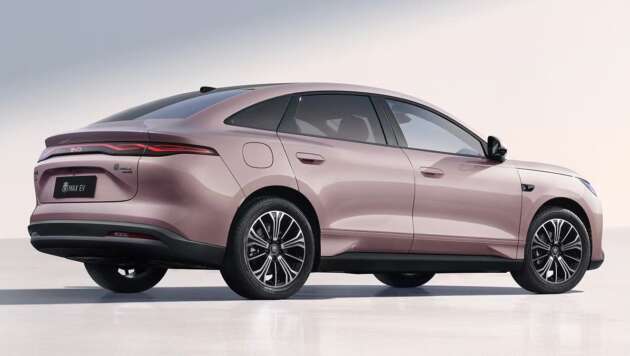
The front end, meanwhile, gains the latest face of the Dynasty lineup, similar to that of the new Atto 3 (sold as the Yuan Plus in China). There’s a visor-like silver strip that incorporates the slim headlights and central light bar, along with a sporty X-shaped bumper. The rear end has also been cleaned up, featuring sleeker “infinity” full-width taillights and a number plate recess that’s been moved up to the boot lid.
The Max’s closeness to the Seal 6 is laid bare by the reported dimensions. According to Autohome, a filing with China’s ministry of industry and information technology (MIIT) provides a length of 4,866 mm, width of 1,880 mm, a height of 1,495 mm and a wheelbase of 2,820 mm – the last three figures are identical to the Seal 6’s. The extra 146 mm in length has likely been added to the front of the car, because it now needs to house…an engine.
Be in no doubt, however – the Qin Max will still be offered as an EV, although available outputs from the rear electric motor have been boosted to 163 PS (120 kW) and a whopping 326 PS (240 kW) depending on the battery. That’s a decent increase from 150 PS (110 kW) and 218 PS (160 kW) on the Qin L; the Standard and Dynamic variants of the export-market Seal 6 are capped at 129 PS (95 kW) instead.
The jump in power is complemented by larger LFP battery sizes, up from 46.08 and 56.64 kWh on the Qin L to 52.868 and 64.315 kWh. This results in a marginal increase in range to 530 km (+60 km) and 630 km (+85 km) respectively, albeit on China’s lenient CLTC cycle. Expect WLTP figures closer to 410 km and 490 km; by comparison, our Seal 6 is only available with the larger battery and possesses a WLTP range of 425 km.
More impressive still is the fact that the Qin Max receives BYD’s second-generation Blade batteries, meaning it supports the company’s lightning-fast 1,500 kW Flash Charging technology. That means the car should be able to be charged from 10 to 70% in just five minutes and 10 to 97% in nine minutes.
The Max is also set to gain the Dual Mode Intelligent (DM-i) plug-in hybrid powertrain, mating a 238 PS (175 kW) front motor with a 101 PS (74 kW) 1.5 litre naturally-aspirated four-cylinder petrol engine and a single-speed dedicated hybrid transmission (DHT). An LFP battery of unspecified capacity will enable extended pure electric running. The Max will be the first Qin model to combine EV and PHEV variants on a single platform; the current Qin L EV and DM-i are two disparate cars that share only their badge.
Will the Max EV be offered in Malaysia, perhaps as a facelifted Seal 6? It remains to be seen if the car will be converted to right-hand drive like the Qin L, but even if it does, the ministry of investment, trade and industry’s (MITI) latest protectionist CBU EV policy and the current fluidity of BYD’s CKD local assembly plans means that it is only a distant possibility for now.
The top-spec model’s boost in power to 326 PS does mean that it will easily clear one of MITI’s new CBU requirements – a power output of more than 245 PS (180 kW). However, the other requirement of a minimum cost, insurance and freight (CIF) value of RM200,000 – that’s before import and excise duties, by the way – means the car will be prohibitively expensive, well beyond the Seal 6’s current tax-free price starting from RM100,000.
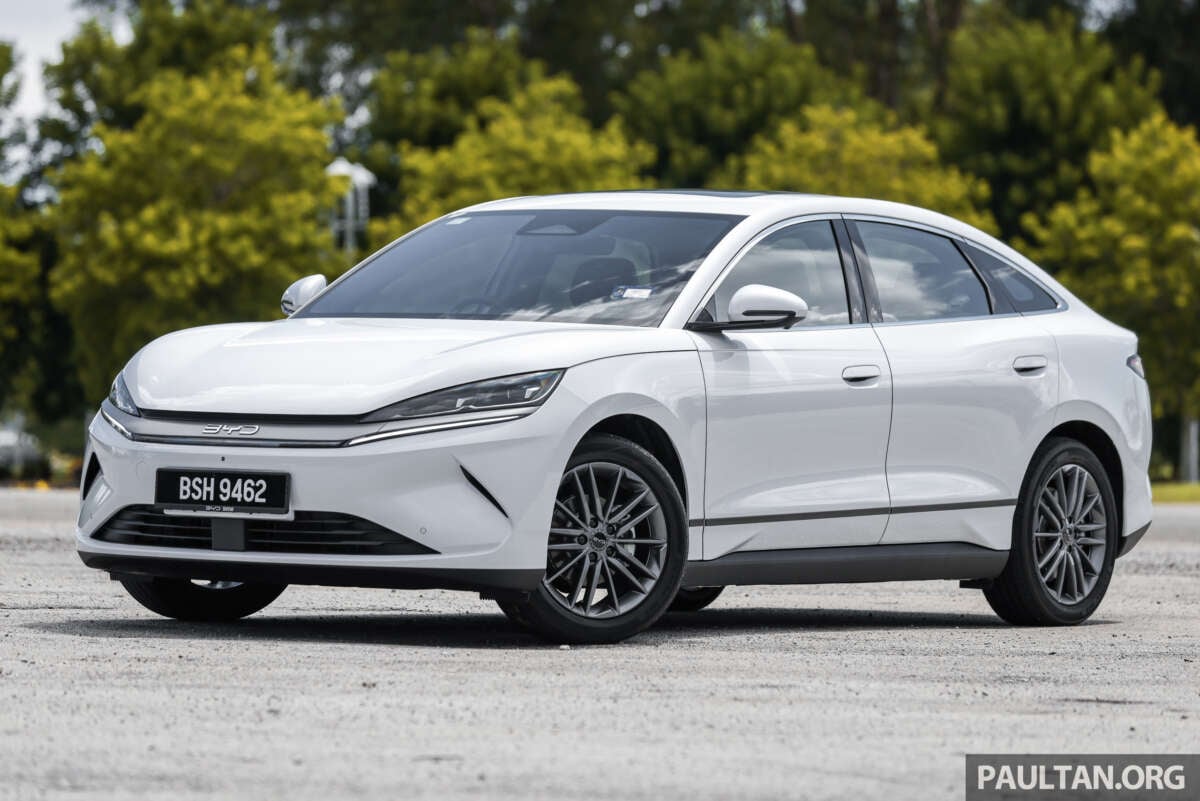
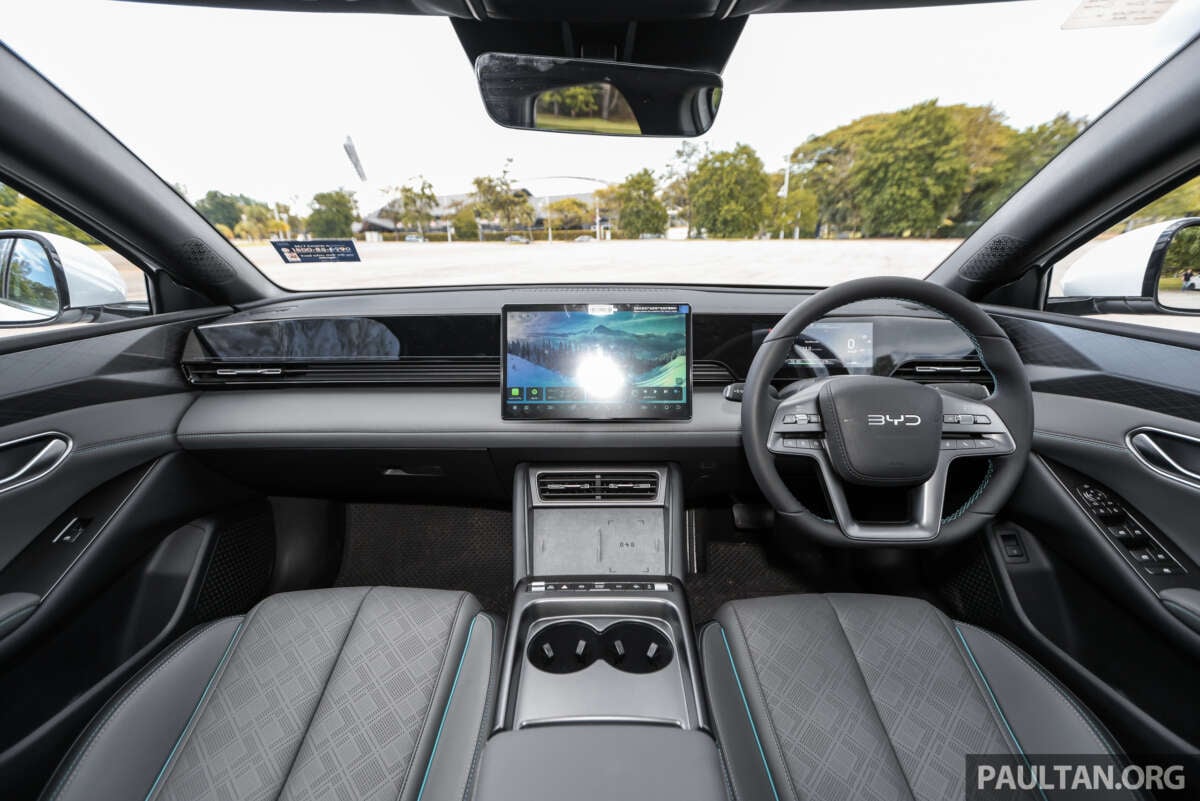
GALLERY: BYD Seal 6 EV in Malaysia







Looking to sell your car? Sell it with Carro.



another Wannabe China luxury EV. will go bankrupt in 1 year. BS talks about Tesla. not even close
BYD must bring this in at RM80k