
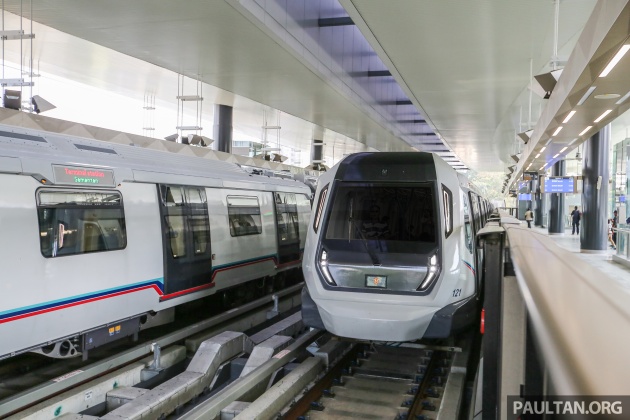
The Mass Rapid Transit (MRT) Sungai Buloh-Kajang line has ferried around 7.4 million passengers since it began operating, Bernama reports. Phase one of 51 km-long stretch of urban rail began operations in December, and phase two was opened to the public in July.
According to Rapid Rail CEO Datuk Zohari Sulaiman, during the period, an average of about 100,000 commuters used the MRT each day on working days while on weekends, the number rose to around 140,000.
“The station getting the most number of passengers is Bukit Bintang, which takes people to the Kuala Lumpur Golden Triangle area where there are well-known shopping complexes like Pavilion and Lot 10,” he said. He added that the number of passengers is expected to increase during the 2017 SEA Games (KL2017), which runs until August 30.
The MRT is projected to reduce traffic entering KL daily by 160,000 vehicles, based on an estimated 400,000 riders per day. It’s also expected to reduce up to 34,400 tonnes of carbon dioxide emissions yearly, and the train service is also capable of reducing the cost of living for Klang Valley folk, according to domestic trade, cooperatives and consumerism (KPDNKK) minister Datuk Seri Hamzah Zainudin.

 xxx
on
xxx
on 

 Henry
on
Henry
on  Ohwai
on
Ohwai
on  Syiok Syiok Sendiri
on
Syiok Syiok Sendiri
on  Tokok
on
Tokok
on  Nazee
on
Nazee
on  topkek
on
topkek
on  shaiful
on
shaiful
on  john
on
john
on  Dedak In The House
on
Dedak In The House
on  Basherlogic
on
Basherlogic
on  Low2215
on
Low2215
on  Ohwai
on
Ohwai
on  Sehn
on
Sehn
on  tiadaid (Member)
on
tiadaid (Member)
on  ali
on
ali
on  Jr
on
Jr
on  obviously
on
obviously
on  Ohwai talkingkok
on
Ohwai talkingkok
on  Jibril
on
Jibril
on  shibby
on
shibby
on  Ah Kow
on
Ah Kow
on  BigFish
on
BigFish
on  komarad
on
komarad
on  12yrsold
on
12yrsold
on  IKendo
on
IKendo
on  Ohwai tak cebok
on
Ohwai tak cebok
on  Bullshit
on
Bullshit
on  Mummy Yummy
on
Mummy Yummy
on  lorlor
on
lorlor
on  haha
on
haha
on
AI-generated Summary ✨
Comments generally express mixed feelings about the MRT, with some praising its success in serving 7.4 million passengers and reducing traffic congestion, while others criticize its capacity, legitimacy of ridership numbers, and operational issues like breakdowns. Several comments highlight that many users are foreigners or former motorists and question whether the MRT genuinely reduces car usage. There are ongoing debates about funding, management, and whether the MRT truly benefits Malaysians, with some expressing pride and others frustration.