
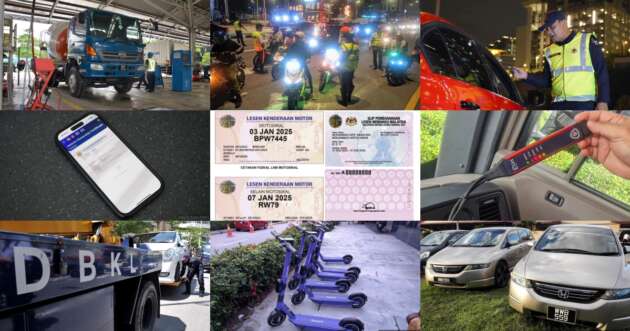
Amendments to the Road Transport Act 1987 (Act 333) are set to be tabled in parliament next Monday, and they will be wide-ranging, containing reforms and changes in 11 scopes, covering 42 provisions. These were briefly outlined by the ministry of transport (MoT) at a special media briefing yesterday, with transport minister Anthony Loke saying that these changes were due.
“As all matters regarding road transport are under Act 333, it is a very important piece of legislation, and there are amendments that we make periodically. The last was in 2020, regarding increasing the punishment for drink-driving, but this time we have amendments that contain more changes and are more comprehensive,” he said.
He said the amendments have gone through a careful process, including discussions in the parliament select committee involving members from both the government and the opposition, demonstrating cross-party support. “The first amendment will be tabled in parliament next Monday (first reading) and is expected to be passed as early as Tuesday (second reading), demonstrating the government’s urgency and commitment,” he said..
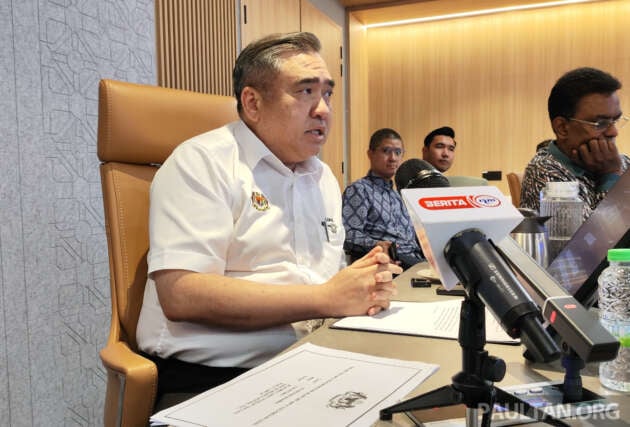
While the primary aim of many of these changes are scoped at improving road safety through new legal provisions, allowing authorities to take more effective action against those who endanger other road users, some of the amendments are targeted at improving the service system and simplifying people’s affairs by modernising services and enforcement through digitalisation. Loke said amendments were necessary on that front as the growing scope of digitalisation meant the law also had to evolve accordingly.
The amendments cover four broad categories, these being digitalisation of services and enforcement, an increase in fine and compound rates, the introduction of new provisions and the strengthening and harmonisation of existing provisions. In a nutshell, the 11 areas covered under the amendments are:
Digitalisation of JPJ services and enforcement

Although myJPJ is currently being used by 14 million people, many of the digital processes are not yet supported by a solid legal basis. As such, the amendment introduces provisions for the legal use of digital licenses (e-license) and motor vehicle licenses (e-LKM) in the myJPJ application, essentially providing recognition of digital documents as valid according to the law.
As for enforcement, automatic number plate recognition (ANPR) is set to play a key role in digitalising this – road transport department (JPJ) patrol vehicles will be equipped with cameras that can automatically identify number plates and check the existence of road tax/insurance and also uncover any stolen vehicles.
When implemented, JPJ patrol vehicles will be able to detect problematic vehicles without having to utilise traditional roadblocks. This will reduce direct interaction between enforcers and drivers, reducing the risk of integrity and corruption allegations.
Harmonisation of road tax rates and declaration of region for use
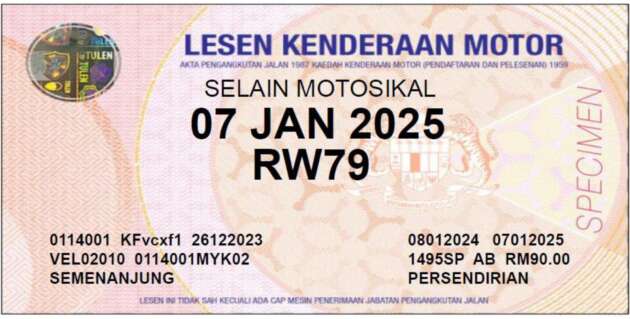
Currently, road tax (LKM) rates differ by region (Peninsular and Sabah, Sarawak and Labuan). Problems arise when vehicles are registered in a low-fee region (such as Labuan) but are used in Peninsular Malaysia. This amendment will require vehicle owners to declare the primary region of use when registering or renewing their road tax.
The road tax amount will then be calculated based on the declared location, closing the loophole in which cars that were registered in either duty-free states like Langkawi or Labuan, or in Sabah or Sarawak, get exacted a lower road tax when used in Peninsular Malaysia.
Increase in the minimum fine rate
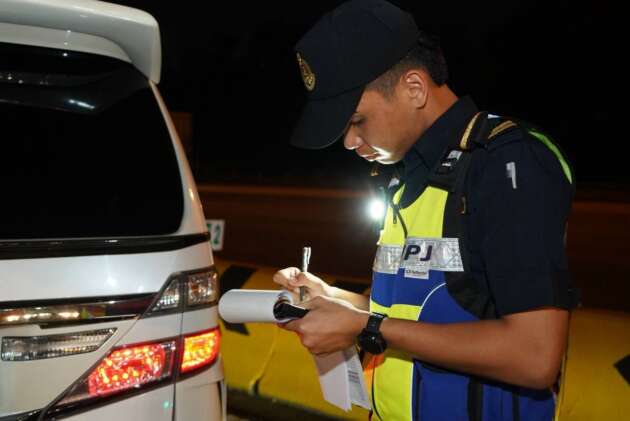
The current maximum compound rate is RM300, which authorities consider to be insufficient as a deterrent, with many drivers more willing to pay a fine than comply with the law. Therefore, the government is looking to increase the maximum compound rate for certain offences, especially those that endanger safety. Offences that will be involved in the fine increase include driving without road tax (LKM), driving without a valid driving licence (CDL), driving above the speed limit or dangerously, and failure to adhere to traffic lights/road signs.
“However, the implementation of this increase will not be implemented immediately. It will be given a period of two years for public preparation and system adaptation. This gives room for public education and preparation by the authorities,” Loke explained.
The introduction of a new Section 42A to deal with illegal racing
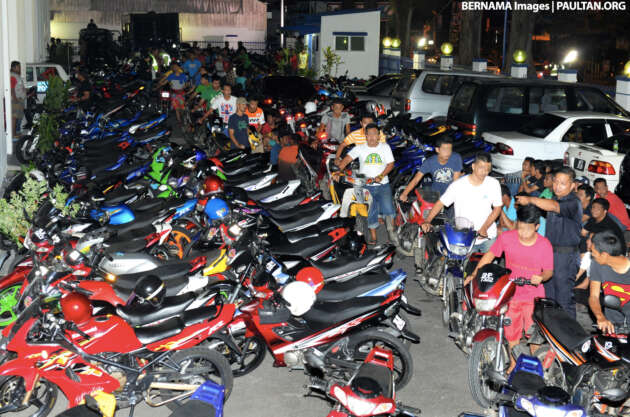
As indicated previously, the government is looking to clamp down on the mat rempit menace with the introduction of tougher laws. This will be accomplished with a new Section 42A, which has specific rules against illegal racing and speeding. Previously, action could only be taken under the offence of dangerous driving, which required proof of an accident or actual danger.
This made it difficult for enforcement to act if there was no accident. With Section 42A, the act of racing or speeding itself is now considered an offence, even if there is no accident (for example, two or more vehicles speeding competitively on a public road).
Electronic accident reporting (e-Polis Reporting)

The amendment to Section 52 allows accident reporting to be done electronically, not just physically at the police station. This is a collaboration between the MoT, Bank Negara Malaysia (BNM), and the General Insurance Association of Malaysia (PIAM) to make it easier for accident victims to make insurance claims. Minor accidents involving single vehicles without injuries or third parties can be reported via e-Polis Reporting.
Identical to the PDRM e-Reporting pilot trial that was introduced last September, this reduces the burden on the police, saves time, and helps process insurance claims faster. It also addresses the problem where drivers have difficulty reporting accidents because they are far from their homes. However, accidents involving injuries, deaths or third parties will still require a physical report as usual.
Expanding the transport minister’s regulatory powers


The amendment clarifies and expands the regulatory power of the minister of transport over workshops, modifications, technical safety standards and EV/new-tech components. This will include the ability to regulate the registration and operation of workshops, factories and vehicle repair centres; setting technical standards for vehicle safety; regulating driver training/shifts and setting related fees.
The extended scope will also cover regulating new vehicle models, components, and safety technologies (for example, electrical systems on vehicles). This is important to address issues, for example illegal modifications that cause electric shocks on buses, because previously there was no clear authority to take action against workshops or manufacturers.
Enhanced cross-border movement control

The amendment tightens control of vehicles entering or leaving Malaysia, with the purpose being to encourage vehicle owners to settle summonses before travelling or crossing the border. Essentially, foreign vehicles may be prohibited from entering if they do not have a valid permit (including VEP) or have outstanding summonses, while Malaysian vehicles may be prevented from leaving the country if they have pending traffic summonses.
Vehicle towing and impounding
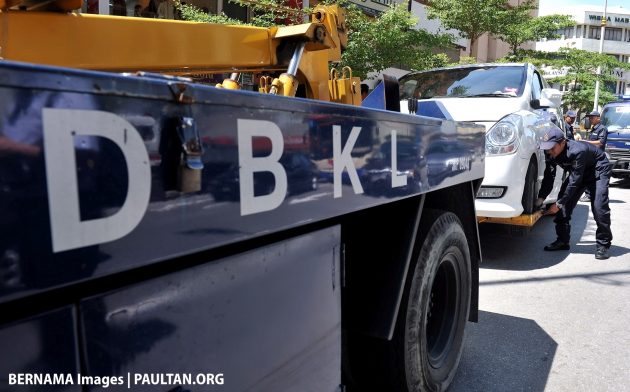
The amendment will provide local authorities (PBT) with clearer scope to remove vehicles that are obstructing traffic or violating parking regulations, and also detain these vehicles until removal and detention fees are paid, with the risk of removal being on the vehicle owner. The changes are aimed at addressing the problem of random parking causing congestion in urban areas.
Curbing “tonto” activities
The amendment introduces new provisions to make “tonto” activity – in which individuals or groups help lorry drivers evade enforcement by disrupting JPJ field operations – a criminal offence, with authorities being able to take action and mete out strict penalties in the form of fines and/or imprisonment.
Management of micromobility vehicles


With the use of electric scooters and other micromobility devices increasing, the amendment looks to introduce clearer definitions and rules regarding e-scooters/e-bikes, with the intention of providing a framework regarding their use. These include a minimum age to use, speed limits, where these devices can be ridden as well as the need for safety equipment (helmet, lighting, reflectors etc)
As there is presently no clear procedure for managing impounded or abandoned vehicles, the amendment will also introduce one, where micromobility vehicles used contrary to regulations may be impounded. The owner will be given a reasonable period to reclaim them. If not reclaimed, the vehicle can be legally destroyed with the permission of the court. This will help authorities manage and overcome storage and safety issues in public areas.
Addressing document forgery and vehicle cloning
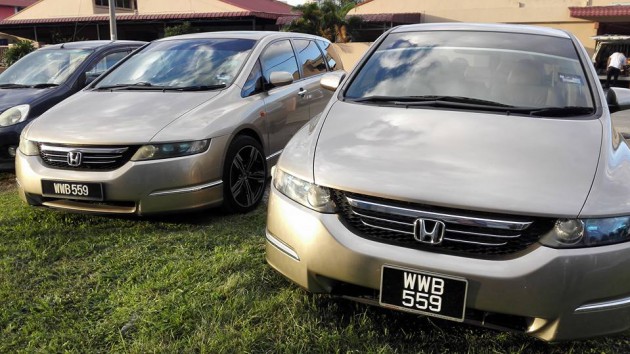
The amendment increases the punishment under Section 19 for the offence of submitting false documents or false vehicle records, with higher fines and prison terms for those convicted of for these offences. It aims to tackle vehicle cloning syndicates and address the issue of document forgery and stolen vehicles, crimes that were previously not punished commensurate with the risk.
Looking to sell your car? Sell it with Carro.



Ahlokekor.pls lobby confiscation of mat rempits bikes and Mr Torredo fast and furious cars,that break the law.
Those confiscated vehicles.drop from 100ft crane,like what Jeremy Clarkson of Top Gear did.
A saman big or small wont deter these bastards.
Just sita and wreck the vehicles.
If the teen Merc driver racing with his BMW (dead )brother ,escaped with bigger summons..they will still go another round of deadly racing.
This new ammendment tabling is the result of me sending emails to MoT to propose 10 strokes rotan punishment for motorcycle offenders. Tq Loke kor.
well done and congrats to you for encouraging gomen to realize that enforcement against motorbikes had been far too lenient in the past.
and as for the cretin member named “Maybe…” and his equally maronic associate “Don’t forget..” , clearly this proves my point all along , that current laws and current enforcement against bikers are inadequote .
Or instead of destroying the vehicles dismantle it for scrap parts and sell it, use the money to fix potholes?
bold of you to assume they wont, they’ll sell all the part and line their pocket with the money..how do you think this pay for their sugarbaby
pls implement death penalty for those useless mat rempits putting everyones lives at risk.
So… For fines of “Illegal” No Plates is the same is a Mat Rempit ?? So ..”Lives’ are Not as Important as “a Fancy No Plates”. Wake Up !!!
heavy fine but no enforcement then what’s the point? Sadly, nothing on autonomous driving, Malaysia still so behind, are developing still?
There is no law on driver vaping piu piu. When you want shutdown all vape shop? only allow vape selling at registered convenience store. All vape speciality shop should be banned.
vape isnt under transport ministry , you should address this concern to kpdn or trade minister, or to state gomen.
wow, vape also want “transport” department to control? You never go school???
We welcome and applaud tighter and more stringent rules. But as with all new ‘laws’ in Bolesia, zero or selective enforcement means nothing. Worst case, another means for our officers to enjoy new revenue streams.
Please also include heavy fine for motobike and car having super noisy and loud exhaust pipe which very disturbing and create sound pollution around the environment
i agree , gomen must fine and ban those who motobike and car having super noisy and loud exhaust pipe which very disturbing and create sound pollution around the environment at every day 615 am daily morning .
sorry my mistake, that noise was not from vehicles.
Please do include heavy fine for motobike and car having super noisy and loud exhaust pipe which very disturbing and create sound pollution around the environment
Please remove all tinted windows. Also provide imprisonmentbor heavy fines for vehicle not allowing other vehicles to overtake although sufficient indication has been given. Numerus accidents are due to this selfish drivers.
Loke introduced no limit Tint to rear windscreen and windows to avoid peeping tom like yourself to look inside other vehicles. It makes rempits hard to determine whether there are valuables hidden around the rear seats, deterring break-ins.
Dark rear tint that cannot see through should be stopped. It makes the third brake light redundant! Don’t people remember that the 3rd brake light was made mandatory over 20 years ago, to allow early warning on front vehicles braking and be seen by one or more vehicles behind? The unlimited dark rear tint is a joke!
Only don 50÷km
Only done 50÷km
i think the problem in malaysia is not necessarily the laws but rather actually enforcing them. so they can amend laws to the end of times but sadly nothing will change…if there isn’t any enforcement.
– you never encounter a traffic police or JPJ road block before.
thats exactly the problem . even roadblock lets the offending drivers escape if they pay a fee to drink coffee.
source- i myself have experience giving brib…sorry i mean donations.
because there’s hardly non…only there is during mco period…ah…tat one really enforcement…after tat…tengok la…suka ada road block…tarak free tarak road block…tapi manyak free jual license plate numbor tuh, study this and that, set up apa nama tuh body ah…apa-tsb?
our beautiful country cannot enforce anything effectively because we have multiple laws on multiple type of human beings, we have laws for ordinary citizens if you do not fall into any of the below categories:
– the ones with power
– the ones with money
– the ones without power nor money but bumi
– the banglas and rohingyas whose wife is bumi
– the banglas and rohingyas
– the ordinary citizens who does not belong to any above
The easiest things to enforce and fine are never implemented. Things that don’t need any stupid gadgets and electronics for the enforcement officers.
– Dark tints all around the vehicle including front windshield and front windows
– Fancy plates that do not conform to specifications
– Loud exhausts for cars and motorcycles
– Cars driving with rear fog lights permanently turned on
– Cars driving with high beam continuously turned on
– Cars with dangerous modifications e.g. stance and slammed
really lok this fella…just go enforce existing ones is more than good enuf…the problem with you minister is that you don’t enforce it…only when big incidents (or rather accidents) happened, then talk this talk that, media, press conf, study this-n-that and maybe/perhaps enforce la…and then wat happened after a while…as usual hangat tahi ayam approach…back to “usual”…you can revise and add sorts of scope/provision la…but this will not work in practical…really.