
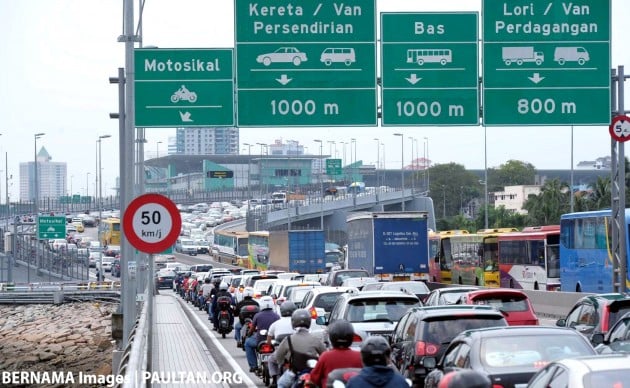
The implementation of the Vehicle Entry Permit (VEP) later this year is expected to solve the problem of cloned cars in the country, JPJ says. The system will also address the issue of unpaid summonses among foreign vehicles that are going in and out of the country, The Sun reports.
The department’s director-general, Datuk Seri Ismail Ahmad, said that the introduction of the VEP will put an end to cloned cars. He said that while the JPJ has already seized 1,708 cloned cars since it began operations at the end of 2014, there were still over 3,000 such cars on the roads.
He said there were no accurate figures, but the department believes that there are roughly between 3,000 to 5,000 cloned cars still on the road. “This issue is only temporary (though). When the VEP is implemented, I think the issue of cloned cars will be settled,” he told reporters.
Ismail said that the VEP will be implemented in phases, with phase one implemented by year end for vehicles entering from Singapore. The second phase will cover the Thai-Malaysian border and phase three will involve Sabah, Sarawak and Indonesia.
In phase one, the system will be installed at the two border crossings with Singapore (the Causeway and the Second Link). It will serve as a medium to record details of vehicle owners from the republic and monitor overstaying Singaporeans as well as curb the issue of cloned vehicles.
Deputy transport minister Datuk Ab Aziz Kaprawi said the system would see a RM20 charge per entry for each foreign vehicle. Each vehicle owner will get a radio-frequency identification card, with a RM10 administration fee being charged. It was reported last week that the system is expected to begin operating from June 1.
Looking to sell your car? Sell it with Carro.



How to address the issue of cloned cars when JPJ staff themselves are the biggest kingpins of the syndicate?
JPJ staff themselves are the ones printing the registration cards, doing the road tax for these cloned cars. Nothing new. 30 years they have been doing it. VEP or no VEP, until the JPJ boss clean up with filthy corrupted JPJ, cloned cars will continue forever.
Datuk Seri Ismail, pls don’t pretend you don’t know that your staff are involved in this syndicate. Past 1 year, when media give attention, you all sacrifice a few cars for raid. 10k cars get confiscated no problem because every year, JPJ crooks make billions and this has been going on for 30 years.
JPJ, pls adress corruption issues by your driving test examiner…..which is bigger issue….that would help us the Malaysian People.
Pls investigate who is behind this VEP company… just like AES… The public will be shocked to know who this/these “individuals” are. They always portray a very caring rakyat’s welfare image … while totally different from their true greed
The dictionary has a name for them … “Hypocrite” while the Bible has a place for them … “Hell”
Yeah right coz it will be run by God. Totally airtight. No worries.
Can’t the gov see why people go for cloned cars? Because they want good car with cheap price. Just close Proton so that people can buy good cars with cheap price. Simple solution je once and for all.
Will VEP work if there is “technology transfer”?
the article says the system will monitor overstaying Singaporeans as well as curb the issue of cloned vehicles…. haha, if they cannot even monitor tax free luxury cars from labuan and langkawi breaching the 90 days rule, i really wonder if they can monitor those from singapore? but lets hope for the best!
When there is money to make, any system will fail under corrupt leaders who are incharge of implementing the system. Malaysia Boleh….. And I do not believe it will solve clone cars issue.
The offer and biz is running as usual. JPJ, u need to work harder. take a peek into apps advertisements such as carousell etc. for scrapped cars lah.