
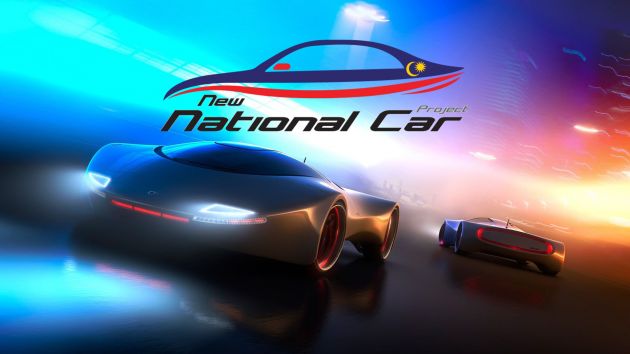
The Ministry of Entrepreneur Development has approved approximately RM20 million in funding for the new national car project (NNCP), which will help to attract the private sector to develop a prototype.
In a report by Bernama, entrepreneur development minister Datuk Seri Mohd Redzuan Yusof said the funds were sourced from existing grants that have already been approved. This will be part of the research and development (R&D) grant used to attract the participation of the private sector in the NNCP.
“The idea is that we become the catalyst for the new national car project. I’m not developing the third national car project, I am facilitating to create an environment for the new national car project,“ he said, adding that the ministry has already shortlisted several vendors that will be part of the endeavor.
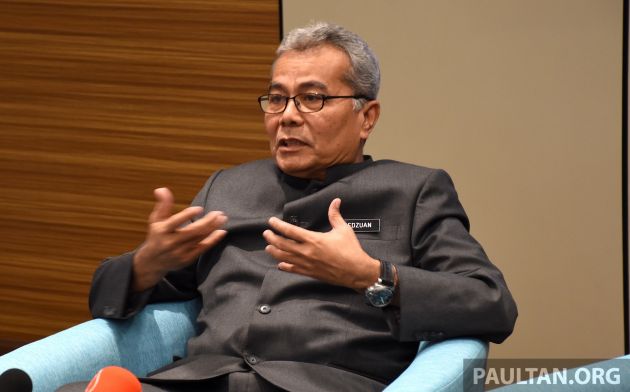
As previously stated by finance minister Lim Guan Eng, the project will need the involvement of the private sector as the government will not sink any funds into the project. However, the NNCP can benefit from the government’s allocation for R&D activities, which is what’s happening here.
In October 2018, Mohd Redzuan revealed the timelines for the NNCP, whereby the new national car’s name will be announced by the end of 2018, although nothing was revealed at the time.
Following that, a prototype for the NNCP model is expected to be ready by early 2019, ahead of a 2020 roll out. The car is expected to feature semi-autonomous capabilities and advanced safety features, while remaining affordable.
Looking to sell your car? Sell it with Carro.

 Leafable
on
Leafable
on 

 rotibakar
on
rotibakar
on  Vincent
on
Vincent
on  john
on
john
on  newme
on
newme
on  Amran
on
Amran
on  Ben Yap
on
Ben Yap
on  Safety First
on
Safety First
on  john ketawa
on
john ketawa
on  JK
on
JK
on  Ultimate Rugal
on
Ultimate Rugal
on  taboogen
on
taboogen
on  Petoron Sagu
on
Petoron Sagu
on  Anonymous
on
Anonymous
on  N87
on
N87
on  common sensor
on
common sensor
on  YB Kunta Kinte
on
YB Kunta Kinte
on  lex
on
lex
on  panjang
on
panjang
on  Not Toyota Fan
on
Not Toyota Fan
on  Jacky Yong
on
Jacky Yong
on  Projohn killer incoming
on
Projohn killer incoming
on  Cash Money
on
Cash Money
on  Dato Ravin
on
Dato Ravin
on  Notmypm
on
Notmypm
on  Wan Syaifulaizan
on
Wan Syaifulaizan
on  lilytan
on
lilytan
on  Sohai (not ori)
on
Sohai (not ori)
on  Ksatria
on
Ksatria
on  maik
on
maik
on  Greasemonkey
on
Greasemonkey
on  Jokey
on
Jokey
on  Chua
on
Chua
on  YB Albert
on
YB Albert
on  my england is bad
on
my england is bad
on  Abg beng
on
Abg beng
on  Calculator
on
Calculator
on  vVivi Zurianti
on
vVivi Zurianti
on  Dong gor
on
Dong gor
on  Hancing
on
Hancing
on  Fred Durst
on
Fred Durst
on  Leonardo
on
Leonardo
on  Amran
on
Amran
on  Apek Berjaya Time Square
on
Apek Berjaya Time Square
on 


AI-generated Summary ✨
Comments express strong skepticism, criticism, and disappointment regarding the RM20 million government funding for the new national car project, citing concerns over mismanagement, cronyism, and unrealistic expectations. Many accuse the project of being a waste of taxpayers’ money, compare it unfavorably to existing automotive initiatives, and question the transparency and feasibility of the plans. There is widespread doubt about government involvement, with some calling it a potential repeat of Proton's failures and emphasizing the need for better support for local consumers and industries.