
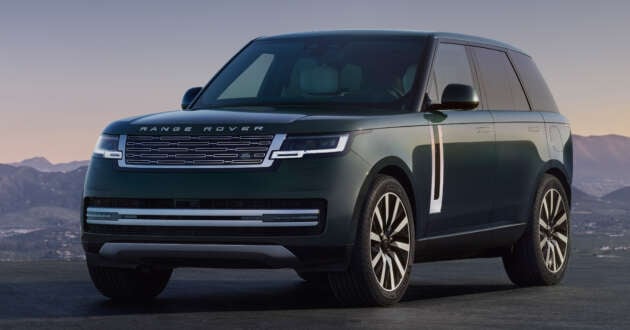
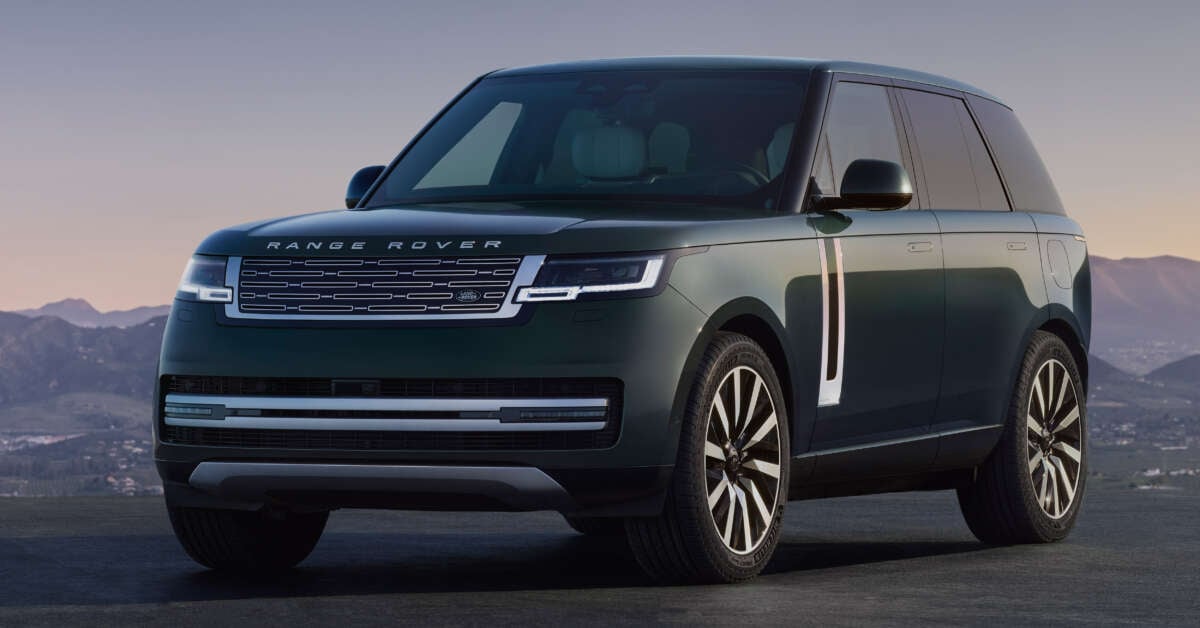
The Range Rover Electric has finally made its debut, promising to be “quieter, more responsive and with more torque than any Range Rover to date.” According to Land Rover, the Range Rover Electric will be offered with a choice of short or long wheelbase on top of seven grade levels (SE, HSE, Autobiography, SV, SV Ultra, SV Black and First Edition) – order taking has already started in the United Kingdom.
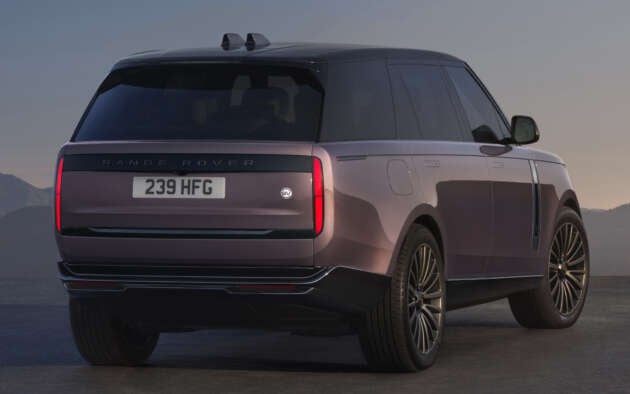
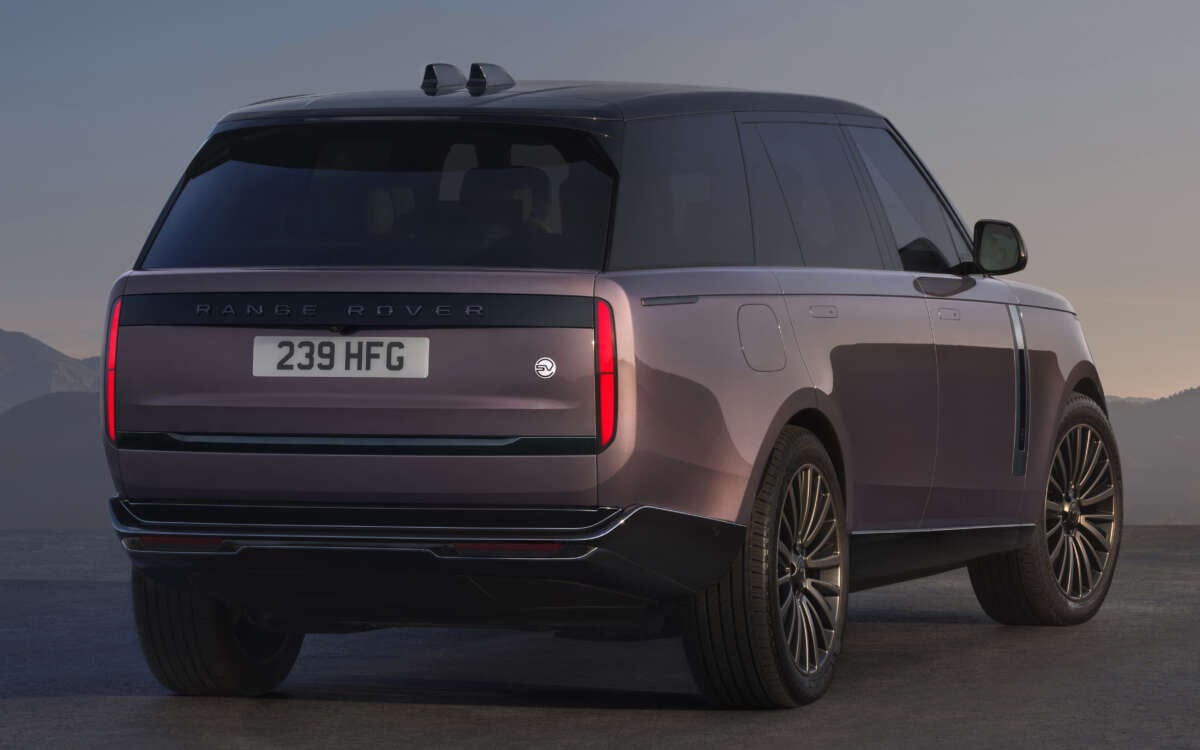
Visually, the Range Rover Electric looks almost identical to the fossil fuel-powered, fifth-generation (L460) Range Rover that made its debut nearly five years ago in October 2021. This is no coincidence because the L460 is built on the Modular Longitudinal Architecture (MLA), which was developed from the start to accommodate a variety of powertrain types.
For the fully electric version, the floor of the vehicle is modified to accommodate two nickel manganese cobalt (NMC) battery packs stacked on top of each other. The 344 prismatic cells in total provide 118.5 kWh of usable energy for up to 598 km (372 miles) of range following the WLTP standard. Land Rover also discloses its own real-world range of 535 km (333 miles) that is less than the WLTP figure.
These packs are wired into an 800-volt electrical architecture, enabling DC fast charging at up to 350 kW to get from a 10-80% state of charge in around 22 minutes, or 220 km with 10 minutes of being plugged in.
As for the electric motors, there are two of them – one per axle – that are each rated at 354 PS (349 hp or 260 kW). These feature silicon carbide semiconductors and are said to produce 20% more torque than other motors of the same size.
What you need to know is that the Range Rover Electric’s total system output is 550 PS (542 hp or 404 kW) and 850 Nm of torque, which is good for a 0-96 km/h (0-60 mph) time of 4.3 seconds. Getting to overtaking speeds from 80-120 km/h (50-75 mph) requires as little as 2.7 seconds. As the Range Rover P550e only has 800 Nm on hand, the Range Rover Electric lives up to the promise of having more torque than any Range Rover to date, while also being the quietest.
On the responsiveness front, Land Rover says the Intelligent Driveline Dynamics (IDD) in its electric vehicle (EV) is able to distribute rear torque from 100% to 0% to prevent loss of traction. This is supported by the Integrated Traction Management (ITM) system that controls motor speed within 50 milliseconds and manages slip up to 100 times quicker than equivalent internal combustion engine (ICE) vehicle.
Adding to the mix is the new Single Pedal mode, providing owners with a high level of control to smoothly pull away up to 33 degrees with ease – a slope as steep as a black‑diamond ski run – or complete a rolling climb ascend up to 45‑degree slopes. Wading through up to 900 mm of water is also not an issue and identical to the ICE version.
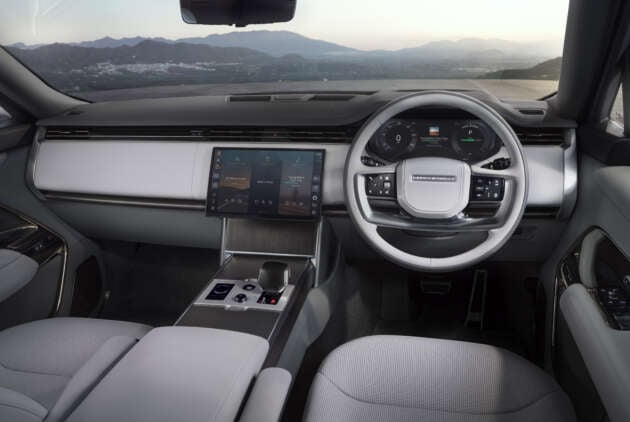
Prior to its launch, the Range Rover Electric was driven the equivalent of 38 times around the world during physical testing, with more than 250,000 hours of virtual tests undertaken – more than any previous Range Rover. As such, it should be just as capable as an ICE Range Rover, just electric.
Land Rover also noted new technologies to maximise its electric potential, including ThermAssist that manages heat to optimise driving range, charging speeds, battery longevity and performance. There’s also Jaguar Land Rover’s (JLR) new battery testing laboratory to ensure the battery packs can withstand knocks and jolts, while advanced safety features exceed industry standards.
For serviceability and maintenance, each Range Rover Electric comes with a ‘Battery Digital Twin’ which provides over 900 diagnostic data points. This works with JLR’s over-the-air (OTA) software updates to allow Land Rover to proactively maintain clients’ vehicles. All in all, over 300 patent applications have been filed for Range Rover Electric, which is the most for a single vehicle in the brand’s history.









 Land Rover Range Rover
from RM2,488,000
Land Rover Range Rover
from RM2,488,000  Land Rover Range Rover Evoque
from RM498,800
Land Rover Range Rover Evoque
from RM498,800  Land Rover Range Rover Sport
from RM1,698,000
Land Rover Range Rover Sport
from RM1,698,000  Land Rover Range Rover Velar
from RM638,800
Land Rover Range Rover Velar
from RM638,800 
Jokes
22 minutes charging for 10-80% even with 350kW? No thanks, I’ll stick with PHEV variant.