
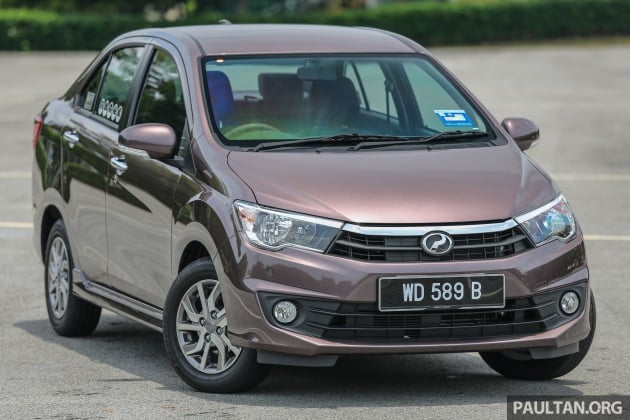
Perodua had set for itself a target of selling 216,000 units for 2016, and the company announced in July that it was maintaining that target, despite the slight downturn in the economy and the automotive industry. With one month remaining in the year, Perodua has to work hard to achieve its sales target.
Up to the month of October this year, Perodua has sold 167,000 vehicles, with 44.2% comprising the Axia (of which the bestselling variant is the Standard G), followed by the Myvi which made up 24.9%, Alza at 17.3% and the Bezza at 13.6%. Since the new sedan’s launch in July, Bezza, over 22,000 units have been delivered to customers, with the average waiting period now down to just two weeks.
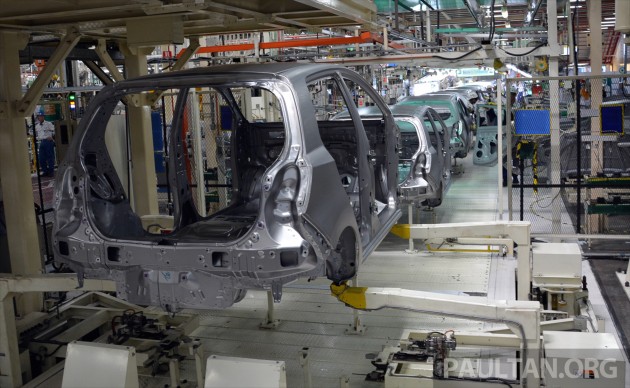
Perodua’s vehicle delivery is attainable, because in addition to the main plant in Sg Choh which produces the Myvi and the Alza, there is also the Perodua Global Manufacturing Plant Sdn Bhd (PGMSB) located nearby, which produces the Axia and Bezza, as well as a separate plant in Sendayan which produces engines and transmissions.
Over 250,000 vehicles have been produced at PGMSB since it started operations in August 2014, with the Axia making up 85% of PGMSB’s volume while the remainder is made up of the Bezza. Overall, PGMSB has the capacity to produce up to 200,000 vehicles annually, with a two shift cycle in place.
From January to November 2016, Perodua has managed 182,000 vehicle registrations, though this figure is 4.8% down from the same period last year. This sum comes from 251,546 received applications (a 4% increase), with the difference coming from factors such as rejected loan approvals.
Though sales are down compared to last year, Perodua has seen an increase in aftersales revenue. Up to October 2016, 1.7 million vehicles were checked in to Perodua service centres, representing a 3% increase over the same period last year. The number of out-of-warranty vehicles returning to Perodua service centres has also increased.
In the future, Perodua is set to further strengthen its aftersales efforts. In addition to attracting more out-of-warranty Peroduas to its service centres, the company will also turn its attention to its line of more affordable ProGanti service parts, and will continue adding to the list of of service parts on offer, which currently stands at 14.

Meanwhile, the company sees opportunity in Sabah and Sarawak, a region which currently contributes just 14 to 15% of Perodua’s total sales volume. In these two states, cars with manual transmissions are the more popular choice, according to Perodua president and chief executive officer Datuk Aminar Rashid Salleh.
Among the measures Perodua has taken to tackle the market in these two states include the streamlining of prices within these states. Warlier, prices of Perodua vehicles between different areas within the same state were not the same. Nevertheless, prices will still be different from those in Peninsular Malaysia due to transportation costs. Perodua has also prepared mobile servicing facilities to cater to areas which do not have service centres, with the number of these mobile services set to increase.
For the export markets, Perodua has plenty of work cut out as it currently stands at just 4,600 units. Besides current active markets which are Africa, Indonesia, Singapore, Brunei, Fiji, Sri Lanka and Mauritius, Perodua is also considering export to other markets, which the company has not disclosed.
As for its sales volume push this year, Perodua will be aiming for its target with various promotions, chiefly with discounts of up to RM5,000 for selected models for the month of December.
Looking to sell your car? Sell it with Carro.
 Perodua Traz
from RM 76,100
Perodua Traz
from RM 76,100  Perodua QV-E
from RM 80,000
Perodua QV-E
from RM 80,000  Perodua Axia
from RM 38,600
Perodua Axia
from RM 38,600  Perodua Alza
from RM 62,500
Perodua Alza
from RM 62,500  Perodua Myvi
from RM 46,500
Perodua Myvi
from RM 46,500  Perodua Ativa
from RM 62,500
Perodua Ativa
from RM 62,500  Perodua Bezza
from RM 34,580
Perodua Bezza
from RM 34,580  Perodua Aruz
from RM 72,900
Perodua Aruz
from RM 72,900 


P2 learning from Berjaya. When got market share, up the price with flimsy reasons but shift blame to Gov. Bashers hook line n sinker belip this fairytale.
with bezza waiting period reduced to only 2 weeks i must say congratulations to proton for helping. back to drawing board perodua!
Something must be wrong with Proton. Perodua started much later than Proton but they now sell 200,000 cars.
Proton last count sold only 57,000 cars. And half of them bought by gomen as a “sedekah” to Proton. Like PDRM alone bout abot 10,000 cars.
Time to close down Proton. They are losing RM4 million per day. Lasy year the lost RM646.3 million besides taking RM1.5 bil of our money
Cross eyed until salah tembak? P2 raise price, u nak tembak P1 pulak.
Banggang much?
Kunta
Perodua’s BLOCKBUSTER AXIA alone can overtake proton’s entire product range in terms of sales volume for 2016.
So,taxpayers ,get ready for the mus to announce another BAILOUT for poor Protong,come 2017.
PROOTONG…..THE BLOCKBUSTER RECEIPIENT OF BAILOUTS…..TAK MALU,PENGEMIS…..KESIAN.
Why u reply own dupe? No sales of toyota yet?
Because Perodua successfully produce much much more sohais
Especially the salesmen variety.
Great.. Maybe they can reach 190k sales at the end of December..
aiyo, axia standard G with nearly 80,000 on the road in 2016 alone. i know not all people afford buying a better car. but safety first lah. i was wondering how perodua will perform in 2018 when ESC is compulsory. sure the price will increase right? so will the sale drop further?
On Persona launch P2 announced it just deliver 20k Bezza. Now after 3-4 month they manage to sell 22k Bezza only? And looking at 2 weeks waiting period there is a lot of Bezza at Rawang plant it seem. 2nd taught, the loan rejection rate by the bank is very high at 27.65% rejection.
Perodua tidak boleh pasang ESC pada model semasa, kecuali Bezza ????????
I sent my car at Perodua Service center Shah Alam for service and repairs to my PERODUA Nautica and was quoted;
1. Air Filter – RM 151.00 per unit after discount! (Imported ma – More expensive than BMW.)
2. Drive shaft – one pair RM 3000 plus. And the problem is the CV joint only. (again – imported ma).
No wonder the after sales is up. The main revenue is from the after sales.
Nautica is CBU from Japan… what do you expect?
Drive shaft RM3k? I buy for my car below RM300
Sale ur Nautica, buy new Myvi bro.. Drive shaft just RM150.
Warlier. I thought it just another fancy vocab. :p
Bravo to P2 for managing to register 182,000 vehicle from Jan to November this year.
Want to Share my Experince with Perodua SC some months back.
Sent in car for normal service, They conducted a check for all problems and found my fog light need replacement. I knew about it and told them i will replace item myself. The irony is they fail to inform me my Tailgate brakes light have burned out which they should have highlighted. I told them about it and they were not aware. Anways told them i will get them replaced outside which is much cheaper.
Fully agree! I also “kena ketuk” by P2 SC when do alignment and changing 2 tyres, RM 160 per tyre for the Axia, you can replace it for much less outside.
Bro. When u tell them replace outside, they automatic register ur car as warranty voided. Thats what my Biza customers tell me. So I tell them, not my problem and kolos phone.