
One of the key points of the interview with Proton chairman Tun Dr Mahathir Mohamad was the national carmaker’s dogged determination in developing its own cars with its own technology – such as its upcoming new range of engines with direct injection – instead of rebadging those from other carmakers.
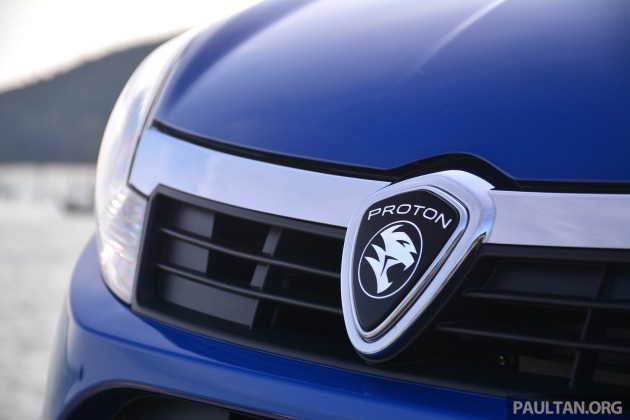
When asked about whether it was worth it to spend so much money on its own research and development, when it is cheaper to simply rebadge other cars, the former premier responded, “We will never progress if we just change the logo at the front and back. One has to remember that there is also a nation agenda – it is not just about making money.
“We want to acquire engineering capabilities in this country. The car provides a lot of engineering technologies and ways of thinking. We have to learn those,” he said.
Mahathir added that there was no point if Proton had continued to simply change the badges at the front and rear of the car. “It’s not our car. We might as well just import cars and not put our badges,” he said.
He also touched on the partnership with Suzuki, and how Proton could learn from Japan’s fourth biggest carmaker. “They are very good in small cars, they have good knowledge about reducing costs, they have a lot of technology we can access. So we can learn from them.
“They went to India before anybody did, and they worked with Maruti. Now they are selling one million cars in India. So they have certain knowledge which we need to acquire.”
Mahathir claimed that Suzuki found that “the Malaysian market is too small for them,” and that it wanted to exit the country. “They offer to work with us. So why not? We can learn from them,” he said.
Watch the video above to see the full interview with Proton chairman Tun Dr Mahathir Mohamad.
AD: Drive the Proton model of your dreams. Submit your details and Proton PJ will get in touch with you.
 Proton X90
from RM106,800
Proton X90
from RM106,800  Proton S70
from RM73,800
Proton S70
from RM73,800  Proton eMas 7 PHEV
from RM109,800
Proton eMas 7 PHEV
from RM109,800  Proton X70
from RM106,800
Proton X70
from RM106,800  Proton Saga
from RM38,990
Proton Saga
from RM38,990  Proton eMas 5
from RM59,800
Proton eMas 5
from RM59,800  Proton X50
from RM89,800
Proton X50
from RM89,800  Proton eMas 7
from RM103,800
Proton eMas 7
from RM103,800 
 Janji najix tak ditunaikan,penipu Rakyat!
on
Janji najix tak ditunaikan,penipu Rakyat!
on 

 Gargantia
on
Gargantia
on  hahaha
on
hahaha
on  Same L0rrrr
on
Same L0rrrr
on  Songlap Songlap Malaysia
on
Songlap Songlap Malaysia
on  john
on
john
on  Nonsense logic
on
Nonsense logic
on  snoopay
on
snoopay
on  kzm (Member)
on
kzm (Member)
on  Axxx
on
Axxx
on  Ayam
on
Ayam
on  UMGGOK
on
UMGGOK
on  Albert
on
Albert
on  john
on
john
on  takNakP1
on
takNakP1
on  Songlap Songlap Malaysia
on
Songlap Songlap Malaysia
on  Battu
on
Battu
on  john
on
john
on  Joey
on
Joey
on  camtakpro
on
camtakpro
on  protoncloseshopla
on
protoncloseshopla
on  sparcov
on
sparcov
on  Fair Competition
on
Fair Competition
on  Proton achieving 13% TIV in 2016
on
Proton achieving 13% TIV in 2016
on  Macan
on
Macan
on  DK
on
DK
on  Willy
on
Willy
on  c.p. mohan
on
c.p. mohan
on  syed azhar
on
syed azhar
on  Bomoh
on
Bomoh
on  Consumer
on
Consumer
on  Stupid Msian Cars
on
Stupid Msian Cars
on  NAP
on
NAP
on  kinokuniyah
on
kinokuniyah
on  ioma
on
ioma
on  Ntah Ntah Uung
on
Ntah Ntah Uung
on  chin peng
on
chin peng
on
AI-generated Summary ✨
Comments largely criticize Proton’s lack of progress over 30-40 years, accusing it of poor engineering, laziness, and reliance on rebadging rather than innovation. Many blame Proton’s management and cronyism for high prices, subpar quality, and missed opportunities like JV with VW. Some suggest importing cars or reducing taxes as alternatives. Overall, sentiments are negative, emphasizing Proton’s failure to develop competitive, reliable vehicles domestically, and calling for a focus on foreign imports to benefit consumers and the industry.