

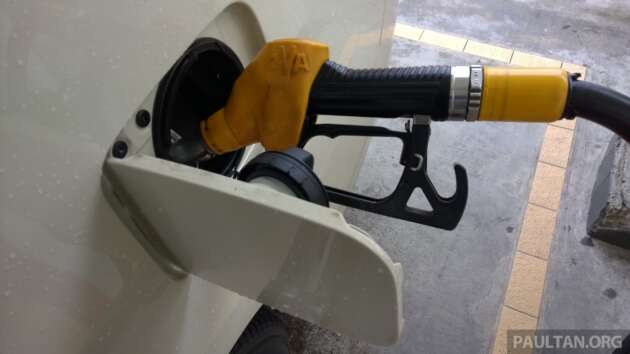
Should the rich pay more for their petrol? This question has been on everyone’s lips and minds since Malaysian prime minister Datuk Seri Anwar Ibrahim recently announced that the government is mulling denying higher-income Malaysians access to subsidised RON 95 petrol amidst the ongoing global fuel crisis, which has resulted in subsidy spending ballooning to around RM5 billion a month.
Well, Puchong MP Yeo Bee Yin has spoken out in a statement against locking out T15 and T20 income groups from Budi95 petrol, saying this could lead to inflation and economic slowdown, according to reports by the Malay Mail and Free Malaysia Today.
“Fuel price hikes are never contained within a single demographic; they ripple through the entire supply chain,” she said, adding that since many T15 and T20 earners are small business owners, service providers and employees, higher transport and operational costs could be passed down to consumers at large.
“This creates a secondary wave of inflation for essential goods and services, ultimately hurting other lower-income groups,” she said.
Yeo also pointed out that the T15 and T20 groups are key drivers of domestic private consumption, and higher fuel costs could dampen demand in the retail, hospitality and services sectors. The combined impact of inflation and weaker domestic consumption could worsen an already fragile economic outlook amidst global uncertainties, including tensions in West Asia, she said.
“Putrajaya must answer this: is there truly a net positive impact on the economy when the government uses one hand to remove subsidies – effectively increasing inflation and reducing demand – and the other to cushion it through a supplementary budget?” she said.
Subsidy rationalisation, she added, must be carefully managed to avoid unintended macroeconomic consequences, and the government must consider the broader fiscal impact, including potential stimulus spending required to offset economic slowdown.
“The worst time to remove any subsidy is in the middle of a crisis when an expansionary fiscal policy – not a contractionary one – is required to sustain the economy,” she said. Even if subsidy removal proceeds, she questioned how eligibility would be determined fairly beyond just gross household income.
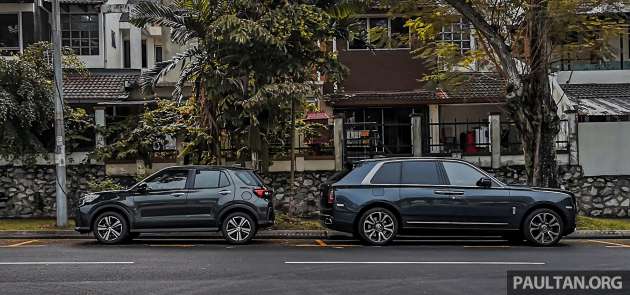
On this, Yeo said a household earning RM13,000 may live comfortably in rural areas but struggle in the Klang Valley when factoring in housing, childcare, education and elderly care. She also said that if T15 is taken to be the cut-off, nearly a third of Selangor and Kuala Lumpur households, plus 40% of Putrajaya households, could be affected.
“This policy risks further squeezing the urban middle class, many of whom are already struggling to keep up with the high cost of living.
“Putrajaya must prove with data that this move will not trigger an inflationary spiral or a net economic loss before asking the people to bear this burden. Fiscal reform should not become a code word for squeezing the urban middle class to their breaking point,” she said.
For all these reasons, the Puchong MP said removing fuel subsidies should not be rushed, and that any implementation system, be it ID verification or tiered pricing, could lead to petrol station congestion and create opportunities for a grey market and corruption.
Looking to sell your car? Sell it with Carro.




Overwhelming high profile earners are doing so working hard and having succeeded in life competing against their peers at the very top, now some dumbos want to punish them by making them pay more for fuel. These people are paying taxes according to the tax brackets like anyone else even more so in their case. Despicable lowbrow crowd always demand things because they cant have welfare freebies handed down to them taken away. Low lives. The subsidies should have never existed for anyone in the first place. All done to win votes by the usual nepos
Fuel subsidies are a feature of the Malaysian economy, acting as a support and advantage for business development and foreign investments. They have historically helped to keep costs lower, potentially influencing salary levels compared to other countries. However, in the current global climate, they could become a double-edged sword.
Tnb, water, cooking gas sub etc…
Well, will the government slash the income tax % for those in T20, T15 bracket too? This will then be considered as FAIR. my 2 cents.
this woman is talking sense, but when sense and akmal saleh clash idea, akmal always wins
“PH bad” people don’t know how to respond to this. Hahahaha!!!
To make it simple:
1) Jobs of B40s mostly depending on consumerism and consumption of T20. ie: food delivery, driver, food stall, cleaner, cashier, work labor etc.
2) If the T20’s cost of living is affected, they will reduce consumption, cut their expenses.
3) When consumption is reduced, people’s livelihood that depends on T20’s consumption will be be affected.
T20s are the main driver of the economy and the effect trickles down to the lower income earners.
Our economy is so inter-connected and never a zero sum game. The government has to handle this very carefully.
Is your conclusion based on facts or plucked from thin air? T20’s main driver of the economy?
Honestly lah, subsidy either give everyone or don’t give at all. Now keep splitting people into B40, M40, T20 also very messy. Some “B40” actually earn more than T20 people but pandai hide income only.
Better bring back GST properly la. At least everyone contributes, even those never declare income tax also can contribuyte. The business owners cannot hide extra income or fake expenses because GST system can track transactions. “duit kopi” claims also can track already. More fair to people who honestly declare and pay tax properly every year.
Whoa there, how dare you talk logic! You cant win votes with informed rakyat.
Firstly subsidies for fuel are not given in most other countries. Secondly, the major recipients of fuel subsidies will be the heavy users of fuel ie. Large vehicles, etc. For business owners, well it’s time to think carefully about efficiency like UPS, Fedex – read about it. Thirdly, too many arguments and counter arguments about who should and who should not get subsidies.
Solution is to repeal or eliminate fuel subsidies, if not completely but gradually.
From the looks of it, everytime we see a luxury car on the road, it’s safe to assume that 90% of the time it has no road tax, no insurance, and the license plate is either a law-breaking fancy plate or a false plate altogether. So much for being “status symbols”. These cars have become nothing more than scammer symbols. so it is safe to assume that the T15 are lawbreaking crimimal scum , remind me again why they should be entitled to subsidies?
Only those super car or exotic la dude. Those bmw and merc still perfectly normal one. And those buy with official dealer like Naza hapseng or auto bavaria normally will pay one.
GE16 TUKAR
“Targeted subsidy scheme can save country RM20b annually – Muhyiddin”
(From Bernama, 31st July 2022)
‘The government can save RM20 billion a year by implementing the targeted subsidy scheme, said National Recovery Council (NRC) chairperson Tan Sri Muhyiddin Yassin.
According to Muhyiddin, at the moment, only 20 percent of the subsidies provided by the government were taken up by the B40 group while the rest was enjoyed by groups which did not deserve it.’
actually the majority subsidies is enjoyed not by T20 as what the article tries to imply, but it wa used by either business or smuggled abroad.
Below is the complete news article. It does say almost 50 percent of subsidies are used by people in the well-to-do category which should be the T20.
“Targeted subsidy scheme can save country RM20b annually, says Muhyiddin”
KUALA TERENGGANU, July 30, 2022 — The government can save RM20 billion a year by implementing the targeted subsidy scheme, said National Recovery Council chairman Tan Sri Muhyiddin Yassin.
According to Muhyiddin, only 20 percent of the subsidy provided by the government was taken up by the B40 group while the rest was enjoyed by groups which did not deserve it.
“Almost 50 percent of government subsidies are used by people in the well-to-do category, those with big vehicles and so on.
“So, I think the basis for the government to make a decision (on targeted subsidy scheme) is very strong for a higher percentage to reach the target group (B40),” he said after a meeting between MPN and Terengganu fishermen at the Cendering LKIM Port here today.
Also present were Agriculture and Food Industries Minister Datuk Seri Ronald Kiandee and state Agriculture, Food Industries, Plantations, Commodities and Rural Development Committee chairman Dr Azman Ibrahim.
At the ceremony, Muhyiddin also presented cheques totalling RM20 million as assistance for fishermen from the Agriculture and Food Industries Ministry to the Terengganu Fishermen Association.
It included Projek Khas Perumahan Nelayan aid totalling RM14.2 million; cost of living allowance (RM4.2 million) and PENENTU special fund (RM1.6 million).
Muhyiddin said the saving from the targeted subsidy scheme can be channelled to the B40 group like farmers and fishermen who are badly affected by the rising cost of living.
However, the mechanism for implementing the scheme needs to be fine-tuned by the government to ensure subsidies reach the targeted group, he added.
“We are discussing this proposal at the MPN level and it will be taken to the Cabinet at the right time,” he said. — Bernama
At least Abah kau never promise to bring down fuel price unlike Bang Non..
that PM8’s term in office had lasted only seventeen and a half months because he didn’t want to admit to his mistakes like his rival.
Hahahaha padan muka. Undi lg bangnon… Apa lagi… Tepuk laa!!
biasalah, type c minister protecting her rich crony husband
Don’t be a brokie. Any self-respecting T20 that isn’t a cheapf@g understand paying 200-400 in extra fuel money isn’t going to bankrupt them. If you’re that tight on your budget, then you’re likely not T20, so don’t worry and maybe consider taking the bus to same some money.
T20 earns only a min Rm13k per mth. No subsidy should be given to t5 only. Tiered subsidy better t20 maybe 200 , t10 100L etc
Bring back GST
Eh why you want to make it so easy for PH? Let them figure a way out of the mess they created by removing GST completely instead of lowering the percentage.
The increased funding to sustain subsidies for RON95 is related to the still unresolved mess which someone else made in the Middle East since late February this year, not due to the removal of GST 8 years ago.
Our systemic problems existed long before DJT did anythinglah.
Any issue regarding funding to sustain fuel subsidies in Malaysia became exacerbated after DJT’s actions in West Asia. It is obviously ridiculous to imply that crude oil prices had increase dramatically since two and a half months ago because GST was removed in 2018.
Try us, remove our subsidy. We’ll just raise our price. We own the business, not the b40.
Yes, u can own the business but u don’t own the customers.
what business bro? mamak ka?
If the government’s objective is to curb petrol smuggling, then it should impose a daily volume limit, which will make it more difficult for traffickers to take advantage.
Bring back GST, use more pay more lah