

Tesla has started selling the Cybercab to private buyers in the US. Its Robotaxi account on X said that “select customers are now being invited to purchase Cybercab for personal use”, and the order page it shared lists the two-seater at US$29,990 (RM122,600) before taxes. No Tesla has ever cost less.
Select customers are now being invited to purchase Cybercab for personal use
— Robotaxi (@robotaxi) November 13, 2026
When the Cybercab was unveiled in October 2024, Elon Musk said it would cost under US$30,000. Production started at Gigafactory Texas in April this year, and Tesla began offering Cybercab rides in Austin in September. Until now, every Cybercab built has gone into Tesla’s own Robotaxi fleet.
Musk said earlier this month that Cybertruck production at Giga Texas will wind down around mid-2027 to make room for more Cybercabs.
The Autonomy Subscription

The Cybercab has no steering wheel or pedals, so its owner can’t drive it. To operate, it needs regular maintenance and Tesla’s Autonomy Subscription, which costs US$299 (RM1,220) a month. The first month is included with the car, and the subscription is then billed each month until it’s cancelled. Over a year, it costs US$3,588 (RM14,660).
Placing an order needs a non-refundable deposit of US$1,000 (RM4,090), and the order page shows an estimated delivery date of December 2026 in Austin, Texas. At its third-quarter earnings call in October, Tesla said it aimed to deliver the first Cybercabs to customers by the end of the year.
Only within Robotaxi service areas

The email Tesla sent to invited customers says initial availability is limited, and that the car can only be used in supported service areas. Owners monitor the car and manage their rides in an app.

Ashok Elluswamy, Tesla’s vice president of AI software, said on X that owners’ Cybercabs will drive unsupervised in all of the same areas as the Robotaxi service.
It’ll work unsupervised inside all the same geo locations as @robotaxi, just serving the owners’ needs.
— Ashok Elluswamy (@aelluswamy) November 13, 2026
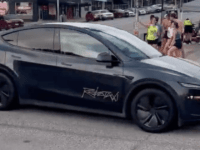
Tesla’s Robotaxi service uses the Model Y, which runs without a safety monitor in eight US cities. They are Austin, San Antonio, Houston, Dallas and Fort Worth in Texas, and Miami, Orlando and Tampa in Florida. Rides in the San Francisco Bay Area still have a Tesla safety monitor on board.
Cybercab rides are only offered in Austin for now, where more than 300 of them run alongside the Model Y robotaxis. Tesla plans to start Cybercab rides in Dallas in November.
Owners can’t put their Cybercab on the Robotaxi network to earn money, unless Tesla allows it in writing or enables the feature. On the same earnings call, Musk said the vast majority of Cybercabs will be owned by Tesla and offered as a ride-hailing service.
What the subscription agreement says

When placing an order, buyers agree to Tesla’s Autonomy Subscription Agreement, which has been posted on X. It says the Cybercab “will not operate without an active Autonomy Subscription”, and that Tesla may change the terms from time to time.
BREAKING: Tesla’s Cybercab Autonomy Subscription terms are now live. A paid monthly subscription is required.
1/12 Tesla: “Your Cybercab will not operate without an active Autonomy Subscription. 🧵— Spencer (@scotsrule08) November 13, 2026
The subscription covers autonomous driving, connectivity, remote support and roadside assistance, including towing of up to about 50 miles (80 km) to a Tesla service centre or the owner’s home. Tyre and windscreen replacement, wipers, cabin air filters and camera cleaning are also covered. For scheduled servicing, the car drives itself to the service centre and back with nobody inside, or it’s transported there if needed.
Owners are responsible for registration, insurance, parking, charging and general cleaning. Unplanned repairs aren’t included, though the vehicle warranty may cover them.
The car is for personal use only, so third-party ride-hailing, delivery and rental work is off limits without Tesla’s approval. Wraps, window tint and wheel changes have to be done by Tesla or an authorised provider.
It only operates in areas Tesla enables, which may differ from the Robotaxi service’s areas and can be expanded or reduced. Tesla can also restrict the car by road type or weather. It can remotely locate, restrict or take control of the car, or put it in a safe state. Three or more “strikeouts” for improper or unsafe use lead to a one-week suspension, during which the car may not operate and the monthly payment isn’t prorated.
There are manual controls for moving the car at up to 2 mph (3 km/h), but they aren’t meant for public roads and need a valid US driving licence. The subscription renews monthly and can be cancelled at any time, with no refund for a part month. Tesla says it will give a month’s notice before changing the price.
Tesla’s Motor Vehicle Binding Order Agreement for the Cybercab bars owners from selling or transferring the car without Tesla’s written permission. Doing so carries damages of at least US$50,000 (RM204,300) or the full value of the deal, whichever is higher, and Tesla can also disable the car. Tesla reserves the right to buy the car back at any time, at a fair market value it determines.
Each car is road tested before delivery, so it arrives with about 250 miles (400 km) on the odometer. Those miles count towards the warranty’s mileage limits. The Cybercab can only be charged at NACS DC fast chargers, including Tesla Superchargers.
Cybercab specifications

Inside, there are two fully adjustable seats, wraparound ambient lighting and a 21-inch centre touchscreen. Tesla quotes 20.1 cubic feet (569 litres) of storage space, enough for luggage, golf clubs and scooters.

The Cybercab’s filing with the US Environmental Protection Agency (EPA) shows a battery of about 47.6 kWh and a single 163 kW (222 PS) motor driving the front wheels. It weighs 1,412 kg. Its unadjusted combined range in the EPA test is 418.2 miles (673 km), which should work out to an official EPA figure of around 470 km.
The body panels get their gold colour from reaction injection moulding instead of paint, and the butterfly doors open and close automatically. There are no side mirrors or rear window.
Under NHTSA audit

Tesla self-certified the Cybercab as meeting US federal motor vehicle safety standards (FMVSS), even though it has no steering wheel, pedals or mirrors. It doesn’t have an exemption from those standards.
The National Highway Traffic Safety Administration (NHTSA) opened an audit query in early September, just as Cybercab rides started. A week later, it issued a special order requiring Tesla to give sworn answers to 21 questions on how the car complies. Tesla filed its response on October 30 and asked for the entire file to be kept confidential. NHTSA hasn’t announced any findings yet.
In June, NHTSA proposed dropping the brake pedal requirement for vehicles that are built only for autonomous driving.
On display in Malaysia

The Cybercab is currently touring Malaysian malls, and its last stop is Gurney Plaza in Penang until November 22. It’s only here for display, as Malaysia has no regulations for autonomous vehicles yet.
GALLERY: Tesla Cybercab on display in Malaysia


Bought a new Tesla? You need to make sure it has an insurance cover note 7 days before delivery day. You can use our Tesla Insurance service to get it insured.




 Tesla Model Y
from RM198,000
 Tesla Model 3
from RM149,000
