
A report by Bernama states that Proton has acquired all of Petronas’ engine technologies as well as the associated technology patents at a cost of RM63 million. The deal encompasses seven engine technologies as well as 117 technology patents.
The reports adds that the acquisition gives Proton immediate ownership of a family of normally-aspirated engines and turbocharged 2.0 litre engines, as well as a 2.2 litre turbocharged version to complement its existing Campro engine line-up, according to Proton chairman Datuk Seri Khamil Jamil.
“Proton and Petronas initiated the engine technology exploration in 1996. It is now time to take over from Petronas, since the company decided in 2010 to exit completely from all engine development activities,” he told reporters at the agreement signing.
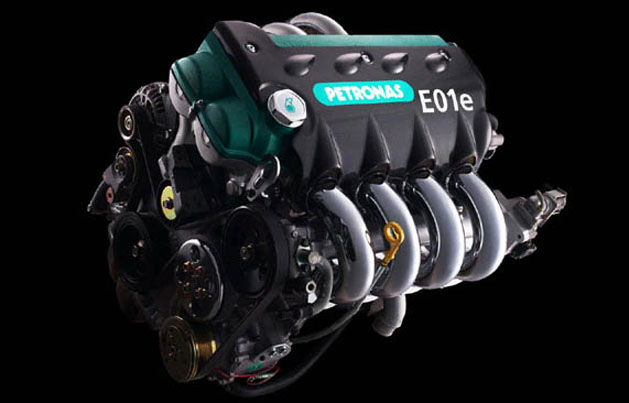
The only Petronas-developed engine revealed to date is the E01e inline-four, 16-valve DOHC engine with variable valve timing, which is a normally-aspirated unit, so the mention of turbocharging could mean previously unrevealed tech.
Designed to be configurable in three displacements (1.8, 2.0 and 2.2 litres), the E01 first appeared in 1998 in a Proton Waja and a Satria GTI.
The original design target for the unit was 200 PS and 200 Nm of output as well as a 120 kg weight – when delivered, these benchmark numbers were surpassed, the rated output being 204.3 PS at 7,300 rpm and 203 Nm at 5,300 rpm, and the engine tipped the scales at 108.9 kg.
Commercially, the engine never made its way into series production Protons, despite an intention to do so. In 2005, it was reported that Nanjing Automobile would be using the Petronas E01 technology in its vehicle line-up. It was later mentioned that the unit was to be built in China.
 Proton S70
from RM59,800
Proton S70
from RM59,800  Proton X90
from RM106,800
Proton X90
from RM106,800  Proton eMas 7 PHEV
from RM109,800
Proton eMas 7 PHEV
from RM109,800  Proton X70
from RM106,800
Proton X70
from RM106,800  Proton Saga
from RM38,990
Proton Saga
from RM38,990  Proton eMas 5
from RM59,800
Proton eMas 5
from RM59,800  Proton X50
from RM89,800
Proton X50
from RM89,800  Proton eMas 7
from RM103,800
Proton eMas 7
from RM103,800 
 sz
on
sz
on 

 kirk
on
kirk
on  mel
on
mel
on  alldisc
on
alldisc
on  Sam Loo
on
Sam Loo
on  Kalun
on
Kalun
on  Jimmy
on
Jimmy
on  insperut
on
insperut
on  Dissapointed Proton Owner
on
Dissapointed Proton Owner
on  Cyberkayu
on
Cyberkayu
on  mystvearn
on
mystvearn
on  yada
on
yada
on  haha
on
haha
on  NVV
on
NVV
on  Cal
on
Cal
on  fazron80
on
fazron80
on  KillBox1Alpha
on
KillBox1Alpha
on  gen y
on
gen y
on  tdci
on
tdci
on  untitled
on
untitled
on  12345
on
12345
on  harrisshazman
on
harrisshazman
on  kzm
on
kzm
on  Heng Lee
on
Heng Lee
on  Continental
on
Continental
on  Danial
on
Danial
on  jl@ipl
on
jl@ipl
on  666
on
666
on  Jonathan Lee
on
Jonathan Lee
on  nazri
on
nazri
on  KK
on
KK
on  haiya
on
haiya
on  superman
on
superman
on  pirlo
on
pirlo
on  superman
on
superman
on  gOOsh
on
gOOsh
on  5050
on
5050
on  mat
on
mat
on  rynn
on
rynn
on  GT3
on
GT3
on  Bujang Lapuk
on
Bujang Lapuk
on  mim
on
mim
on  /k
on
/k
on  Kevin
on
Kevin
on  Name
on
Name
on  MoFaz
on
MoFaz
on  start-a-figt
on
start-a-figt
on  4g63t dsm
on
4g63t dsm
on  theanswer
on
theanswer
on  moha774
on
moha774
on  amokio
on
amokio
on  MrDDR
on
MrDDR
on  Kelvin
on
Kelvin
on  taufic
on
taufic
on  xdm
on
xdm
on  momo
on
momo
on  portnoy
on
portnoy
on  Dick-tator Kim
on
Dick-tator Kim
on  Modesto.hann
on
Modesto.hann
on  llgriver
on
llgriver
on  ajam
on
ajam
on  Karl
on
Karl
on  Lemonguy
on
Lemonguy
on  odi862
on
odi862
on  Vahsa
on
Vahsa
on  nanashisan
on
nanashisan
on  Saga BeLum Masak
on
Saga BeLum Masak
on  RazorBlade
on
RazorBlade
on  V8
on
V8
on  Cosmo Artemis
on
Cosmo Artemis
on  Chz
on
Chz
on  taboogen
on
taboogen
on  crank
on
crank
on  Interior
on
Interior
on  blackgenius007
on
blackgenius007
on  jens lehman
on
jens lehman
on  lanz
on
lanz
on  John
on
John
on  ezracopters
on
ezracopters
on  MatLimMutu
on
MatLimMutu
on  Bob
on
Bob
on  Darenz
on
Darenz
on  momo
on
momo
on  obese
on
obese
on  nighttrain
on
nighttrain
on  ah seng
on
ah seng
on  Pumpkins
on
Pumpkins
on  Sam Loo
on
Sam Loo
on  bux
on
bux
on  lalok_stylo
on
lalok_stylo
on  works
on
works
on  udasalleh
on
udasalleh
on  lordjijul
on
lordjijul
on  Hero86
on
Hero86
on  ayamxxx
on
ayamxxx
on  Hmm
on
Hmm
on  zool
on
zool
on  Mire
on
Mire
on  Cest
on
Cest
on  unforgiven
on
unforgiven
on  teelim
on
teelim
on  dog
on
dog
on  Severe Tyre Damage
on
Severe Tyre Damage
on  vtec-suck
on
vtec-suck
on  Neo
on
Neo
on  dzulx
on
dzulx
on  shawal
on
shawal
on  fast on rolling downhill
on
fast on rolling downhill
on  lcms
on
lcms
on  Wan Abdul Aziz Bin Ismail
on
Wan Abdul Aziz Bin Ismail
on  faisal
on
faisal
on  jc
on
jc
on  longhorn
on
longhorn
on  diamjer
on
diamjer
on  Ononimos
on
Ononimos
on  acab
on
acab
on  kim jong il
on
kim jong il
on  Azmil San
on
Azmil San
on  youyuo
on
youyuo
on  kacak
on
kacak
on  kurt maes
on
kurt maes
on  longjaafar
on
longjaafar
on  Mat Kelakar
on
Mat Kelakar
on  Jaybond
on
Jaybond
on  clutch_plate
on
clutch_plate
on  Abuya
on
Abuya
on  sepul
on
sepul
on  bibo
on
bibo
on  Medic
on
Medic
on  BuyCheapSellExpensive
on
BuyCheapSellExpensive
on  watchman
on
watchman
on  umnokakipitnah
on
umnokakipitnah
on  KL
on
KL
on  shahrom
on
shahrom
on  JeremyNg
on
JeremyNg
on  NeSH
on
NeSH
on  mayonis
on
mayonis
on  shame
on
shame
on  daniel
on
daniel
on  Kaninabei
on
Kaninabei
on  zanggief
on
zanggief
on  Kuntil
on
Kuntil
on  fariz01
on
fariz01
on  sompro
on
sompro
on  NIEKO
on
NIEKO
on  khairul
on
khairul
on  cardreamer
on
cardreamer
on  kurterplunk
on
kurterplunk
on  slasher
on
slasher
on  laser hair removal lubbock
on
laser hair removal lubbock
on  glaze
on
glaze
on  Alson P
on
Alson P
on  fathil asri
on
fathil asri
on
AI-generated Summary ✨
Comments express excitement and optimism about Proton's acquisition of Petronas engine technology, highlighting the potential for improved engines and competitiveness. Many recall the engine’s past capabilities and look forward to its application in Proton cars, while some criticize the technology as outdated. Discussions include the history of Proton's engine development, comparisons with other brands, and hopes that this move will boost Proton's innovation and market position. Overall, sentiments are positive but cautious about the engine's modernity.