2026 Proton Saga review - all the good & bad in full detail


Sell your car to Carro, get paid in 24 hours

Latest Stories

  • 2026 GWM Haval H7 Hi4 previewed in Malaysia – AWD PHEV Jetour T2 rival, 370 PS, 115 km WLTP EV range

    2026 GWM Haval H7 Hi4 previewed in Malaysia – AWD PHEV Jetour T2 rival, 370 PS, 115 km WLTP EV range

    As teased earlier this week, the GWM Haval H7 has made an appearance at the Kuala Lumpur International Mobility Show (KLIMS), signifying the brand’s growth into the lifestyle off-roader sector. In other words, this car has the surprise hit that is the Jetour T2 right in its sights.

    Just like its rival, the H7 is a unibody SUV that looks like a 4×4 – in this case, it’s a facsimile of the body-on-frame H9. With its boxy design, upright stance, squared-off wheel arches and external spare tyre mounted on a sideways-opening tailgate, it certainly looks the part, even if it may not be quite as fashionable as the Defender-aping T2.

    The car arrives in facelifted form, sporting rectangular headlights in place of round ones – putting some distance between it and that H9 – and a new grille with a horizontal light bar. At the back, the quad square taillights have been replaced by twin vertical clusters. The wheels measure 19 inch in diameter and come in a black multi-spoke design.

    2026 GWM Haval H7 Hi4 previewed in Malaysia – AWD PHEV Jetour T2 rival, 370 PS, 115 km WLTP EV range

    The rugged design continues on the inside with an angular dashboard and a chunky passenger grab handle. Ahead of the driver sits a rather cutesy two-spoke steering wheel and a 12.3-inch instrument display, the latter topped by a strange “hood” incorporating the P-R-N-D indicator.

    Meanwhile, the infotainment touchscreen measures 15.6 inches and runs GWM’s latest Coffee OS. There’s a welcome row of physical air-con controls underneath and a wide centre console housing a smattering of physical controls and a rotary drive mode selector. Available features include a power-adjustable driver’s seat, cooled centre console storage, a head-up display, a panoramic sunroof and rear air vents.

    Measuring 4,800 mm long, 1,950 mm wide and 1,843 mm tall, the H7 is 15 mm longer, 56 mm narrower and 27 mm lower than the T2, while its 2,738 mm wheelbase is 62 mm shorter. The extra length is thanks to the full-size external spare tyre, which beats the Jetour’s space saver housed in a slim “backpack”.

    2026 GWM Haval H7 Hi4 previewed in Malaysia – AWD PHEV Jetour T2 rival, 370 PS, 115 km WLTP EV range

    At KLIMS, the H7 is being shown in full-fat Hi4 plug-in hybrid form, powered by twin electric motors. The one at the front makes 109 PS and 170 Nm of torque, while the rear pushes out 204 PS and 350 Nm. This is paired with a 150 PS/230 Nm 1.5 litre turbo four-cylinder engine and a two-speed dedicated hybrid transmission (DHT) for a total system output of 370 PS and 750 Nm.

    So equipped, the H7 is able to sprint from zero to 100 km/h in 6.2 seconds, while the 27.54 kWh LFP battery – larger than the 19.09 kWh set to be offered in the Philippines – delivers a pure electric range of up to 150 km on the CLTC cycle, or 115 km on the WLTP cycle. All in all, GWM quotes a total range of over 1,000 km.

    Aside from the Hi4, the H7 is also available in 2WD hybrid and PHEV forms, both with a 177 PS/300 Nm front motor for total outputs of 244 PS and 540 Nm for the hybrid and 322 PS for the PHEV. The latter is also fitted with a smaller 19.09 kWh LFP pack, maintaining an NEDC range of 105 km (circa 90 km WLTP).

    Even though the H7 isn’t a pukka 4×4, GWM has still baked in some decent off-road capability, with an electronic locking rear differential and approach, breakover and departure angles of 25 degrees, 32 degrees and 20.1 degrees respectively. The max water wading depth, however, is only 580 mm, which is significantly lower than the T2’s 700 mm.

    Pricing and availability have yet to be announced, but expect the H7 to arrive later this year, likely in CKD locally-assembled form. It will need to be to match the price of the T2, which retails at RM156,800 nett.

     
  • GWM Ora 5 HEV previewed in Malaysia at KLIMS 2026 – 1.5T hybrid ‘Good Cat SUV’, over 1,100 km WLTP

    GWM Ora 5 HEV previewed in Malaysia at KLIMS 2026 – 1.5T hybrid ‘Good Cat SUV’, over 1,100 km WLTP

    Always liked the looks of the Ora Good Cat but wished it was a bit bigger? GWM Malaysia has previewed the Ora 5 HEV at the ongoing Kuala Lumpur International Mobility Show (KLIMS) 2026.

    What it is, is a little SUV powered by GWM’s Hi2 hybrid system – ‘H’ for hybrid, ‘i’ for intelligent and ‘2’, GWM says, represents two benefits, namely efficiency and performance. You can also think of ‘2’ as referring to two-wheel drive (since GWM calls its four-wheel drive hybrids Hi4), because only the front wheels are powered on the Ora 5 HEV.

    Let’s get the powertrain out of the way first – the Ora 5 HEV has a 1.5 litre turbo engine, a two-speed dedicated hybrid transmission (DHT) with an integrated electric motor, a 1.09-kWh battery and a 223 PS/476 Nm combined output for a 7.7-second 0-100 km/h time, a 22.7-km per litre claimed fuel economy and a WLTP range of over 1,100 km.

    At 4,471 mm long, 1,833 mm wide and 1,641 mm tall, with a 2,720-mm wheelbase, the Ora 5 sits between the BYD Atto 3 and the Proton eMas 7 where size is concerned. It’s also 236 mm longer, 58 mm wider and 45 mm taller than the Good Cat, while having a 70-mm longer wheelbase.

    There are MacPherson struts and ventilated discs up front; multi-links and solid discs out back. The 18-inch alloys are wrapped in 225/60 rubber.

    Going by Thai specs, the car gets a 10.25-inch instrument panel, a 14.6-inch touch-screen, wireless Apple CarPlay/Android Auto, app functionality, OTA updates, six speakers (nine on the range-topping Ultra), 50-watt wireless charging, a six-way powered driver’s seat (Ultra adds ventilation and three memory settings), a four-way manual front passenger seat (Ultra adds power adjustment and ventilation) and leather seats.

    ADAS is standard, including AEB, ACC and various lane functions, but the Ultra adds lane change assist, blind spot detection, door open warning, emergency lane keeping, rear cross traffic alert, rear cross traffic braking, front cross traffic alert and front cross traffic braking.

    The starting price in Thailand is 729k baht (RM90k) but since our Ora Good Cat Ultra and Ora Good Cat GT are already RM110k and RM120k respectively, how much are you willing to fork out for the Ora 5 HEV?

     
  • 2026 Proton X50 Sport Edition on display at KLIMS – kitted-out variant to go on sale later in lifecycle?

    2026 Proton X50 Sport Edition on display at KLIMS – kitted-out variant to go on sale later in lifecycle?

    The 2026 Proton X50 Sport Edition gets its public showing at the 2026 Kuala Lumpur International Mobility Show (KLIMS 2026), and the facelifted B-segment SUV that was launched in July last year gets a selection of styling tweaks.

    Taking on a black-out aesthetic similar to that of its larger stablemate the X70 Sport Edition, the X50 Sport Edition is shown with a black exterior colour that is joined by the black-out treatment for its trim sections which are in matte silver on the regular X50.

    Meanwhile, red highlights – such as on the grille trim of the standard-run model – also feature on the front splitter, side skirts and the rear diffuser. The rather prominent rear spoiler is actually standard on the X50 Flagship.

    The Sport Edition treatment for the latest X50 mimics that of the previous version, which was shown at the 2024 running of KLIMS. Like its predecessor, this latest Sport Edition isn’t available to purchase at this initial public showing, though it could go on sale later on in the X50’s lifecycle.

    2026 Proton X50 Sport Edition on display at KLIMS – kitted-out variant to go on sale later in lifecycle?

    It remains to be seen as to which variant of the X50 will underpin the Sport Edition should it come to market, and it won’t necessarily be based on the range-topper, as the previous Sport Edition was based on the Premium rather than the Flagship with the more powerful engine in the X50 line-up at the time.

    There’s yet to be access to the interior of the latest X50 Sport Edition, though like its predecessor, the black-and-red colour scheme of its cabin already matches that of the dressed-up exterior.

    In the case of the current X50, its powerplant is the 1.5 litre BHE15TD turbocharged and direct injected unit, producing 181 PS at 5,500 rpm and 290 Nm of torque between 2,000 rpm and 3,500 rpm, driving the front wheels through a seven-speed wet dual-clutch automatic transmission.

    Three variants of the Proton X50 facelift are currently on sale – the 1.5TD Executive at RM89,900, the 1.5TD Premium at RM101,800, and the 1.5TD Flagship at RM113,300.

     
  • Perodua C2 Concept unveiled at KLIMS 2026 – ‘Chapter 2’ prototype previews P2’s future EV sedan

    Perodua C2 Concept unveiled at KLIMS 2026 – ‘Chapter 2’ prototype previews P2’s future EV sedan

    There’s only one world debut at the KL International Mobility Show (KLIMS) 2026, which opens for the media today at MITEC (public days are from June 12-21), and its from local carmaker Perodua. The quiet folks from Rawang pulled the drapes off the Perodua C2 Concept moments ago, and it’s quite a sight.

    C2 stands for ‘Chapter 2’ and this B-segment sedan showcar is our first look at the second chapter of Perodua electric vehicle journey, following the QV-E that was launched in December 2025.

    Perodua says that the C2 ‘represents an entirely different styling direction, incorporating the latest technology and created by our young and talented designers, which represent their vision of what the future of EV would look like’. It’s inspired by the Alpha and Beta generations, they say.

    Perodua C2 Concept unveiled at KLIMS 2026 – ‘Chapter 2’ prototype previews P2’s future EV sedan

    “The C2 is part of our ongoing EV storyline. It expands our narrative of made by Malaysians for the world as we improve the future of mobility experience for our customers,” said Perodua president and CEO Datuk Seri Zainal Abidin Ahmad. “The C2 will be our basis for our future EV, and we are looking forward to engaging with visitors to our booth on their views and comments to ensure that our future product will exceed our customers’ expectations,” he added.

    The P2 C2 is conceptualised with AI driving assist features such as real-time navigation, charging station locations, traffic updates, enhanced anti-theft features and assisted parking.

    “We have greatly integrated our P-Circle super app into this prototype so that our customers can access a world of convenience – from a secure e-wallet app to priority genuine parts delivery – the C2 represents the future in mobility integration,” Zainal said. The P-Circle super app and its ecosystem was launched in October 2025, intended for P2’s EV future. By then, battery swapping might be a thing.

    Perodua C2 Concept unveiled at KLIMS 2026 – ‘Chapter 2’ prototype previews P2’s future EV sedan

    Perodua says that the C2 represents a new phase of its design language that is distinct from the previous eMO look that culminated in the production QV-E. The wavy body features a bunga pecah lapan theme (as seen on the lighting at both ends) as well as a new logo, which if you look closely, is a stylised P2 – do you see the ‘2’?

    Future Bezza EV? What do you think of the Perodua C2 Concept? Full gallery coming your way soon.

    GALLERY: Perodua C2 Concept at KLIMS 2026

     
  • TQ Wuling Huajing S makes Malaysian debut at KLIMS – six-seat 1.5T PHEV SUV co-developed with Huawei

    TQ Wuling Huajing S makes Malaysian debut at KLIMS – six-seat 1.5T PHEV SUV co-developed with Huawei

    TQ Wuling clearly has intentions of moving upmarket beyond the little Bingo, as the TQ Wuling Huajing S has been unveiled at the ongoing Kuala Lumpur International Mobility Show (KLIMS) 2026 – not only is it a Malaysian debut for the six-seat PHEV; it’s its first appearance outside China.

    Sold under the (slightly) more upmarket Baojun marque in China, the Huajing S (which will almost certainly be renamed for Malaysia) debuted globally at Auto China 2026 in Beijing, so it’s very new. It’s a joint development between SAIC-GM-Wuling and Huawei – hence the ‘Hua’ in the name.

    The tech giant has played a significant role in the car’s design as part of the Huawei Inside (HI) Plus model, so it’s no surprise that it bears a slight resemblance to the original Aito M7, developed under the even-more-involved Harmony Intelligent Mobility Alliance (HIMA).

    TQ Wuling Huajing S makes Malaysian debut at KLIMS – six-seat 1.5T PHEV SUV co-developed with Huawei

    That much is visible through the visor-like front end, which on the Huajing S incorporates the headlights and a striking lightning-shaped full-width light bar. This sits above a large hexagonal lower grille and vertical corner air inlets, joined together by a large U-shaped chrome bar.

    Meanwhile, the side profile is dominated by a hockey stick-like swage line that incorporates the front fender appliqués. The D-pillars are fairly upright, befitting the car’s status as a posher model, while the full-width taillights mirror the front’s lightning graphic.

    Standing in contrast to the bijou Bingo, the Huajing S is a massive SUV, measuring 5,235 mm long, 1,999 mm wide and 1,800 mm tall with a 3,105 mm wheelbase. That makes it a whopping 415 mm longer than the already-sizeable Jaecoo J8 and even the new Denza B8.

    TQ Wuling Huajing S makes Malaysian debut at KLIMS – six-seat 1.5T PHEV SUV co-developed with Huawei

    Inside, the Huajing S features a cookie-cutter Chinese car interior, with a minimalist dashboard, big screens and twin smartphone holders. As befits a Huawei-developed model, there’s plenty of tech on board, with the 8.8-inch instrument display and 15.6-inch infotainment touchscreen both running on HarmonySpace 5, the automotive version of the firm’s in-house HarmonyOS 5 software.

    Also fitted as standard is Huawei Qiankun ADS Pro, a suite of driver assists that uses the Limera (lidar and camera) array at the top of the windscreen to deliver highly-automated highway and city driving and remote park assist with an automated valet function. Don’t expect this to make it to Malaysia, however.

    Other features include a 50-watt Qi wireless charger, 15-speakers, dual sunroofs, powered second-row captain seats with ottoman, heating, ventilation and massage for the first two rows, a fridge with heating and cooling, and a 15.6-inch roof monitor. The boot swallows 423 litres even with all six seats up.

    Power comes from a single front electric motor producing 272 PS (200 kW) and 310 Nm of torque, with an available dual-motor all-wheel-drive version pushing out a sum total of 525 PS (386 kW) and 620 Nm. This is paired with a 143 PS/220 Nm 1.5 litre turbo four-cylinder engine and a single-speed dedicated hybrid transmission (DHT).

    The motors are juiced by a choice of two LFP batteries – a 31 kWh unit in the base FWD model delivers a claimed CLTC range of 200 km, while a 41.9 kWh CATL pack boosts this figure to 255 km, or 235 km with AWD. Expect WLTP numbers closer to 160 km, 200 km and 190 km respectively. The car also supports up to “3.5C” DC fast charging (around 145 kW) and can be charged from 10 to 70% in as little as 14.5 minutes.

    If the Huajing S does go on sale here, it will likely be the second Huawei-influenced model offered in Malaysia, with the Avatr 07 from Changan – another HI Plus car – also being considered. Will TQ Wuling be able to justify this huge gap to the Bingo? Let us know what you think in the comments.

     
  • Proton FutureMotion HEV at KLIMS – i-HEV hybrid coming soon, to debut in AMA02 this year?

    Proton FutureMotion HEV at KLIMS – i-HEV hybrid coming soon, to debut in AMA02 this year?

    Aside from the new eMas 7 Premium Plus and CKD locally-assembled eMas 5, Proton has also showcased its FutureMotion HEV hybrid technology at the Kuala Lumpur International Mobility Show (KLIMS). This is a version of Geely’s i-HEV powertrain, which debuted in China earlier this year.

    The setup is essentially that of the eMas 7 PHEV, except shorn of its large 18.4/29.8 kWh Aegis short blade LFP battery. This is led by a 1.5 litre BHE15 four-cylinder engine, with the one shown here being the naturally-aspirated version.

    Proton calls this a dedicated hybrid engine (DHE), closer in design to the eMas 7 PHEV’s mill instead of the i-GT engine used in the turbo X50 and NA Saga. It uses a slightly modified block and runs on an Atkinson cycle full-time, rather than only in certain conditions as per the other cars, and is fitted with single instead of dual VVT.

    Proton FutureMotion HEV at KLIMS – i-HEV hybrid coming soon, to debut in AMA02 this year?

    The powertrain is already fitted to Geely hybrids like the Emgrand i-HEV

    The engine also adopts an electrically-powered alternator and air-con compressor, joining the electric water pump the Saga already comes with and eliminating the auxiliary belt. The exhaust gas recirculation (EGR) system is different from one in the i-GT mills as well.

    The only model currently on sale with this powertrain is the Geely Preface i-HEV, which uses a 111 PS/136 Nm version of the engine – with a record thermal efficiency of 48.41% – and a 190 PS/240 Nm motor housed within the 11-in-1, single-speed dedicated hybrid transmission (DHT).

    As the eMas 7 PHEV proved, however, this DHT could easily be mated to the less powerful 99 PS/125 Nm BHE15-DFN mill, which has a thermal efficiency of just 46.5%. The electric motor is also available in a less powerful 163 PS/210 Nm tune, as used in the Geely Galaxy Starshine 6/Emgrand EM-i.

    Proton FutureMotion HEV at KLIMS – i-HEV hybrid coming soon, to debut in AMA02 this year?

    Saga Cross render by Theophilus Chin

    This is important because Proton has already confirmed that it will use a “DHT120” for a yet-to-be-launched SUV, with the number standing for the motor’s output in kW – this conveniently converts to 163 PS. The company’s deputy CEO Abdul Rashid Musa said during his KLIMS presentation that the powertrain is slated to debut in a new model very soon, with the engine and DHT set to be assembled in house in Tanjung Malim.

    We can think of two separate possible models. The first is a rebadged version of the fifth-generation Geely Emgrand, which will soon receive the i-HEV powertrain in China. We don’t expect this to arrive here within the next couple of years, however, as such a vehicle would at least partially replace the S70 – and given that the sedan has only recently been refreshed, it will likely soldier on for a while yet.

    The much more likely option would be the second model built on the Advanced Modular Architecture (AMA02), expected to be a Perodua Ativa-rivalling A-segment SUV. The car, widely tipped to be called the Saga Cross, will enter production at the end of the year. Excited? Let us know in the comments.

     
  • 2026 Proton eMas 7 Premium Plus launched with 68.39 kWh battery, 115 kW DC, 450 km WLTP; RM119k OTR

    2026 Proton eMas 7 Premium Plus launched with 68.39 kWh battery, 115 kW DC, 450 km WLTP; RM119k OTR

    The Proton eMas 7 Premium Plus is now the range-topping variant for the eMas 7 EV line-up and it has been launched in Malaysia, packing a larger, 68.39 kWh battery and taking after its overseas twin, the Geely EX5 with the larger battery and resulting longer battery range, as well as added equipment.

    The eMas 7 Premium Plus sits at the top of a three-strong range that is locally assembled (CKD) at Proton’s dedicated EV plant in Tanjong Malim:

    eMas 7 Premium Plus – RM118,800
    eMas 7 Premium – RM112,800
    eMas 7 Prime – RM96,800

    2026 Proton eMas 7 pricing and specifications; click to enlarge

    Here, launch pricing for the eMas 7 Premium Plus includes a RM5,000 trade-in rebate, a RM1,500 complimentary 7 kW home charger, a RM500 V2L adapter, and a five-year, unlimited data plan with RM1,800, as well as a complimentary tonneau cover.

    In the Premium Plus, this offers up to 450 km of range on the WLTP standard when specified with 19-inch wheels shod in 235/50R19 tyres (as on the Premium), up from the 410 km WLTP range figure of the Premium variant with the 60.22 kWh battery, or an 40 km increase.

    Drivetrain is unchanged from before, and thus the eMas 7 EV carries over the 218 PS/320 Nm front-mounted motor takes slightly longer on the 0-100 km/h benchmark at 7.4 seconds, compared to the Prime that takes 6.9 seconds and the Premium that takes 7.1 seconds. According to Proton, the Premium Plus with the larger battery weighs 1,815 kg, or 50 kg heavier than the Premium that weighs 1,765 kg.

    2026 Proton eMas 7 Premium Plus launched with 68.39 kWh battery, 115 kW DC, 450 km WLTP; RM119k OTR

    The larger battery capacity is accompanied by a fast charging figure of 115 kW DC, and Proton quotes the same 20 minute duration for charging from 30-80%. Likewise, AC charging continues to be at 11 kW, and thus takes 6.7 hours for a 10-100% charge; up from 6.1 hours for the Premium with the 60.22 kWh battery.

    New equipment added to the Premium Plus includes a leg rest for the front passenger seat, and a massage function for the driver and front passenger ventilated seats.

    Elsewhere, the Premium Plus mirrors the Premium for equipment with memory for front passenger seat adjustment, and a front passenger seat leg rest, plus a self-dimming rear view mirror, a 16-speaker Flyme audio system with headrest speakers, and a windshield-projected head-up display.

    The same applies to ADAS, thus the Premium Plus similarly gets brings evasive manoeuvre assist, active lane change assist and front cross traffic alert as found in the Premium, in addition to intelligent cruise control, AEB, emergency lane keep assist, lane change safety warning and traffic sign recognition that is offered range-wide from the base Prime variant.

    Accompanying the top Premium Plus are the Premium and Prime variants, which continue to use batteries of 60.22 kWh and 49.52 kWh capacities offering 410 km (WLTP) and 345 km (WLTP) respectively.

    Six exterior colours are offered for the 2026 Proton eMas 7; these are Lithium White, Turquoise Green, Slate Grey, Platinum Silver, Quartz Rose and Obsidian Black. Two interior colours are offered, Indigo Blue and Alabaster White, though the latter is exclusive to being paired with Turquoise Green and Quartz Rose in the Premium and Premium Plus variants.

    The 2026 Proton eMas 7 is sold in Malaysia with a six-year, unlimited mileage vehicle warranty and an eight-year, 160,000 km warranty for the high-voltage battery and related components.

    2026 Proton eMas 7 brochure

     
  • Zeekr 9X now open for booking in Malaysia – flagship PHEV SUV previewed at KLIMS; est price from RM800k

    Zeekr 9X now open for booking in Malaysia – flagship PHEV SUV previewed at KLIMS; est price from RM800k

    As planned, Zeekr Malaysia has revealed the Zeekr 9X at this year’s Kuala Lumpur International Mobility Show (KLIMS) as part of a preview before a launch takes place in late 2026 or early 2027.

    Order taking for the brand’s flagship SUV starts today as well, with estimated pricing from RM800,000. If the price announced on launch day is around that mark, the 9X will be the most expensive Zeekr model on sale in Malaysia.

    However, you’re getting a lot for the money. Measuring 5,239 mm long, 2,029 mm wide, 1,819 mm tall and with a wheelbase of 3,169 mm, the 9X occupies a large footprint and looks properly stately with its boxy shape, imposing front grille, dual-tier front lighting and full-width taillights. Some call it ‘China’s Rolls-Royce Cullinan’, and they do have a point.

    As for the three-row interior, you get fancy materials like Nappa leather seat upholstery, a suede headliner, ‘Nordic’ natural wood veneer trim and a crystal media control knob. No shortage on toys either, as the 9X is available with ambient lighting, powered seats (with heating, ventilation and massage functions), a 13-inch digital instrument cluster, dual 16-inch 3.5K OLED infotainment and front passenger touchscreens, a refrigerator, 32 speakers and a rear 17-inch ceiling-mounted display.

    Zeekr 9X now open for booking in Malaysia – flagship PHEV SUV previewed at KLIMS; est price from RM800k

    Built on the SEA-S platform with a 900-volt electrical architecture, the 9X features the Geely Group’s SEA Super Hybrid, which is a plug-in hybrid system. The fundamentals include a 2.0 litre turbocharged engine making 279 PS (275 hp or 205 kW), which is augmented by electric motors that are linked to a nickel manganese cobalt (NMC) battery pack in either 55- or 70-kWh capacities.

    In its most potent form, the 9X comes with a 70-kWh battery and three electric motors (two rear, one front) for a total system output of 1,400 PS (1,381 hp or 1,030 kW) and 1,410 Nm of torque. We’re told the 9X previewed at KLIMS is with a lesser powertrain, one with just two electric motors (one front, one rear) and a choice of a 55- or 70-kWh battery for 897 PS (885 hp or 660 kW) and 935 Nm.

    These figures will scare many sports cars, with the 9X capable of getting from 0-100 km/h in as little as 3.1 seconds. (3.9 or 4.2 seconds with lower outputs). Top speed is limited to 240 km/h across the line-up.

    Following the WLTP standard, the 9X’s electric-only range is between 235 and 302 km depending on the powertrain configuration, with the combined hybrid driving range between 982 and 1,015 km. With its high-voltage system, DC fast charging from 20-80% state of charge takes just nine minutes.

    The list goes on, as the 9X comes with dual-chamber air suspension and continuous damping, with 48-volt active roll stabilisation available as an option. Unsurprisingly, the flagship gets a comprehensive suite of ADAS functions powered by a smorgasbord of hardware, including a roof-mounted LiDAR.

    The 9X ranges from 465,900 to 599,900 yuan (about RM280k to RM360k) in China. Given it is a PHEV, it is not subject to the same excise duty as a pure electric vehicle (EV) imported into Malaysia. Instead, engine displacement decides what excise duty is charged, which ranges between 75% and 105% – 90% since this is within the 2,000 to 2,499 cc tier.

    We should point out the car being displayed is a left-hand drive example from China and isn’t fully reflective of what we’ll get. As such, we’ll have to wait for Zeekr Malaysia to provide more details but for now, know that the 9X is expected to be priced from RM800,000. Looking forward to this tauke mobile?

     
  • Proton eMas 5 CKD shown in Malaysia – new tonneau cover standard since June 1, still 325 km, fr RM57k

    Proton eMas 5 CKD shown in Malaysia – new tonneau cover standard since June 1, still 325 km, fr RM57k

    Continuing our coverage of the Kuala Lumpur International Mobility Show (KLIMS), Proton has shown an eMas 5 with a little extra something. If you look at the manufacturer sticker on the driver’s door sill, you’ll spot a Proton version instead of Geely’s, pointing to this being a CKD locally-assembled unit.

    As the national carmaker revealed last week, production at its dedicated EV plant in Tanjung Malim will kick off this month, with the CKD model set to replace CBU fully-imported stock soon. Unlike the eMas 7, which received a price drop with the start of local assembly, the eMas 5 will continue unchanged at RM56,800 on-the-road without insurance for the Prime and RM69,800 for the Premium, both with a RM3,000 launch rebate.

    There are no changes to the cutesy exterior, nor the interior with its dual-cowl design, 8.8-inch instrument display and 14.6-inch infotainment touchscreen. The only tweak is to the 375 litre boot, which gains a standard-fit hard tonneau cover – and which, by the way, will be provided to all customers who purchase the eMas 5 starting June 1, including CBU units. Previous rumours of updates such as power-folding door mirrors and a rear wiper were wide off the mark.

    Proton eMas 5 CKD shown in Malaysia – new tonneau cover standard since June 1, still 325 km, fr RM57k

    Proton has also left the mechanicals well alone. The Prime continues to push 79 PS (58 kW) and 130 Nm of torque through its single front motor, while the 30.12 kWh CATL LFP battery delivers a range of just 225 km on the WLTP cycle. Meanwhile, the Premium produces 116 PS (85 kW) and 150 Nm, with the larger 40.16 kWh battery enables it to travel a more respectable 325 km on a single charge.

    We should point out that the eMas 5 has yet to receive the Chinese-market Geely Xingyuan’s even bigger 47.14 kWh battery (not that it was realistic to expect that, given that the update was only introduced two weeks ago). This boosts range to 480 km on China’s wildly optimistic CLTC cycle (expect a WLTP figure closer to 390 km). Like the eMas 7, we could see the car gaining it as part of a Premium Plus variant, perhaps sometime next year.

    In any case, the eMas 5 continues to support 53 kW of DC fast charging on the Prime and 71 kW on the Premium; both can be topped up from 30 to 80% in 21 minutes. They also accept up to 6.6 kW of AC charging, taking 4.3 and 5.9 hours respectively to charge from 10 to 100%.

    Standard kit includes halogen headlights, 15-inch steel wheels with hubcaps (still wrapped in Linglong Comfort Master tyres), keyless entry, push-button start, manual air-con, manual seat adjustment, faux leather upholstery, wireless Apple CarPlay and Android Auto, rear air vents, 20 litres of rear under-seat storage, four speakers, a reverse camera and a 70 litre front boot. Safety equipment comprises of six airbags, blind spot monitoring, rear cross traffic alert rear collision warning and a door opening warning.

    The Premium adds LED headlights and daytime running lights, a black roof, 16-inch alloy wheels, a faux leather-wrapped steering wheel, a rear USB-A port, a 360-degree camera setup, six speakers and a powered tailgate. It also gains driver assists such as autonomous emergency braking, adaptive cruise control with stop and go, lane departure warning and traffic sign recognition.

     
  • MG ZS Hybrid+ B-SUV open for booking in Malaysia – early birds get RM3k rebate, 3-year free service

    MG ZS Hybrid+ B-SUV open for booking in Malaysia – early birds get RM3k rebate, 3-year free service

    SAIC Motor Malaysia has unveiled local specifications of the MG ZS at the KL International Mobility Show (KLIMS) 2026, which opens for the media today at MITEC (public days are from June 12-21). Now open for booking, the ZS, a B-segment SUV, will have two powertrain variants in Malaysia – Lux Turbo and Lux Hybrid+. Of the two, the hybrid will be launching soon while the pure-petrol version will come later.

    The ZS actually predates the S5 EV. Not many will remember this, but the ZS EV was one of MG Motor Malaysia’s launch models alongside the MG4 back in March 2024. A new generation ZS appeared later that year, and made it to the previous KLIMS in December 2024.

    This generation of ZS is much larger than the one before – over 100 mm longer (4,430 mm) and nine mm wider (1,818 mm), with a 29 mm longer wheelbase (2,610 mm). MG says that it’s the largest B-segment SUV in town. There’s 443 litres of boot space, expandable to 1,457 litres with the rear seats folded.

    MG ZS Hybrid+ B-SUV open for booking in Malaysia – early birds get RM3k rebate, 3-year free service

    The hybrid’s 102 PS/128 Nm 1.5-litre naturally-aspirated four-pot is paired with a 136 PS/250 Nm electric motor, a three-speed hybrid transmission and a 1.83 kWh battery. Total system output is 196 PS and 465 Nm of torque, good for 0-100 km/h in 8.7 seconds, while achieving claimed fuel consumption of 5.1 litres per 100 km on the WLTP cycle.

    MG says that the ZS is the fastest B-segment hybrid SUV in the market, while offering a range of up to 870 km on a 41-litre fuel tank. By the way, the Turbo that will come later is powered by a 1.5T with 170 PS/275 Nm, mated to a CVT.

    Highlighted features include ‘Connected Hunter Eyes’ headlights, LED taillights, 18-inch alloys with 215/50 tyres, a 12.3-inch ‘floating’ infotainment display and a digital instrument cluster. The MG Pilot ADAS 2.5 suite of driver assist features is standard, along with the MG iSmart app, which allows owners to remotely access and control key vehicle functions from their phones.

    MG ZS Hybrid+ B-SUV open for booking in Malaysia – early birds get RM3k rebate, 3-year free service

    The MG ZS Hybrid+, which will be CKD locally assembled at the EPMB Melaka plant alongside the S5 EV, is available in four colours – red, silver, black and white – all with an all-black cabin. Final specs and pricing will be unveiled at the launch, which will happen very soon. It’s open for booking now for a RM99 fee, and early birds will get a RM3,000 rebate and three years of free maintenance.

    So, what do you think of the MG ZS Hybrid+’s looks and package?

    GALLERY: 2026 MG ZS Hybrid+ at KLIMS 2026

    GALLERY: MG ZS Hybrid official images

     
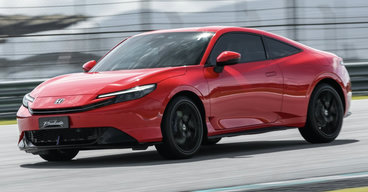
  • 2026 Honda Prelude launched in Malaysia – 203 PS, 2.0 litre hybrid, S+ Shift, Civic Type R chassis, RM278,000

    2026 Honda Prelude launched in Malaysia – 203 PS, 2.0 litre hybrid, S+ Shift, Civic Type R chassis, RM278,000

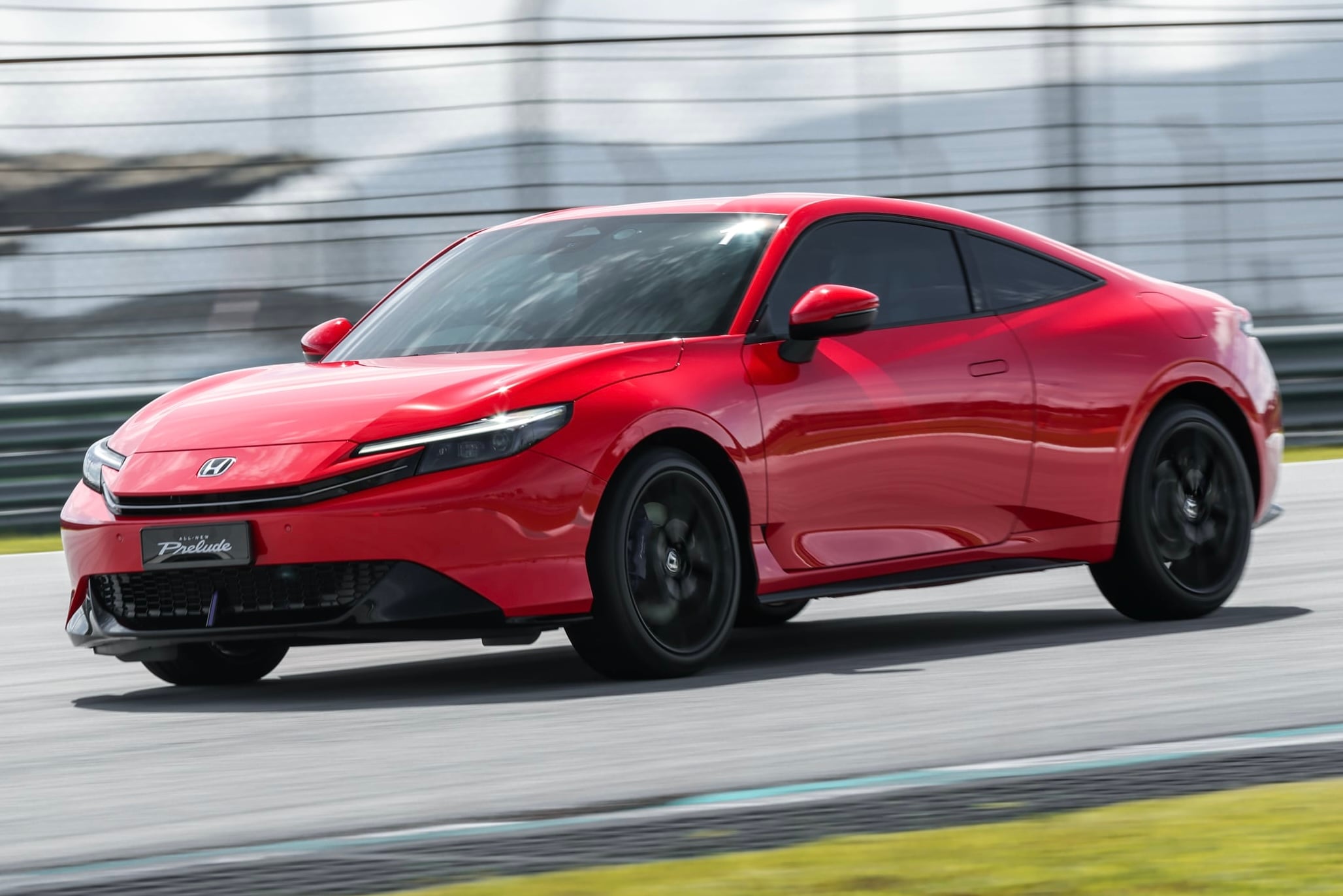
    First previewed here in April, and then again last month at a test session in Sepang, the Honda Prelude has now finally made its local market debut, with Honda Malaysia (HMSB) officially launching the sixth-gen coupe earlier this morning at the Kuala Lumpur International Motor Show (KLIMS) 2026.

    The BF1 Prelude arrives in Malaysia in a single trim form, priced at RM278,000, on-the-road without insurance, which is significantly lower than what was anticipated, given its price positioning above the FL5 Civic Type R in its domestic market. Despite being slightly cheaper than the CTR in the US, the initial expectation was that it would hover close to the latter’s pricing here.

    Buyers can look forward to a stylish 2+2 coupe measuring in at 4,522 mm long, 1,880 mm wide and 1,355 mm tall, with a 2,605 mm-long wheelbase. From an exterior design veiwpoint, the Prelude has plenty of physical presence, and while the cab forward profile is unmistakably Civic from the nose to the A-pillar, the subsequent flow through has enough to provide the car with its own distinct character.

    2026 Honda Prelude launched in Malaysia – 203 PS, 2.0 litre hybrid, S+ Shift, Civic Type R chassis, RM278,000

    There’s only one powertrain choice for the car, and that’s an Intelligent Multi-Mode Drive (i-MMD) hybrid system similar to the one found in the Civic 2.0L e:HEV and CR-V e:HEV. This combines the workings of an electric motor and petrol engine, with the latter being a LFC-H4 2.0 litre naturally-aspirated inline-four petrol engine running on an Atkinson cycle.

    Output from the unit is 141 PS (139 hp or 104 kW) at 6,000 rpm and 182 Nm of torque at 4,500 rpm, identical to the Civic e:HEV. The engine acts primarily as a generator for a 72-cell, 1.05 kWh capacity unit battery, which provides juice for a front traction motor offering 184 PS (181 hp or 135 kW) and 315 Nm, with an electric CVT handling transmission duties.

    When needed, the engine can also be clutched in to directly drive the wheels, bringing the total system output to 203 PS (200 hp or 149 kW). Performance specifications for the 1,469 kg offering include a 0-100 km/h time of 8.2 seconds and a 188 km/h top speed, with fuel economy quoted at 4.2 litres per 100 km.

    While the hybrid powertrain is shared with the Civic e:HEV, its underpinnings and chassis components, such as a dual-axis strut front suspension and adaptive dampers, come from the FL5 CTR. The Prelude, which rides on black twin-five spoke 19-inch alloy wheels wrapped with 235/40 profile tyres, also features a Brembo brake system with 13.8-inch front and 12-inch rear rotors, with the calipers finished in Prelude Blue.

    The Prelude is the first Honda product in Malaysia to feature the automaker’s S+ Shift, which simulates gear shifts of an eight-speed transmission unit and integrates with Active Sound Control to offer an elevated aural experience on upshifts and downshifts. Three default drive modes (Comfort, Sport and GT) are available for the car, with Individual adding one more customisable option.

    Also to be found is Honda Agile Handling Assist, which is said to improve steering responsiveness and stability during cornering. This is said to enable seamless line-tracing from turn-in to corner exit, contributing to enhanced stability of vehicle behaviour even in difficult situations such as obstacle avoidance. Additionally, the driveshaft is said to have uniform rigidity to suppress torque steer and enhance steering stability.

    Exterior equipment on this one includes automatic LED headlights, LED daytime running lights, active cornering lights and side mirrors with integrated indicators. The rear lights are combination units, while the radio antenna is fitted into the glass area of the rear liftback gate. Elsewhere, there’s remote engine start, walk away auto lock and smart entry functionality.

    Inside, you’ll find a general presentation similar to the Civic, although the dashboard configuration in the two-tone interior has been altered with the use of hexagonal air vents minus the full-width mesh of the standard Civic, and the Prelude also gets a unique flat-bottomed, three-spoke leather-wrapped steering wheel with a 12 o’clock marker.

    Another unique item to the Prelude are its front seats, which feature distinctive high shoulders and plenty of bolstering support, and more importantly, dedicated ergonomics and a seat profiling tailored specifically to driver and front passenger. The manual adjustment (six-way driver, four-way passenger) front units are dressed in leather and finished in a two-tone blue and white scheme, common to all three exterior colour choices available for the car here.

    As for the rear seats, they are finished in fabric. In a nod to the past, the inside of the seatbelt guide/retainer of the driver’s seat features a sequence of numbers, exposed when you unbutton the unit for access to the rear bench. That’s the date when the first-gen Prelude went on sale in Japan. There’s another Easter egg homage to the music-themed nameplate, to be found on the windscreen.

    The fully digital 10.2-inch TFT meter is familiar territory, as is a 9.0-inch Display Audio freestanding central infotainment screen, but the centre console has been reworked, now housing a push-button gear selector instead of a gear lever. The selector is flanked by a switch for the electronic parking brake as well as the drive mode selector, with the S+ Shift system accessed by a large button located on the left side of the console.

    Standard fit items and features include sport aluminium pedals, dual-auto air-conditioning, an auto dimming rear view mirror, LED ambient lighting, two Type-C USB connection ports, a wireless mobile charger and an eight-speaker Bose sound system, along with wireless Apple CarPlay and Android Auto support.

    2026 Honda Prelude launched in Malaysia – 203 PS, 2.0 litre hybrid, S+ Shift, Civic Type R chassis, RM278,000

    In terms of safety and driving assistance kit, the Prelude comes equipped with seven airbags (front, side, side curtain and knee), four front and four rear parking sensors, a reverse camera and a full Honda Sensing suite, with adaptive cruise control, blind spot monitoring and the cross traffic monitor among the items on the list.

    As for the three exterior colour choices mentioned earlier, they are Winter Frost Pearl, Rallye Red and Crystal Black Pearl. The Honda Prelude comes with a five-year unlimited mileage vehicle warranty and five times free labour service (within 100,000 km or five years), with the hybrid battery and related components coming with a 10-year unlimited mileage warranty.

    We’ve driven the BF1 Prelude at Sepang – read our first drive report here.

     
  • The All-New Honda Prelude is coming to Malaysia – see the hybrid sports coupé at KLIMS 2026

    The All-New Honda Prelude is coming to Malaysia – see the hybrid sports coupé at KLIMS 2026

    An iconic nameplate returns. The All-New Honda Prelude is set for its official Malaysian market debut, and the 2+2 coupé will be the leading light for Honda’s hybrid powertrain models in Malaysia, and this will be the first hybrid sports coupé to be offered by Honda Malaysia.

    Electrified motoring need not be short on excitement, as the All-New Honda Prelude comes equipped with S+ Shift for added driver engagement through its drivetrain. Integrating Active Sound Control to simulate gear shifts of an eight-speed transmission unit, this utilises the shift hold function to aid driving precision by helping the vehicle respond more accurately to driver inputs.

    Packing the manufacturer’s e:HEV powertrain, this combines petrol power from its 2.0 litre Atkinson-cycle engine that makes 143 PS and 189 Nm with electric drive from a front e-motor producing 184 PS and 315 Nm, together combining to output 203 PS.

    If its powertrain is potent, its chassis is at least as capable, as it employs chassis components from the acclaimed FL5 Honda Civic Type R. The All-New Prelude gets the track-honed hatchback’s dual-axis front suspension configuration and adaptive dampers, which works to minimise torque steer and therefore offer a more honed steering response. Outside, the All-New Prelude gets 19-inch alloy wheels with Brembo brake callipers.

    Visit your nearest Honda authorised dealer now to find out more about the All-New Honda Prelude, or better still, head over to the Kuala Lumpur International Mobility Show 2026 (KLIMS 2026) to take a closer look at the latest hybrid sports coupé.

    Check out the Honda Malaysia official website to find out more, as well as through Honda Malaysia social media channels on Instagram, Facebook, XHS, YouTube and TikTok.

     
  • 2026 Mazda CX-5 previewed in Malaysia – RM170k est, third-generation SUV open for booking from June 12

    2026 Mazda CX-5 previewed in Malaysia – RM170k est, third-generation SUV open for booking from June 12

    The third-generation Mazda CX-5 has arrived in Malaysia for its first official preview at this year’s Kuala Lumpur International Mobility Show (KLIMS), almost a year after the SUV made its global debut last June.

    If you’re interested, you can place a booking for the latest CX-5 starting from tomorrow (June 12, 2026), although Bermaz Motor isn’t revealing when a launch will take place. If we refer back to our report from November 2025, the company said the SUV is set to arrive in the third quarter of 2026, which is from July to September. The all-important price? It’s an estimated figure from RM170k for now, according to Bermaz Motor.

    At the time, the company also said the CX-5 will arrive as a fully-imported (CBU) model first before local assembly (CKD) starts “about 12-16 months” later. Bermaz Auto executive chairman Tan Sri Ben Yeoh also pointed out that both the second- and third-generation CX-5 will be sold concurrently.

    This will entail some changes, with the older model (currently CKD) likely to lose its 2.5 litre engine and only offered with a 2.0 litre unit. The newer CX-5, Yeoh said, will only be offered with a 2.5 litre engine, presumably the newer e-Skyactiv G mill that is a naturally-aspirated petrol inline-four with a 24-volt mild hybrid system making 141 PS and 238 Nm.

    2026 Mazda CX-5 previewed in Malaysia – RM170k est, third-generation SUV open for booking from June 12

    This drives the front wheels via a six-speed Skyactiv-Drive automatic transmission. The new CX-5 also benefits from a new brake-by-wire system and some chassis and suspension tweaks to improve handling and ride comfort. The unit on display also comes with all-wheel drive but Bermaz Motor says final specifications may differ come launch day.

    As you can see, the new CX-5 looks vaguely similar to its predecessor but break out the measuring tape and you’ll find it is a much larger vehicle. Measuring 4,690 mm long, 1,860 mm wide and 1,695 mm tall, the new car is 115 mm longer, 15 mm wider and 15 mm taller than the second-generation model. The increased footprint is accompanied by a wheelbase that spans 2,815 mm, which is a considerable 115 mm longer than the older car.

    Styling-wise, the brand’s signature Kodo design gets refreshed following the ‘Wearable Gear’ concept, which sees a black frame underneath the large seven-point grille connecting the slim headlamps that now feature stacked daytime running lights.

    Elsewhere, you’ll find gently squared-off wheel arches and less slope to the roofline, while the L-shaped taillights at the rear are reminiscent of those on the CX-60 and CX-80. No Mazda badge at the back either, with the brand script placed on the tailgate, accompanied by a pair of visible tailpipes.

    2026 Mazda CX-5 previewed in Malaysia – RM170k est, third-generation SUV open for booking from June 12

    Inside, the CX-5 joins the minimalism trend by integrating almost all vehicle functions into its massive infotainment touchscreen, a move that customers apparently preferred. By the way, that central display comes in 12.9- or 15.6-inch sizes, the latter found in the preview car that also gets a 10.25-inch digital instrument cluster.

    While we wave goodbye to the commander knob (enables a wireless charger to be fitted) and the proprietary Mazda Connect it controlled, the CX-5’s infotainment is thoroughly modern and built on Android Automotive OS, so you get many Google services to fiddle with, like you would in other Google built-in cars.

    In 2026, the second-generation CX-5 is offered in three variants starting the 2.0G 2WD Mid that is priced at RM135,469.20 on-the-road without insurance. This is followed by the 2.0G 2WD High at RM147,469.20 as well as the 2.5G 2WD High at RM164,960.40 – premium colours cost an additional RM3,300. Given the estimated price, are you interested?

     
  • Top 20 EV cars in May 2026 – eMas 7 tops eMas 5 by 13 units, iCaur V23 3rd, will Atto 3 comeback in June?

    Top 20 EV cars in May 2026 – eMas 7 tops eMas 5 by 13 units, iCaur V23 3rd, will Atto 3 comeback in June?

    After writing the same thing all year, May 2026 finally brings a changing of the guard at the top of Malaysia’s EV chart. The Proton eMas 7 has overtaken its smaller sibling, the eMas 5, to become the country’s best-selling fully electric model for the month, according to the latest EV registration data from the road transport department (JPJ).

    It was the narrowest of wins. The eMas 7 recorded 896 units to the eMas 5‘s 883, a margin of just 13 units. The eMas 7 had trailed in third place in April, so its move to the summit caps a steady climb. On a year-to-date basis, though, the eMas 5 remains streets ahead, with 9,356 units to the eMas 7’s 2,286, so this is very much a monthly result rather than a shift in the bigger picture.

    Top 20 EV cars in May 2026 – eMas 7 tops eMas 5 by 13 units, iCaur V23 3rd, will Atto 3 comeback in June?

    Third place goes to a relative newcomer, the iCaur V23 with 397 units (1,369 YTD), the Chery-derived marque now carving out its own space in the chart. It is followed by the Zeekr 7X (355 units, 1,354 YTD) and the BYD Seal 6 (268 units, 937 YTD), the best-placed of a cluster of BYD models.

    BYD in fact fields five models in the top 20, but its volume is spread thinly: the Sealion takes sixth with 242 units, the Atto 2 seventh with 208, and further down, the once-dominant Atto 3 is in 14th place with just 96 units, which is expected as BYD geared up for the 2026 Atto 3 facelift to be launched.

    The mid-table sees the Leapmotor B10 in eighth (149 units), the Xpeng G6 ninth (144), and the Tesla Model Y rounding out the top 10 with 104 units. The newly locally-assembled MG S5 makes the biggest leap of all, vaulting from 42nd in April to 11th with 102 units as CKD deliveries get going.

    Top 20 EV cars in May 2026 – eMas 7 tops eMas 5 by 13 units, iCaur V23 3rd, will Atto 3 comeback in June?

    The rest of the 20 is filled out by the TQ Wuling Bingo in 12th (100 units), the iCaur 03 in 13th (99), the Atto 3 in 14th, the Tesla Model 3 in 15th (93), the Leapmotor C10 in 16th (88), the Perodua QV-E in 17th (80), the BYD M6 in 18th (73), the Great Wall Ora in 19th (56) and the Zeekr 009 in 20th, also on 56 units.

    By brand, Proton remains the dominant force in EVs, its e.MAS pair good for 1,779 units, or 35.3% of all EV registrations in May. BYD is a distant second on 925 units (18.4%), with the fast-rising iCaur third on 522 (10.4%), ahead of Zeekr (413) and Leapmotor (237).

    Overall, EV registrations totalled 5,038 units in May, down 14.5% from April’s 5,894, broadly tracking the wider market, which cooled around 15% on the month. The Perodua QV-E continues its slow climb, edging up to 17th from 18th with 80 units against April’s 52, a sign that the national brand’s first EV may at last be finding its feet. You can explore the full EV picture, by model, brand and month, on our car sales data tool.

     
  • V-MY special number plate series for Visit Malaysia 2026 launched – V 1 MY to V 9999 MY on JPJ eBid

    V-MY special number plate series for Visit Malaysia 2026 launched – V 1 MY to V 9999 MY on JPJ eBid

    The ministry of tourism, arts and culture (MOTAC) has launched the V-MY special number plate series in conjunction with the Visit Malaysia 2026 (VM2026) campaign, done in cooperation with JPJ.

    MOTAC minister Datuk Seri Tiong King Sing said that the plate series has the potential of appealing to those attracted to high-value number plates.

    “At the same time, this initiative helps us raise more funds to promote VM2026 as part of our efforts to attract more domestic and international tourists,” he said in a speech read out by deputy minister Chiew Choon Man in Putrajaya today.

    The V-MY series will be available for bidding on JPJ’s eBid portal, from June 13 to 17, with a starting price of RM300. Numbers in the popular category start from RM500, while ‘attractive’ ones start from RM2,500. Premium numbers start from RM5,000 and the top-tier ‘golden’ numbers have a minimum price of RM20,000.

    Can you think of anything interesting starting with V and ending with MY?

     
  • Top 20 cars in May 2026 – Saga retakes top spot from Bezza, Proton eMas 7 PHEV outsells the EV

    Top 20 cars in May 2026 – Saga retakes top spot from Bezza, Proton eMas  7 PHEV outsells the EV

    New car registration data from the road transport department (JPJ) is out, showing the bestselling cars for the month of May 2026. After months of Perodua dominance at the very top, it is the Proton Saga that claims first place this time, with 7,337 units registered in May 2026, part of Proton’s monthly tally of 16,140 units.

    The Saga edged out the Perodua Bezza, which slips to second with 7,079 units after a long run at the top, a gap of just 258 units between the two national sedans. The top three is rounded up by the Perodua Axia with 5,985 units. Perodua remained the top brand overall with 24,480 units in May 2026.

    The monthly result does not change the year-to-date (YTD) picture at the top, however. The Bezza still leads on a YTD basis with 39,465 units, ahead of the Saga on 37,234 units, with the Axia third on 30,940 units. In other words, the Saga has won the month but not yet the year.

    Top 20 cars in May 2026 – Saga retakes top spot from Bezza, Proton eMas  7 PHEV outsells the EV

    These are followed by the Perodua Myvi with 4,416 units in May (23,894 YTD) and the Perodua Alza with 2,871 units (15,677 YTD), giving Perodua four of the top five places. The Proton S70 takes sixth with 2,350 units (10,525 YTD).

    The rest of the top 10 is a run of established names. The Proton X50 is seventh with 2,073 units (11,630 YTD), followed by the Perodua Ativa in eighth (1,762 units, 8,276 YTD). The Toyota Vios takes ninth with 1,676 units (7,127 YTD), leading the Japanese contingent, and the Toyota Hilux rounds out the top 10 with 1,670 units (8,238 YTD), the pick-up still selling in strong numbers.

    The Perodua Traz holds 11th with 1,539 units (8,849 YTD), ahead of the Honda City in 12th (1,511 units, 8,241 YTD) and the Toyota Alphard in 13th (1,409 units, 6,952 YTD).

    The standout new entrant is the Toyota Yaris Cross, which storms into 14th with 1,278 units (1,392 YTD) from just 114 units and 66th place in April, as deliveries of the B-segment SUV ramp up. It is the donor model for the Perodua Traz sitting three places above it.

    Proton’s electrified models cluster in the mid-teens, and the registry now lists the e.MAS 7 in two forms, split by powertrain. The plug-in hybrid e.MAS 7 PHEV takes 15th with 1,181 units, outselling the fully electric e.MAS 7 in 16th on 896 units. The Proton e.MAS 5 follows in 17th with 883 units (9,356 YTD).

    The Toyota Corolla Cross is 18th with 873 units (4,404 YTD), followed by the Perodua Aruz in 19th (748 units, 3,533 YTD) and the Honda HR-V in 20th with 740 units (5,129 YTD). The Honda Civic, in the top 20 a month ago, just misses out this time in 21st with 691 units.

    Top 20 cars in May 2026 – Saga retakes top spot from Bezza, Proton eMas  7 PHEV outsells the EV

    Overall, the market cooled in May, with total new-car registrations of 66,053 units, down 15.1% from April’s 77,819 units. Perodua led the decline in absolute terms, down 23.7% on the month, while Proton was off 10.2%, the smaller drop helping the Saga to the top of the table. You can explore the full month-by-month and YTD breakdowns, by brand, model, body type and fuel, on our car sales data tool.

     
  • Hycan Z03 SUV spied – Aion Y Plus twin for Malaysia?

    Hycan Z03 SUV spied – Aion Y Plus twin for Malaysia?

    The Hycan Z03 has been sighted in Malaysia in right-hand-drive form, following last year’s sighting of left-hand-drive units. The Z03 is essentially a reworked GAC Aion Y Plus, though this example seen on the move here appears simply to be an Aion Y Plus with Hycan badging on its tailgate.

    Measuring 4,602 mm long, 1,900 mm wide and 1,645 mm tall with a 2,750 mm wheelbase, the reworked Aion Y Plus gets a front-mounted electric motor, offering two power output levels; there are 183 PS and 217 PS versions, both quoted with an identical torque figure of 225 Nm.

    From prior details from the Hycan website, three battery specifications were offered for the Z03, which were 55.5 kWh, 63.98 kWh and 76.8 kWh units offering range figures of 430 km, 510 km and 620 km respectively on the lenient CLTC Chinese test cycle. DC charging from 30-80% SoC for the two smaller battery sizes would take 36 minutes, and the largest 76.8 kWh battery would require 45 minutes.

    Hycan Z03 SUV spied – Aion Y Plus twin for Malaysia?

    In China, the Z03 is offered with either 17- or 18-inch wheels, while interior equipment includes a 10.25-inch digital instrument panel, a 14.6-inch central screen, a panoramic sunroof, a V2L reverse power supply function, an electric tailgate, a mobile phone wireless charging panel and an in-car karaoke entertainment system.

    Established in 2018 by GAC and Nio as GAC-Nio New Energy Technology, a significant take up in the company by Pearl River Investment saw Nio scale down its stake in 2021 before the latter fully exited the joint venture a year later.

    In September 2024, the Hycan brand was said to be entering the Malaysian market under a Malaysian company called Concept Fields appointed as distributor for the brand in Malaysia, however it was then stated that Hycan will market its models under a different name for export markets outside China.

    GALLERY: Hycan Z03 SUV

     
  • paultan.org Car Sales Data is live – explore every new car registered in Malaysia, now with May 2026 figures

    paultan.org Car Sales Data is live – explore every new car registered in Malaysia, now with May 2026 figures

    We’ve just launched something: a free, interactive car sales data tool that lets anyone explore exactly which cars Malaysians are putting on the road: month by month, brand by brand, model by model, down to body type and fuel. And as of today, it’s been refreshed with the latest numbers, reflecting May 2026 registrations.

    You can dive in here: paultan.org/car-sales-data

    Numbers straight from the source

    Everything in the tool is built on official Road Transport Department (JPJ) vehicle registration data, published through the government’s open data portal, data.gov.my. That’s more than 15.6 million individual registration records stretching back to the year 2000, covering every new passenger car registered in the country, by make, model, body type, fuel and colour.

    A quick but important note on what this is: these are JPJ registration figures, not MAA wholesale sales numbers. The two won’t match to the unit (registration counts when a vehicle is formally registered with JPJ, which can lag a sale), but registrations have one big advantage: they’re broken down by model, something the headline MAA figures don’t give you publicly. So you can see, say, exactly how many Perodua Bezzas or Proton X50s were registered in a given month, and how that’s trending.

    What you can do with it

    The tool is designed to answer the questions we get asked all the time:

    • Top-selling models and brands: pick any month, year, custom range, or all-time, then filter by body type (SUV, MPV, pickup and so on) or by fuel (petrol, diesel, hybrid, EV). Rankings update live, complete with month-on-month movement and market-share trends.
    • Dedicated brand and model pages: every make and model has its own page with registration history, fuel and colour mix, and which years it was on sale. For example: Perodua or the Perodua Myvi.
    • A dedicated EV page tracking electric-vehicle registrations, top EV brands and models, and EV’s share of the overall market over time.
    • Body-segment pages: SUV, MPV, pickup, passenger cars and vans, plus a hybrid breakdown.
    • Yearly reviews: a recap page for each year (e.g. 2025) with the top performers and how the market shifted.
    • A comparison tool: pit up to 12 models head-to-head on one chart, monthly or yearly, over any range you like (Compare).

    Every chart and table can be exported as an image or CSV, and the whole thing is available in English, Bahasa Malaysia and Chinese.

    May 2026 at a glance

    With the latest data now loaded, here’s where the market stands:

    • Malaysians registered 66,053 new cars in May 2026, down 15.1% on April’s 77,819.
    • Perodua led the market with a 37.1% share (24,480 units), ahead of Proton (24.4%) and Toyota (14.6%).
    • The best-selling single model was the Proton Saga, with 7,337 units, narrowly ahead of the Perodua Bezza (7,079).
    • EVs held a 7.6% share of new registrations, little changed on the month.

    You can explore all of the above, and slice it however you want, on the main dashboard.

    Updated automatically, every month

    This isn’t a one-off. The tool now refreshes itself whenever JPJ publishes new monthly data, so the figures you see will always be the latest available. No manual updates, no stale numbers. May 2026 is the first month to land through this automated pipeline.

    And for the bigger picture: Market Pulse

    If you’d rather read the story than work the filters, our companion Market Pulse site distils the same data into a visual, scrollable narrative of how Malaysia’s car market has evolved over two decades: the rise and plateau of the national makes, the SUV takeover, and the early but unmistakable arrival of EVs.

    We built this for car buyers, industry watchers, journalists and the merely curious. It’s free, with no sign-up. Have a play, and tell us what you’d like to see next.

    Explore the data

    A note on the data: these figures reflect exactly what JPJ and data.gov.my publish, so the occasional quirk comes with the territory. You’ll spot the rare coding oddity, such as a lone petrol-powered Tesla Model S, or the fact that all the new cars from Geely era Smart are called “Smart Brabus” instead of #1, #3 or #5. We present the data as-is rather than second-guessing the source, or rather we can’t do anything to correct it!

     
  • Malaysian fuel prices June 11 to 17, 2026 – unchanged

    Malaysian fuel prices June 11 to 17, 2026 – unchanged

    Today is Wednesday, which means that it is once again time for the weekly fuel price update as announced by the ministry of finance, for the coming week of June 11 to 17, 2026.

    Prices of the main fuel types will be unchanged in the coming week. The retail price of diesel remains at RM4.67 per litre, unchanged from last week, and therefore the Euro 5 B7 blend of diesel, which is 20 sen per litre more than the B10/B15 blends, remains at RM4.87 per litre. As before, the retail price of diesel fuels in Sabah, Sarawak and Labuan stays unchanged at RM2.15 per litre.

    For petrol, subsidised RON 95 under the Budi Madani RON 95 (Budi95) scheme remains at RM1.99 per litre, with Malaysians holding a valid driving licence being eligible for the fuel at a monthly quota that is temporarily adjusted to 200 litres per month.

    The price of unsubsidised RON 95 continues at RM3.72 per litre, while RON 97 is priced at RM4.35 per litre, both unchange from their respective prices of last week.

    These prices take effect from midnight tonight until Wednesday, June 17, 2026. This is the 25th edition of the weekly fuel pricing format for 2026, and the 388th in total since the format was introduced at the start of 2019.

     
  • 2026 BMW X3 30 xDrive M Sport gallery in Malaysia – from RM359k, RM33k more than X3 20; more kit, power

    2026 BMW X3 30 xDrive M Sport gallery in Malaysia – from RM359k, RM33k more than X3 20; more kit, power

    Here’s a gallery of the BMW X3 30 xDrive M Sport which was launched in April this year as the new range-topper in the fourth-generation (G45) X5 line-up in Malaysia, sitting above the X3 20 xDrive M Sport that arrived earlier.

    The latter was originally priced at RM320,800 on-the-road without insurance, or RM348,700 with the optional five-year warranty and service package (known as BMW Service & Repair Inclusive). Since then, the base X3 has received a price revision to RM325,800 (RM353,700 with BSRI). As for the X3 30 xDrive M Sport, it launched at RM358,800 (RM386,700 with BSRI), making it RM33,000 more than the entry-level variant.

    For the premium, you’re getting a more powerful version of the B48 2.0 litre turbocharged inline-four petrol engine with 258 PS and 400 Nm of torque. Both X3 variants feature standard suspension and a 48-volt mild hybrid delivering a temporary boost of 18 PS and 200 Nm, with the B48 being mated to a ZF eight-speed automatic transmission and BMW’s xDrive all-wheel drive system.

    With more grunt, the X3 30 xDrive M Sport gets from 0-100 km/h in 6.3 seconds and has a top speed of 240 km/h. By comparison, the X3 20 xDrive Sport with its 190 PS and 310 Nm needs 7.8 seconds to complete century sprint and it maxes out at 215 km/h.

    In addition to more power, the top-spec X3 also gets larger 20-inch M light-alloy wheels in a double-spoke style 1036 M bicolour design (instead of 19-inch units), M Sport brakes with dark blue metallic-painted callipers, adaptive LED headlamps (no adaptive for the X3 20 xDrive M Sport), a panoramic glass roof. The M Sport styling package, satin aluminium trim and Iconic Glow grille are shared across the range.

    Inside, you get the same Veganza perforated and quilted synthetic leather upholstery in black, M leather steering wheel, an anthracite headliner and sport seats. For the X3 30, the trim is Magnolia printed fine wood from the BWM Individual catalogue whereas the X3 20 gets M fine-brushed aluminium trim décor.

    Another difference is the X3 30 comes with front seat ventilation as well as a 15-speaker Harman Kardon surround sound system with 765 watts of amplification. Shared with the X3 20 is three-zone climate control, ambient lighting, the BMW Interaction bar, a wireless charging pad, an interior camera, a 12.3-inch digital instrument cluster, a 14.9-inch infotainment touchscreen, a head-up display and Connected Package Professional.

    BMW X3 30 xDrive M Sport spec sheet (left), X3 20 xDrive M Sport (right)

    In terms of driving assistance systems, the X3 30 gets the same Driving Assistant Plus package, which includes lane change warning with active steering intervention, front collision warning with brake intervention (AEB), and the evasion assistant for vehicles, cyclists and pedestrians (including when turning and at intersections).

    Also on are the speed limit display with no-overtaking indicator and pre-warning, attentiveness assistant, rear cross traffic warning with brake intervention, exit warning, rear collision prevention, active cruise control with stop-and-go, and the steering and lane control assistant.

    Similarly, there’s Parking Assistant Plus included, with a surround view system, remote 3D view, a drive recorder, Park Assist and Reversing Assistant part of the package. The X3 30 is listed with an additional Active Park Distance Control with pedestrian detection when parking.


Sell your car to Carro, get paid in 24 hours


Latest Fuel Prices

PETROL
BUDI 95 RM1.99
RON 95 RM3.72 (0.00)
RON 97 RM4.35 (0.00)
RON 100 RM6.45
VPR RM7.68
DIESEL
EURO 5 B10 RM4.67 (0.00)
EURO 5 B7 RM4.87 (0.00)
Last Updated Jun 11, 2026

Latest Videos


Tools